Why Your Toilet Keeps Running After a Flush—and How to Fix It
By WowPebble Editorial
A running toilet usually points to a worn seal, a misadjusted float, or a faulty fill valve. Learn how to find the cause and fix it safely.
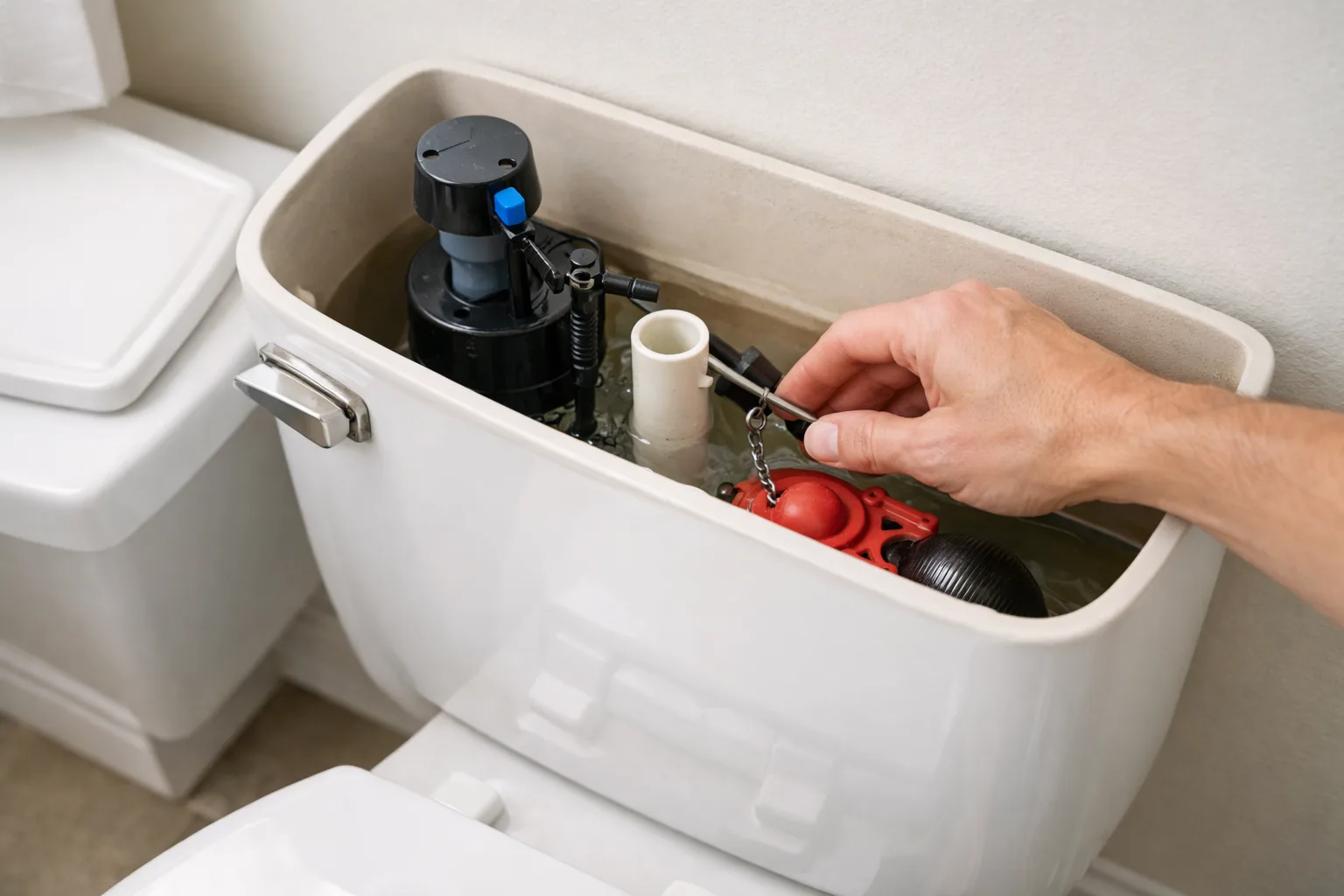
A toilet that keeps hissing or trickling after a flush is more than an irritating background noise: it may be sending clean water straight down the drain. The good news is that the usual causes are inside the tank, where a few simple checks can often reveal the problem.
Most tank-style toilets work in two stages. When you flush, a valve opens and lets water from the tank rush into the bowl. As the tank empties, that valve closes, and a fill valve brings in fresh water until the tank reaches its set level. If either valve fails to close properly—or if the water level is set too high—the toilet can keep running.
First, take a look inside the tank
Remove the tank lid carefully and set it on a stable surface; porcelain can crack if dropped. Flush once and watch what happens. You do not need to put your hands in the water to make these observations.
Watch after the normal filling cycle should have ended. Water spilling over the overflow tube's top is different from a small refill tube delivering water into it during an ordinary refill. Fluidmaster’s kit instructions illustrate that separate refill path and identify the required water level for that kit. Do not copy its dimensions to an unidentified mechanism. Also check whether the flapper settles and the chain moves freely.
If your toilet has a pressure-assisted system or a flush mechanism that is unfamiliar, the parts may work differently from the common setup described here. Check the manufacturer’s instructions before adjusting or replacing anything.
A flapper that does not seal
In many toilets, the flapper is a hinged seal that lifts when you flush and drops back over the opening at the bottom of the tank. If it is worn, warped, dirty, or the wrong size, water can leak slowly from the tank into the bowl. The fill valve then turns on periodically to replace it, creating an intermittent refill sound.
For an ordinary gravity tank, EPA’s WaterSense check uses a couple of drops of food colouring in the tank and a ten-minute wait without flushing. Colour appearing in the bowl indicates a leak path. Flush afterwards to clear the dye; the result alone does not identify the correct replacement part.
A dye observation can indicate a leak path; it does not identify every valve fault or establish which replacement part fits. If your tank is not the ordinary gravity/flapper arrangement described here, stop and use the exact system's manual rather than testing or adjusting unfamiliar parts.
A flapper may need cleaning or replacing. First, identify and close the toilet’s accessible shutoff by its markings or instructions; do not force a corroded or unfamiliar valve. Flush to drain most of the tank, then sponge out any remaining water if needed. Check that the flapper sits evenly over the opening and that no debris is caught underneath it.
If the flapper is damaged or no longer seals, replace it with a compatible model. Flappers vary in shape and size, so take the old one or the toilet’s make and model information to a hardware store, or consult the manufacturer’s parts guide. Follow the replacement instructions, then turn the water back on and test the flush.
A chain that is too tight or tangled
The chain connects the flush handle to the flapper. If it is too short, caught under the flapper, or snagged on another part, the flapper may stay slightly open. A chain that is too long can also tangle or interfere with the seal.
With the water off, check that the chain moves freely and that the flapper can drop fully into place. It should have a little slack when the flapper is closed, but not so much that it gets caught underneath. Adjust the chain using its clip, then flush to see whether the flapper opens and closes cleanly. If the handle sticks or does not return to position, check its connection and make sure it is not holding the chain up.
Water spilling into the overflow tube
The fill valve should stop adding water before the level reaches the top of the overflow tube. If water continuously runs into that tube, the tank may be overfilling because the float is set too high or the fill valve is faulty.
Many fill valves have a screw, clip, or sliding adjustment that lets you lower the float and water level. The exact method varies by valve, so use its instructions. Make a small adjustment, turn the water back on, and allow the tank to refill. The water should stop below the top of the overflow tube, with the correct level guided by the toilet or valve manufacturer’s markings.
If the float is obstructed, rubbing against the tank wall, or visibly damaged, address that first. If the water still rises into the overflow tube after the float is adjusted, the fill valve may need cleaning or replacement. Turn off the water before working on the valve, and follow the product instructions. If you are unsure how to disconnect the supply line or install a new valve, call a plumber.
When the fill valve keeps cycling
A fill valve can fail to shut off even when the water level is not obviously too high. You may hear a steady hiss, a weak stream, or repeated short refills. Mineral buildup or worn internal parts can interfere with its operation. Some valves can be cleaned; others are designed to be replaced. Check the instructions for your model rather than forcing parts apart.
A leak at the base of the tank or around the water-supply connection is different from a toilet that runs into the bowl. If you see water on the floor, turn off the shutoff valve and investigate promptly. A cracked tank or loose connection may require professional repair.
A sensible order for troubleshooting
Try these checks in order:
- Watch the tank after a flush and see whether water reaches the overflow tube.
- Check whether the flapper closes flat and whether the chain is free, correctly adjusted, and not holding it open.
- Use the food-coloring test if you suspect water is leaking from the tank into the bowl.
- Adjust the float according to the fill-valve instructions if the tank is overfilling.
- Replace a worn flapper or a fill valve that will not shut off, using compatible parts.
After any repair, flush several times and listen. The tank should refill and then stop; the flapper should settle back into place, and no water should continue flowing into the overflow tube. If the problem persists, parts do not match, or you find a crack or a leak outside the bowl, get help from a qualified plumber.
A toilet that runs now and then can be easy to ignore, especially if the sound is faint. But the cause is usually a small mechanical fault, and catching it early can prevent unnecessary water use. A quick look under the tank lid is often enough to tell you where to start.
You might also like
What to Keep in a Home Kit for a Power Outage
Build a practical outage kit with lighting, charged power banks, water, easy-to-eat food, essential medicines and supplies suited to your household.
How to Clean a Humidifier and Stop Mineral Buildup
Clean your humidifier regularly to remove scale and reduce residue. Learn how to descale it safely, care for filters and prevent mineral buildup.
How to Remove Burnt Food from a Stainless Steel Pan
Loosen burnt-on food from a stainless steel pan with hot water and gentle scraping. For stubborn residue, add baking soda and scrub without damaging the finish.