How to Clean a Humidifier and Stop Mineral Buildup
By WowPebble Editorial
Clean your humidifier regularly to remove scale and reduce residue. Learn how to descale it safely, care for filters and prevent mineral buildup.
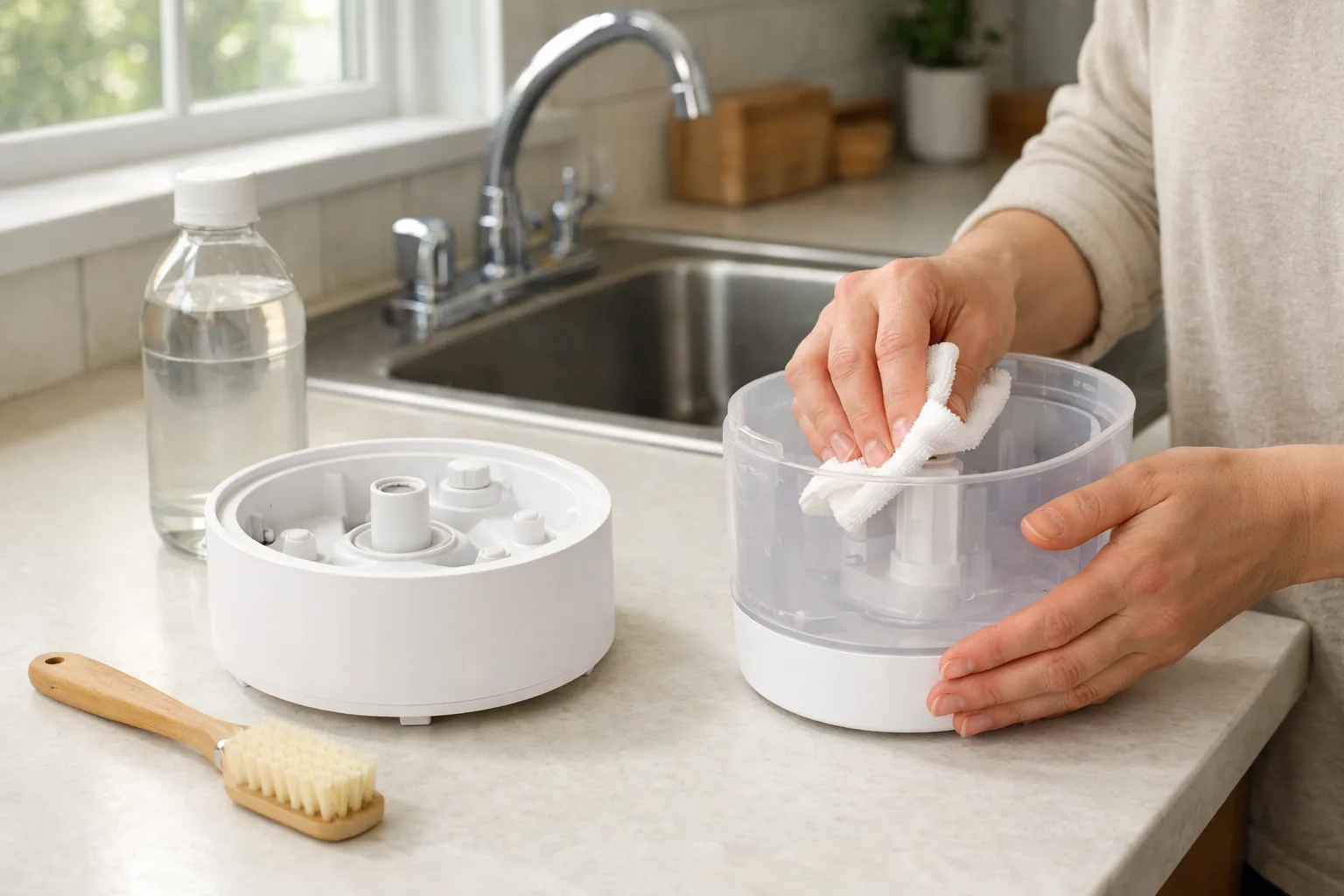
To clean a humidifier, unplug it, empty it and take apart only the pieces the manufacturer says are removable. Use white vinegar to loosen mineral scale if your manual allows it, then rinse and dry the parts thoroughly. For less buildup, use distilled or other low-mineral water, empty the tank daily and follow the cleaning schedule in the manual.
Minerals in tap water can collect as crusty scale on a humidifier’s surfaces. In ultrasonic models, some of those minerals can also leave a fine white dust on nearby surfaces. Regular rinsing helps with fresh residue; dried-on scale usually needs descaling. Cleaning removes dirt and mineral deposits, while disinfection is a separate step that should follow the maker’s directions.
A safe routine for cleaning
- Unplug and empty the unit. If it uses warm mist, let it cool completely before handling it. Pour out standing water rather than topping it up with fresh water.
- Separate the removable parts. Remove the tank, cap and other pieces the manual identifies as removable. Keep water away from electrical parts, air outlets and openings that lead into the motor or fan. Do not immerse the base unless the manufacturer explicitly says it is safe.
- Loosen scale on compatible parts. If the manual permits vinegar, pour white vinegar into the tank so it contacts the scaled areas. Swirl it gently and let it sit according to the instructions. For the base, add vinegar only to the designated water-contact basin if the manual allows it; never pour it into vents or electrical openings. A soft brush or cloth can help lift deposits. Avoid metal tools and abrasive pads, which can damage surfaces.
- Rinse well. Empty the vinegar and rinse the parts with clean water until there is no lingering vinegar smell. Wipe the base with a damp cloth if its instructions call for wiping rather than rinsing. Do not run the humidifier with vinegar inside.
- Disinfect only as directed. If the manual calls for disinfection, use the product and method it specifies, then rinse if instructed. Never mix vinegar with bleach or another cleaner. If you cannot find the instructions, check the manufacturer’s guidance for your model rather than guessing at a chemical or concentration.
- Let parts dry. Air-dry the tank and removable pieces before reassembling or storing the humidifier. Follow any instructions about drying the base.
The exact method depends on the design. A warm-mist humidifier may have scale on its heating element; do not scrape it, and use only the cleaning method allowed for that part. Evaporative models use a wick or filter that may be damaged by vinegar or washing. Clean or replace it only as its instructions specify. If the manual says a part is not washable, replace it when required rather than soaking it.
How often to clean it
Empty, rinse and refill the tank with fresh water every day you use the humidifier. This prevents water from sitting in the tank between uses, but it does not replace a full cleaning. Clean and descale at the interval given by the manufacturer; frequency can depend on the model, how often it runs and the mineral content of your water. If you see scale or residue sooner, clean the affected parts using the approved method.
Preventing mineral buildup
- Use distilled or low-mineral water. This reduces the minerals available to form scale. It is especially helpful with ultrasonic models, which can disperse minerals from the water as fine particles. A demineralization cartridge may help if the model supports one, but follow its replacement instructions.
- Do not leave old water in the tank. Empty and rinse it daily, and let it dry when the humidifier will not be used for a while.
- Keep up with routine descaling. A thin deposit is easier to remove than a thick layer left to harden. Use only cleaning methods compatible with your model’s tank, base, heating element and filter.
- Check the filter separately. Filters and wicks have different care requirements from hard plastic parts. Washing or soaking one that should be replaced can affect how it works.
If the humidifier still has deposits after cleaning, avoid forcing them off with a sharp tool or stronger chemicals. Check the manual for the part in question; some components need a different treatment or replacement.
You might also like
How to Clean a Coffee Maker When Mineral Scale Builds Up
White, chalky buildup can slow a coffee maker and affect your brew. Learn how to descale it safely, rinse it well, and help prevent scale from returning.
How to Clean a Dishwasher Filter When Dishes Come Out Dirty
Cloudy glasses and gritty plates may point to a clogged dishwasher filter. Learn how to find, clean, and reinstall it—and what to check next.

What to Keep in a Home Kit for a Power Outage
Build a practical outage kit with lighting, charged power banks, water, easy-to-eat food, essential medicines and supplies suited to your household.