How to Remove Burnt Food from a Stainless Steel Pan
By WowPebble Editorial
Loosen burnt-on food from a stainless steel pan with hot water and gentle scraping. For stubborn residue, add baking soda and scrub without damaging the finish.
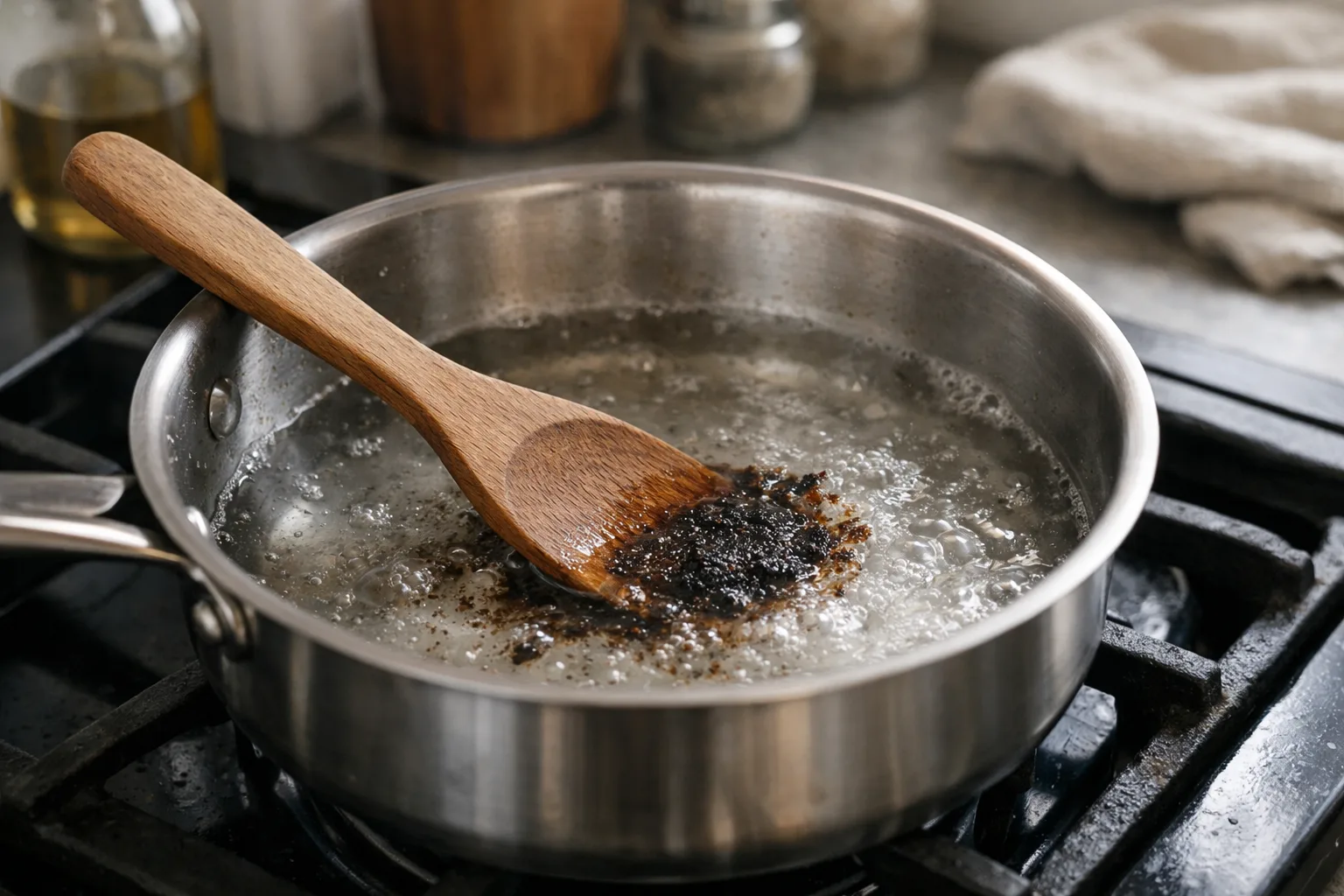
To remove burnt food from a stainless steel pan, cover the stuck-on area with water, bring it to a gentle simmer, and loosen the residue with a wooden or silicone utensil. If that is not enough, simmer the water with baking soda, then scrub the cooled pan with a non-scratch sponge. The heat softens the food, while the baking soda helps lift stubborn residue.
Start with hot water
Let the pan cool until it is safe to handle before adding water. Pouring cold water into a very hot pan can cause a sudden temperature change that may warp it. Scrape out any loose food with a wooden spoon or silicone spatula, but do not dig at the steel with a knife.
Add enough water to cover the burnt patch and bring it to a gentle simmer on the stove. As the water heats, carefully work at the residue with the utensil, moving it across the pan’s bottom rather than forcing it into the steel. Let the water simmer for several minutes; if the food is still firmly stuck, give it more time. Turn off the heat and let the pan cool enough to handle before pouring the water away and washing it with dish soap.
This is often enough for a layer of burnt food. If the food has dried hard or formed a thicker crust, use baking soda for a second pass.
Use baking soda for stubborn residue
For stuck-on food that remains after simmering in plain water, add fresh water to cover the affected area and stir in a spoonful or two of baking soda. Bring the mixture to a gentle simmer and leave it on the heat for several minutes, keeping an eye on the pan so it does not boil dry. Turn off the heat and let the water cool before trying to lift the residue with a wooden or silicone utensil.
For small patches, you can instead make a paste of baking soda and a little water. Spread it over the residue, leave it for a short while, then rub gently with a damp, non-scratch sponge. Rinse and wash the pan as usual. If a dark, carbonized patch remains, repeat the process rather than trying to force it off in one go.
Baking soda is mildly alkaline and slightly abrasive, so it can help loosen cooked-on material. Vinegar is not needed for this job, and mixing vinegar with baking soda makes them react with each other rather than giving you a more effective cleaning mixture.
Scrub without damaging the pan
A nylon scrubber or non-scratch scouring pad is a good next step after the residue has softened. Scrub with steady pressure and check the surface as you go. Avoid knives and other sharp tools, which can gouge the pan, and be cautious with steel wool: it can scratch the finish and may leave particles that later rust.
Once the burnt food is gone, wash the pan with dish soap and rinse it well. If it has a rainbow-like heat stain or a cloudy mineral mark rather than stuck-on food, that is a different problem; vinegar can help with some such discoloration, but it does not replace the simmer-and-scrape method for burnt residue.
What to avoid
Do not leave the pan unattended while water is simmering, and do not let the liquid evaporate completely. Avoid chlorine bleach, which can damage stainless steel. Skip aggressive scraping: loosening the food with heat and repeating a gentle treatment is safer than trying to chip it off.
These methods are for uncoated stainless steel. If the pan has a nonstick or other coated interior, follow its care instructions and avoid abrasive scrubbing, which may damage the coating.
You might also like
How to Clean Cast Iron Without Damaging Its Seasoning
Clean cast iron with hot water, a little dish soap, and a quick dry. Here’s how to remove stuck-on food, protect the seasoning, and handle rust.
What to Keep in a Home Kit for a Power Outage
Build a practical outage kit with lighting, charged power banks, water, easy-to-eat food, essential medicines and supplies suited to your household.
How to Clean a Humidifier and Stop Mineral Buildup
Clean your humidifier regularly to remove scale and reduce residue. Learn how to descale it safely, care for filters and prevent mineral buildup.