What to Keep in a Home Kit for a Power Outage
By WowPebble Editorial
Build a practical outage kit with lighting, charged power banks, water, easy-to-eat food, essential medicines and supplies suited to your household.
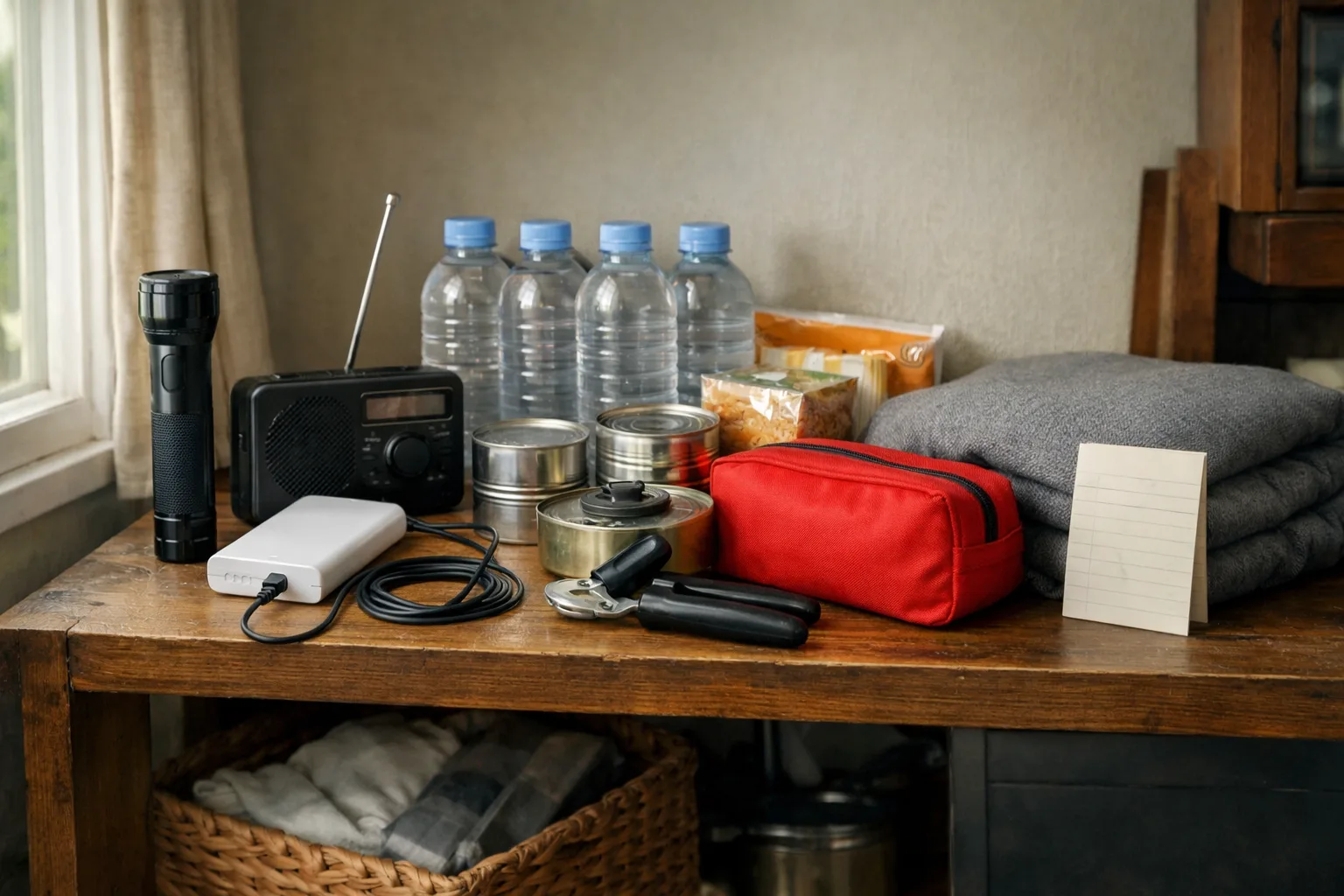
A useful home power-outage kit should let you see, communicate, stay warm or cool, and manage basic needs without relying on electricity. Keep it in an easy-to-reach place and include lighting, charged backup power, water, ready-to-eat food, essential medicines, first-aid supplies and items specific to your household. An outage may also affect heating, cooling, water service or phone networks, depending on where you live, so plan for the needs most likely to matter at home.
Light and communication
- Flashlights or headlamps: Keep at least one where everyone can find it in the dark. A headlamp leaves your hands free. Check what batteries each light takes and store spare batteries nearby.
- A battery-powered or hand-crank radio: It can help you hear local updates if internet or mobile service is unavailable. Check that you can tune it to useful local stations.
- Charged power banks and cables: Charge them before an outage and make sure they match the devices in your household. A car charger can be a backup, but only charge devices while the vehicle is parked outdoors—not in a garage.
- A written contact list: Include important phone numbers and the address or meeting point your household would use if people cannot reach one another by phone.
Use flashlights or lanterns rather than candles when possible. Open flames can start fires, particularly when people are moving around an unfamiliar, dark room.
Water, food and basic care
- Drinking water: Store enough for household members and pets, and replace it according to the container or supplier’s instructions. If an outage could interrupt your water supply, plan how you would obtain more safely.
- Food that needs little or no preparation: Choose familiar, shelf-stable foods that can be eaten without a microwave or electric stove. Include a manual can opener if you store canned food, plus any necessary utensils.
- First-aid supplies: Keep a stocked first-aid kit and know where it is. Add any personal items your household uses regularly.
- Prescription and essential medicines: Keep an appropriate supply where possible, and check storage instructions. If a medicine or medical device depends on electricity or temperature control, ask a pharmacist or healthcare provider how to prepare for an outage.
- Personal and household essentials: Consider hygiene supplies, pet food, infant supplies, spare glasses, and items for anyone with mobility, sensory or other access needs.
Keep foods that need refrigeration chilled by limiting how often you open the fridge and freezer. If you are unsure whether food is still safe, follow local food-safety guidance rather than tasting it to check.
Warmth, cooling and practical items
Keep blankets, warm layers and sturdy shoes where they are easy to reach. In hot weather, plan how household members can stay cool and where they could go if the home becomes unsafe; a small battery-powered fan may help, but it is not a substitute for a safe cooling location during dangerous heat.
A few other useful items include cash in small denominations, a basic tool kit, matches in a waterproof container, and copies of important information stored in a waterproof bag. A whistle can help attract attention if someone needs assistance. Choose additions based on your home and likely local disruptions rather than trying to pack for every imaginable event.
Store it safely and keep it ready
Put supplies together in a labeled, easy-to-carry container, but keep flashlights and other items you may need immediately accessible. Store the kit somewhere household members can reach without power. Check it periodically: recharge power banks, test lights and the radio, replace expired food or medicines, and update supplies as household needs change.
A home kit supports short-term needs; it does not make every backup-power option safe. Never run a generator indoors or in a garage, even with the door open. Keep it outdoors, away from doors, windows and vents, and follow its instructions. Never connect a generator to a home wall outlet; a home connection requires properly installed transfer equipment. If someone relies on powered medical equipment, arrange a backup plan with their provider and utility rather than depending on a general kit alone.
You might also like
How to Clean a Humidifier and Stop Mineral Buildup
Clean your humidifier regularly to remove scale and reduce residue. Learn how to descale it safely, care for filters and prevent mineral buildup.
How to Remove Burnt Food from a Stainless Steel Pan
Loosen burnt-on food from a stainless steel pan with hot water and gentle scraping. For stubborn residue, add baking soda and scrub without damaging the finish.
How to Get a Stuck Zipper Moving Without Breaking It
A stuck zipper usually needs less force, not more. Find out how to free trapped fabric, ease tension and lubricate the teeth without damaging the zip.