Why Some Lakes Turn Pink—and What Gives Them Their Color
By WowPebble Editorial
Pink lakes get their striking color from salt-loving microorganisms and the pigments they produce. Here’s why the shade varies—and what it does not tell you.
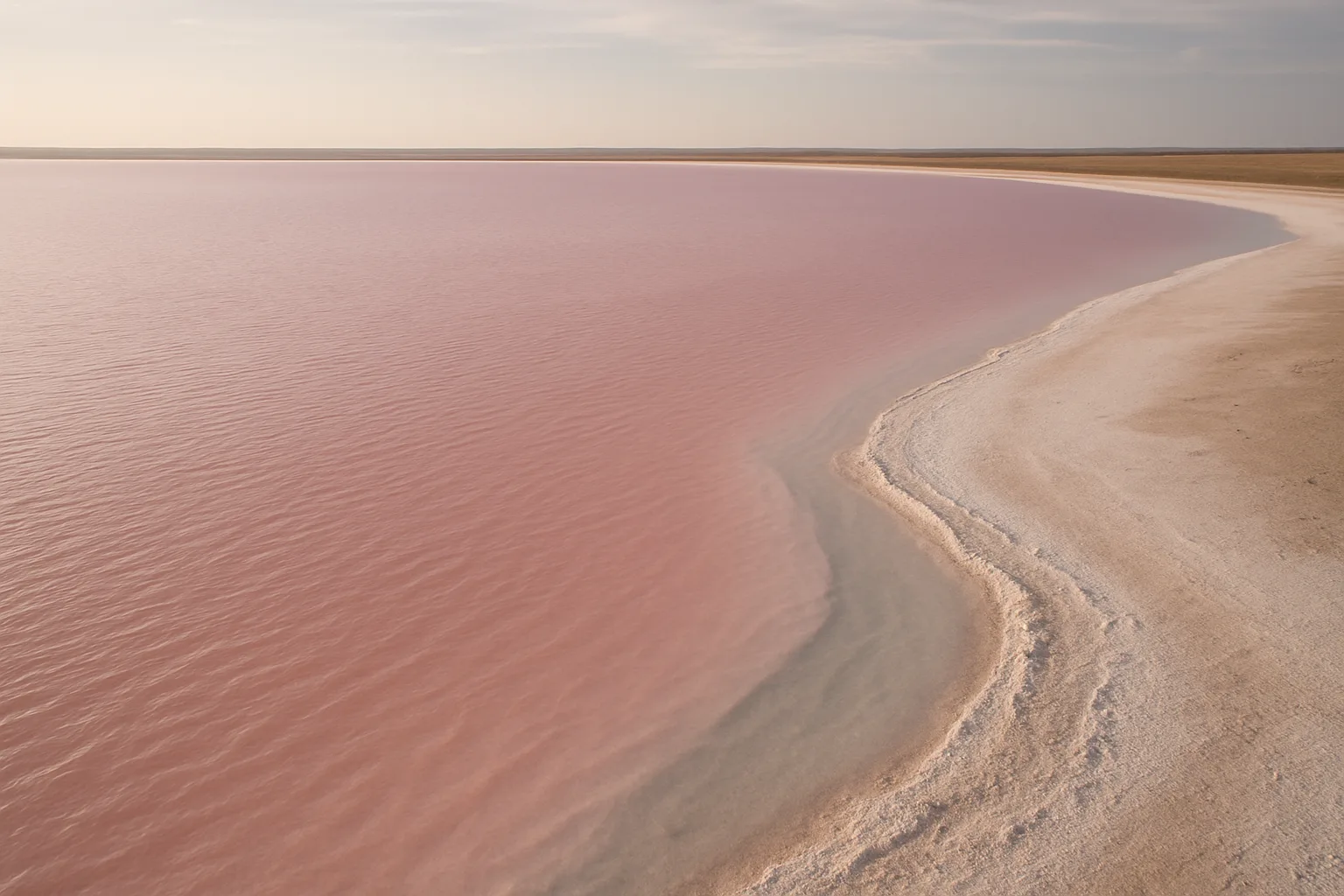
A lake can look as if someone has poured paint across its surface, yet its vivid pink color often comes from life too small to see. In many pink lakes, salt-loving algae and microbes produce reddish pigments that tint the water. The effect depends on more than salt alone: light, temperature, water depth, and the mix of organisms can all influence the shade.
That is why two pink lakes may look completely different—and why one lake can shift from pale rose to deep red over time.
The tiny organisms behind the color
Many pink lakes are extremely salty. In such conditions, ordinary freshwater organisms struggle, but certain algae, bacteria, and archaea are adapted to thrive. Some make carotenoids, a family of pigments that includes the orange color in carrots and the red-orange color of some autumn leaves.
One familiar example is Dunaliella salina, a microscopic green alga that can build up the orange-red pigment beta-carotene. Salt-loving archaea and bacteria may also contribute red pigments of their own. Which organisms dominate—and how much pigment they produce—varies from lake to lake.
The pigments help some microorganisms cope with intense sunlight and other stresses in their harsh environment. When vast numbers of these tiny organisms, or their pigments, are present in the water, their combined color can become visible from shore or even from above.
Salt helps create the right conditions—but it is not pink
Salt itself does not usually turn lake water pink. Instead, high salinity creates an environment where a relatively small group of specialized organisms can flourish. In some lakes, evaporation concentrates the dissolved salts, helping push conditions into the range those microbes tolerate.
That concentration can change with rainfall, inflows, and evaporation. As the water level and saltiness shift, so can the microbial community and its pigments. Seasonal changes in sunlight and temperature may play a part, too. The result is a natural color that can be striking one day or season and noticeably subtler another.
A lake’s appearance also depends on how deep the water is, what lies beneath it, and how light reaches and reflects from the surface. A thin layer of colored water over a pale salt crust may look different from deeper water with a similar concentration of pigments. Cloud cover, viewing angle, and the surrounding landscape can change what the eye sees as well.
Not every pink lake has the same recipe
Two Western Australian examples show why the location matters. Lake Hillier has been studied through microbial sequencing; Hutt Lagoon is described separately in a Western Australian conservation department condition report, which records the alga Dunaliella salina. Evidence from one lake should not be used to identify the organisms in every other pink lake.
Their colors are not necessarily produced by an identical mix of organisms or environmental conditions. Microalgae, salt-loving bacteria, and archaea can all be part of the picture, and their relative influence differs. A pink lake is therefore not a single scientific type with one universal cause. It is a visible result that can emerge from different combinations of salty water, pigments, and light.
A concrete example is the metagenomic study of Lake Hillier, which identified multiple pigment-producing microbial groups rather than a single organism explaining every pink lake. Its findings belong to the samples and methods studied at Hillier; they do not identify the community in a different lake from a photograph.
The same principle explains why color is not a reliable sign of a lake’s salinity. Pink water may occur in a very salty lake, but the hue alone cannot tell you how concentrated the water is. Nor can a photograph establish exactly which organisms are responsible: identifying them requires more than looking at the color.
Why the shade can change
A pink lake is a living, changing system, not a fixed landmark painted one color. Rain can dilute salty water, while hot, dry conditions can increase evaporation and concentrate it. Changes in nutrient supply, water depth, and the balance of microorganisms can also affect how much pigment is present.
The color may range from a faint blush to salmon, rose, or red. Sometimes it is strongest near the shore or in shallow pools, where conditions differ from those in the deeper water. In other cases, the entire visible surface appears colored. A lake can also look more vivid under bright sunlight than on a cloudy day, even if the water itself has not changed much.
This variability is one reason pink lakes can be difficult to photograph consistently. Images can capture a genuine color, but lighting, camera settings, and editing may make it appear more intense or more uniform than it looks in person. The most useful pictures provide context—such as shoreline, sky, or nearby water—rather than treating the lake as a flat block of color.
Does pink water mean it is safe to swim in?
No. Color is not a safety test. Some pink lakes are protected areas, difficult to access, or unsuitable for swimming for reasons unrelated to their hue. Highly salty water can irritate cuts and eyes, and slippery salt or mud can make shorelines hazardous. Local rules and conditions matter, so visitors should follow signs and guidance rather than assume a colorful lake is safe to enter.
The color also does not mean the water is clean or drinkable. Pink pigments can come from natural organisms, but that alone says nothing about other substances in the water or the health of the wider ecosystem. A lake’s appearance is an invitation to learn about it, not a substitute for practical advice.
A color made by ecology and light
Pink lakes seem otherworldly, but their color has a grounded explanation: microscopic life produces pigments, salty conditions can favor that life, and sunlight makes the combined effect visible. The precise recipe is different in every lake, and it can change with the weather and the seasons.
So when a lake turns pink, the salt is only part of the story. The remarkable shade is a clue to the living community in the water—and a reminder that even a landscape-sized spectacle can begin with organisms far too small to see.
You might also like
How Do Mushrooms Seem to Appear Overnight?
Mushrooms don’t grow from nothing in a single night. Their hidden fungal network can produce visible fruiting bodies quickly when conditions are right.
How Tidal Bores Send Waves Upstream
A tidal bore forms when a rising tide is funneled into a shallow river mouth, steepening into a moving front that can surge against the river’s flow.
Why Chameleons Change Color—and What the Colors Signal
Chameleons change color to communicate, respond to temperature and light, and sometimes blend in. Their shifting shades come from both pigments and remarkable skin cells.