How Do Mushrooms Seem to Appear Overnight?
By WowPebble Editorial
Mushrooms don’t grow from nothing in a single night. Their hidden fungal network can produce visible fruiting bodies quickly when conditions are right.
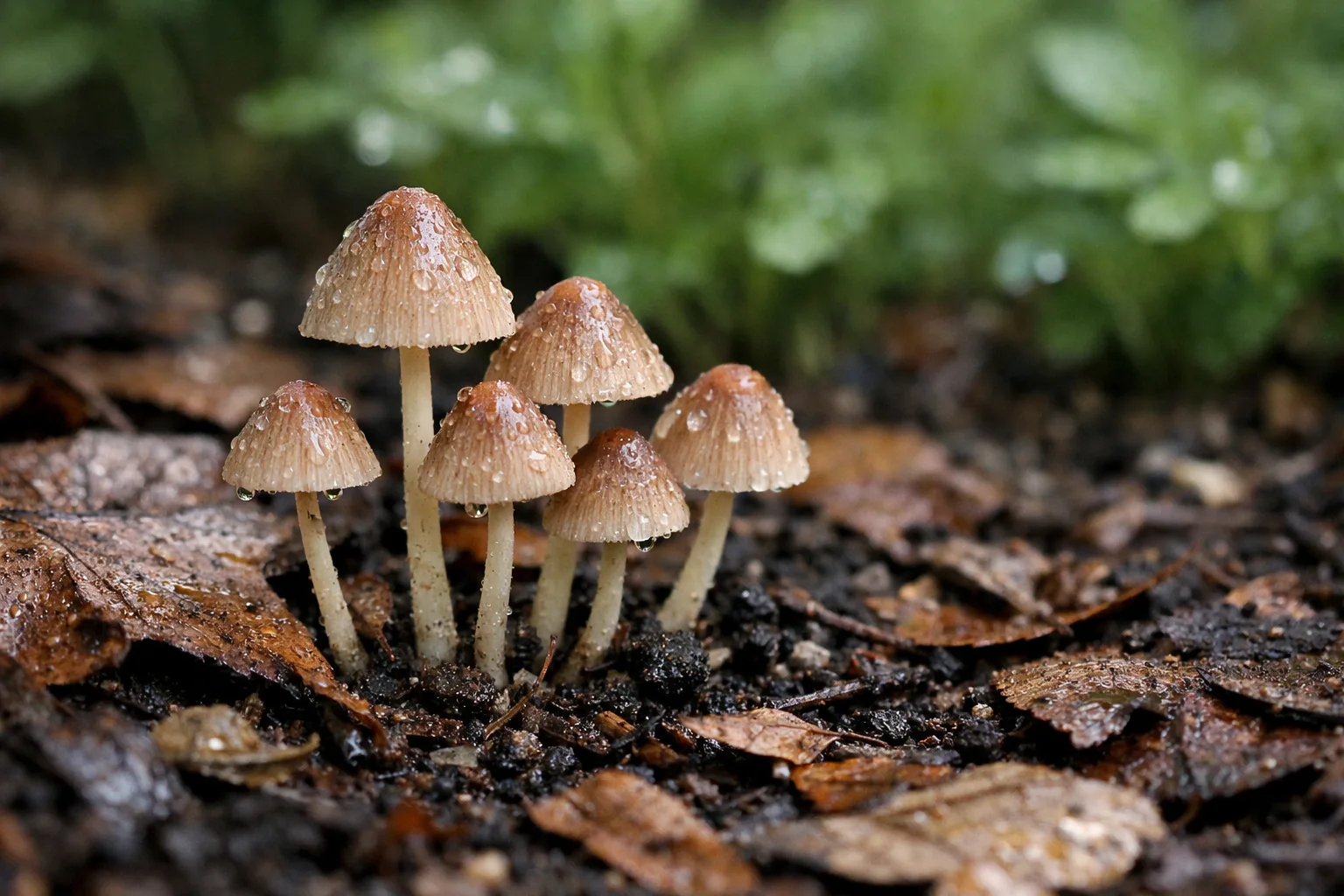
Mushrooms seem to appear overnight because the visible part of a fungus can grow quickly, while most of the organism is already hidden in soil, wood or leaf litter. A mushroom is a reproductive structure, not the whole fungus—and by the time you notice one, the fungus that made it may have been growing out of sight for much longer.
The mushroom is only the visible part
Most of a familiar mushroom-forming fungus consists of fine, branching threads called hyphae. Together, these threads form a network known as mycelium, which spreads through its food source. That might be decaying wood or other organic matter; some fungi instead live in close partnership with plant roots.
When conditions suit a fungus, parts of this hidden network can develop into a mushroom. The mushroom produces and releases spores, which can spread and, under suitable conditions, grow into new fungal threads. But a spore does not instantly become a mushroom: establishing and growing a fungal network takes time.
Why growth can look so sudden
A developing mushroom may start as a small, easily missed structure near the surface or within its food source. As it grows, its cells take up water and expand, making the cap and stem much more noticeable. Under favorable conditions, some mushrooms can enlarge rapidly—fast enough that a mushroom spotted in the morning may seem to have appeared since the previous evening.
That does not mean every mushroom completes its entire development in one night. The pace varies with the kind of fungus and its surroundings, and growth may take longer than an observer realizes. Darkness also helps hide gradual changes: there may be no one watching the patch between evening and morning.
What rain has to do with it
Mushrooms often show up after rain because water can help provide the moist conditions needed for their growth. Temperature and the availability of suitable food also matter, and the exact conditions vary among fungi. Rain can be a useful clue that conditions have changed, but it is not a universal switch that makes every fungus produce mushrooms at once.
A lawn mushroom appearing after a wet spell, for example, has not necessarily grown from a newly arrived spore. The fungus may already have been living in the soil or buried organic material; the weather may simply have made conditions more favorable for producing a visible fruiting body.
Not every fungus makes a familiar mushroom
“Mushroom” usually refers to the conspicuous fruiting body of certain fungi, such as those with caps and stems. Other fungi produce different visible structures, and many fungal networks remain hidden. So the sudden cluster in a garden is not the whole organism appearing out of nowhere. It is a temporary, visible sign of a much less visible life already at work.
You might also like

How Tidal Bores Send Waves Upstream
A tidal bore forms when a rising tide is funneled into a shallow river mouth, steepening into a moving front that can surge against the river’s flow.
Why Chameleons Change Color—and What the Colors Signal
Chameleons change color to communicate, respond to temperature and light, and sometimes blend in. Their shifting shades come from both pigments and remarkable skin cells.

Why Popcorn Pops Into a Light, Fluffy Shape
A popcorn kernel turns fluffy when trapped moisture builds pressure, then bursts through its hull and expands the softened starch into a porous foam.