How Tidal Bores Send Waves Upstream
By WowPebble Editorial
A tidal bore forms when a rising tide is funneled into a shallow river mouth, steepening into a moving front that can surge against the river’s flow.
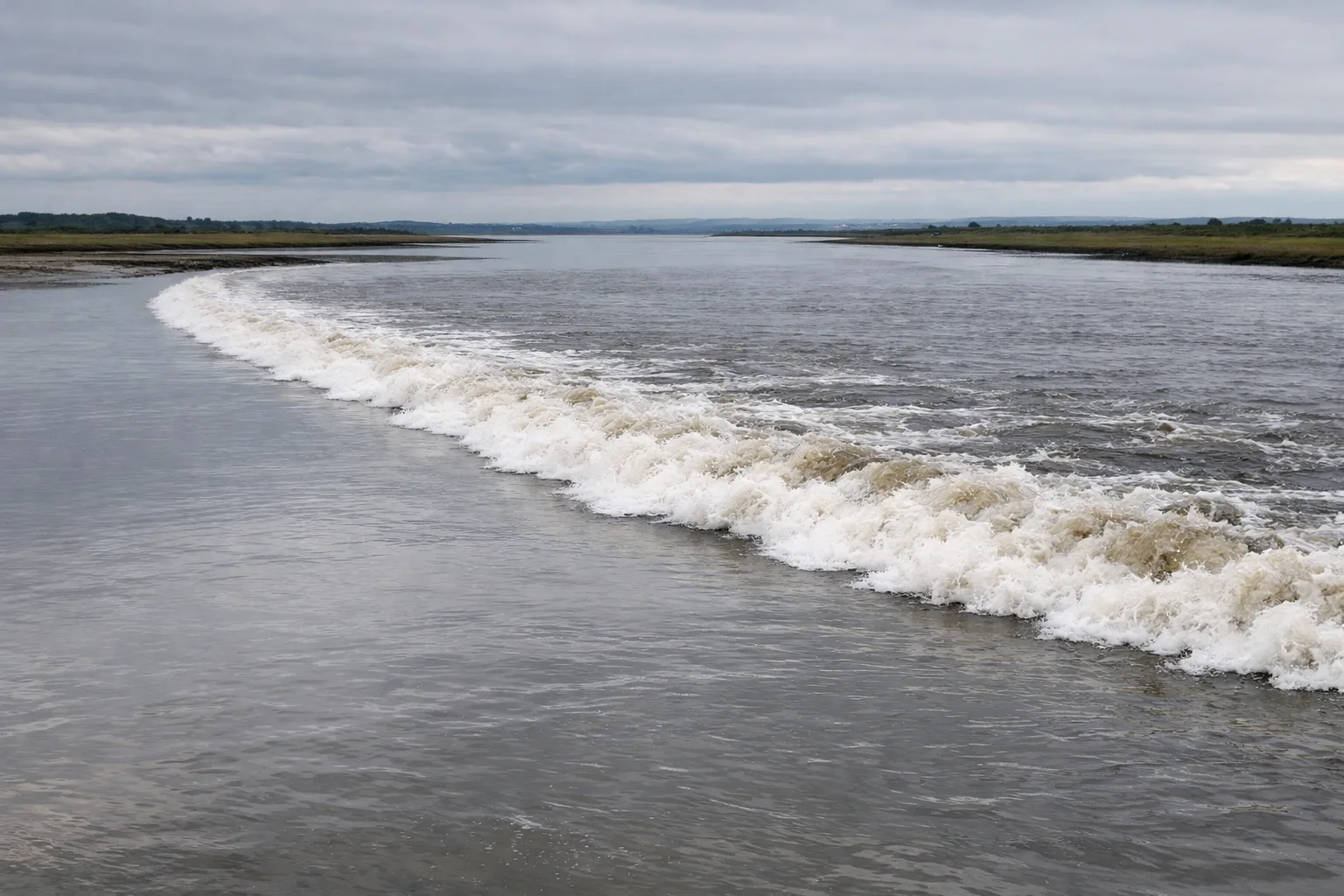
A tidal bore travels upriver because the incoming tide pushes into a river through a shallow, narrowing estuary. In the right conditions, the rising water steepens into an abrupt front—a moving rise in water level that advances inland, sometimes as a breaking wave. The wave’s motion is upstream even though the river normally flows toward the sea.
How the bore forms
Most tides enter rivers as a gradual change in water level. But some estuaries funnel the incoming tide through a channel that becomes narrower or shallower inland. The flow is squeezed into less space, and the water level can rise sharply. Meanwhile, the river’s outward current resists the flood tide.
When the incoming tide advances quickly enough through the shallow channel, the boundary between the new, deeper water and the shallower water ahead can become very steep. That abrupt transition is the bore. In physical terms, it behaves like a moving hydraulic jump: a sudden change between two different depths and flow conditions.
The bore is not simply a normal ocean wave rolling up a river. It is the leading edge of a tidal surge, and it can carry a change in water level and current with it. After the front passes, the tidal flow may run upriver, opposing or temporarily overcoming the river’s seaward flow.
Why only some rivers have bores
A large tidal range helps supply enough water for a pronounced surge, but it is not enough by itself. The shape and depth of the estuary matter, as does the strength of the river current. A funnel-shaped channel can concentrate the incoming tide; a shallow channel can help the front steepen. If the river’s discharge is too strong, it can hold the flood tide back and weaken or prevent a bore.
These factors explain why a bore is a feature of particular rivers and tidal conditions, not something that forms in every estuary. Even in a river known for bores, the wave’s size and shape can vary with the tide and the river’s flow.
What the wave looks and feels like
Some bores arrive as a smooth, steep rise; others break into a foamy, surf-like front. Behind the leading edge, the water level is higher, and the flow may continue upstream with it. A bore can also be followed by smaller waves, but the main feature is the advancing front that marks the tide’s arrival.
The Severn in Britain and the Qiantang in China are among the rivers associated with notable tidal bores. Their contrasting settings illustrate the same basic process: where tides, river flow and channel shape combine in the right way, the incoming tide can rise into a wave and move far inland.
A bore’s apparent direction can be confusing because it moves against the river’s usual current. The key distinction is between the movement of the wave front and the river’s background flow: the front advances upriver as the tide pushes in, while the river’s normal downstream current may persist ahead of it.
You might also like

How Do Mushrooms Seem to Appear Overnight?
Mushrooms don’t grow from nothing in a single night. Their hidden fungal network can produce visible fruiting bodies quickly when conditions are right.

Why Chameleons Change Color—and What the Colors Signal
Chameleons change color to communicate, respond to temperature and light, and sometimes blend in. Their shifting shades come from both pigments and remarkable skin cells.

Why Popcorn Pops Into a Light, Fluffy Shape
A popcorn kernel turns fluffy when trapped moisture builds pressure, then bursts through its hull and expands the softened starch into a porous foam.