Why Do Some Countries Drive on the Left Side of the Road?
By WowPebble Editorial
Left-side driving is more than a quirky road rule. Its history reaches back to old travel customs, empire, and the practical challenge of coordinating traffic.
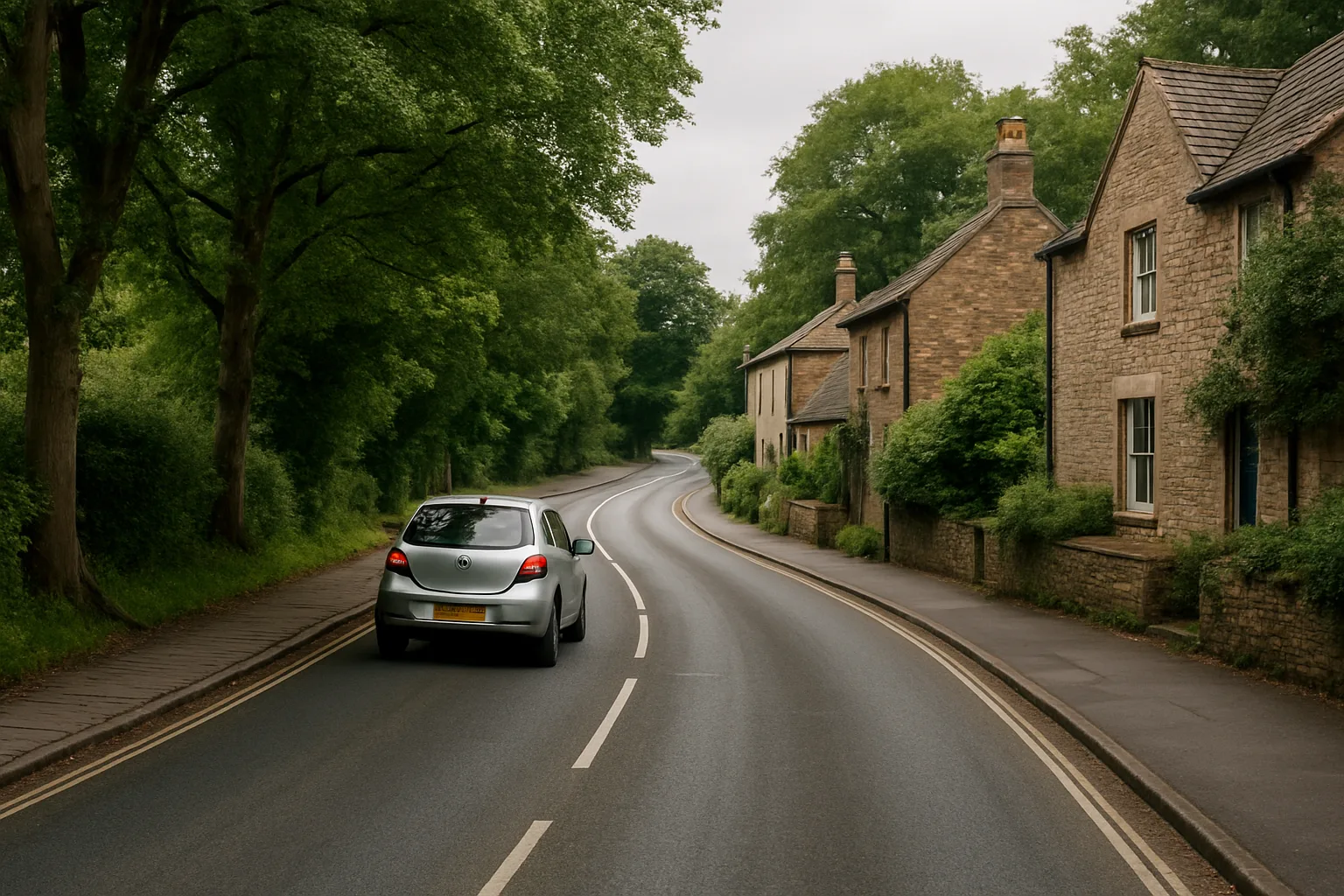
A road trip can change direction before you even leave the airport. In some countries, cars keep to the left, drivers sit on the right, and roundabouts turn clockwise. The arrangement may feel unfamiliar, but it is not arbitrary: it reflects a convention that became law in some places, spread through political and colonial ties, and proved difficult to change once established.
The basic answer is that countries drive on the left because their road systems inherited a left-side rule and kept it. There is no single origin story that explains every country. Instead, centuries of custom, legislation, empire, and practical choices helped shape the pattern we see today.
Why keep to the left in the first place?
Do not mistake a memorable story about swords or riders for a documented origin of every modern rule. National legislation and contemporary traffic records are stronger evidence for a named system. A road convention can become established without leaving proof of the motive behind every earlier custom.
What is more certain is that once a convention became common, it made travel more predictable. Keeping to one side helps people passing in opposite directions avoid collisions. A shared rule matters more than which side is chosen: the danger comes when road users cannot anticipate one another.
A specific legal record is section 78 of the Highway Act 1835, which required carriages meeting or allowing others to pass to keep to the left or near side. It belongs to the Act's England-and-Wales context, not an identical commencement date for every part of Britain or its former territories. It documents a rule, not a proof of the horses-and-swords theory.
Why do most countries drive on the right?
A present-day traffic rule does not establish a single historical reason why every country adopted it. Stories about one ruler or one kind of wagon need dated evidence for the jurisdiction concerned before they can explain a national change.
For driving now, the applicable local rule matters more than a popular origin story. The historical paths of different road systems should be checked separately rather than treating a French or British example as an explanation of the whole world.
How empire and infrastructure shaped the map
Inheritance through political links is only one possible path. The Stockholm historical archive’s record of the 1967 change describes a country adapting its existing roads and traffic rather than deriving the decision from a simple map of empires. Check each jurisdiction's history separately.
Infrastructure can also reinforce a convention. Road signs, junctions, vehicle designs, and driver training all assume that traffic will approach from a particular direction. Railways are sometimes mentioned in discussions of national traffic patterns, but railway conventions do not automatically explain the side used by road vehicles. Different systems can have their own histories.
What changes when you drive on the other side?
In a left-driving country, traffic keeps left and cars are usually built with the steering wheel on the right. In a right-driving country, the usual arrangement is the reverse. These are common patterns, not guarantees: imported vehicles and local regulations can create exceptions.
The flow of traffic changes the feel of familiar road features, too. In countries that drive on the left, vehicles generally travel clockwise around roundabouts; in right-driving countries, they generally travel counterclockwise. The appropriate direction of travel depends on local rules and signs, so visitors should never rely on memory alone.
For drivers crossing between systems, the most important adjustment is attention. Intersections, turns, lane markings, and the position of other vehicles may seem reversed. Drivers should learn local rules before setting off, follow road signs, and take extra care at junctions. Pedestrians also need to remember that traffic may come from a different direction than expected.
Why not switch everyone to the same side?
A universal rule might sound simpler, but changing a country’s traffic system is a huge undertaking. It would require more than telling drivers to use the other lane. Roads, junctions, signs, buses, and vehicle fleets would all need to work safely during and after the change. Drivers would have to relearn habits, and neighbouring traffic systems would need to be considered.
The same municipal archive documents Sweden's switch on 3 September 1967 and the preparation around it. The dated event demonstrates that an established system can change; it does not prove that every country would face the same costs, traffic effects or reasons to switch.
The side a country drives on is therefore less a statement about which system is inherently better than a legacy of decisions that became embedded in everyday life. Left and right are both workable when everyone follows the same rule. The real achievement is not choosing one side for the whole world; it is making the local system clear, consistent, and safe for the people who use it.
You might also like

How Do Mushrooms Seem to Appear Overnight?
Mushrooms don’t grow from nothing in a single night. Their hidden fungal network can produce visible fruiting bodies quickly when conditions are right.

How Tidal Bores Send Waves Upstream
A tidal bore forms when a rising tide is funneled into a shallow river mouth, steepening into a moving front that can surge against the river’s flow.

Why Chameleons Change Color—and What the Colors Signal
Chameleons change color to communicate, respond to temperature and light, and sometimes blend in. Their shifting shades come from both pigments and remarkable skin cells.