Why Some Beaches Sing When You Walk Across Them
By WowPebble Editorial
On certain beaches, a footstep can produce a clear squeak or chirp. The sound comes from grains rubbing and moving together under just the right conditions.

A walk across the right stretch of sand can sound less like a stroll and more like a series of tiny squeaks. The noise is real: on some beaches, footsteps make the sand chirp, squeal or even seem to sing. The sound comes from grains moving against one another, but only certain sand and surface conditions allow that movement to become audible.
These beaches are sometimes called singing, squeaking or whistling sands. Their sounds are usually brief and high-pitched, triggered by a step, a shuffle or a hand dragged across the surface. The effect is unusual, but it does not require anything mysterious. It is a small acoustic event produced by many grains acting together.
How a footstep makes sand sing
When you put your weight on sand, grains shift, slide and press against their neighbors. On an ordinary beach, those movements are too scattered and quiet for you to pick out. On a singing beach, grains move in a way that produces vibrations strong enough for the ear to hear.
Researchers have proposed several related explanations for how those vibrations arise. One involves friction: grains can briefly stick, then slip past one another, creating repeated pulses of movement. Collisions and the collective motion of grains may also contribute. The exact process can vary with the sand, and scientists do not treat every singing beach as acoustically identical.
The key idea is that a single grain is not performing a tiny solo. A recognizable squeak is more likely when many grains move in a coordinated way, producing vibrations that reinforce one another instead of blending into ordinary shuffling noise.
Why only some sand makes the sound
Similar-looking grains are a clue, not a complete explanation. Parks Victoria describes fine, rounded quartz at Squeaky Beach, where dry sand squeaks underfoot. In Miyata and Koge’s laboratory shear tests, polished quartz showed repeated stick-slip movement; the authors linked squeaking to friction rather than roundness or grain sorting alone. This separates a description of one beach from an experimentally investigated mechanism. Neither source establishes one recipe for every singing beach.
Surface conditions matter, too. The sand usually needs to be dry enough for grains to move freely rather than clump together. A thin dry layer over damper sand can sometimes provide a useful combination: loose grains at the surface, with firmer material below. Too much moisture can mute the effect by making grains stick together, while loose, mixed or unusually rough sand may not produce the same clear vibration.
That is why a singing patch can be local and temporary. A few steps away, the grain mixture may differ. Rain, tides, wind and foot traffic can change the surface, and a beach that squeaked yesterday may be quiet today. Even at a well-known singing beach, not every footprint is guaranteed to produce a sound.
A squeaky beach is not the same as a booming dune
The phrase “singing sand” is also used for sand dunes that make a deep, booming or humming sound. That phenomenon is related in the broad sense that moving grains produce the noise, but it is different from the sharp squeak of a footstep on a beach.
Booming dunes can produce low-frequency sounds when a large mass of dry sand slides down a slope. The sound may carry across a landscape and last longer than a single footstep. Beach squeaks, by contrast, are usually short, higher-pitched sounds made close to the surface as someone walks or scrapes the sand.
The shared name can make the two effects seem more alike than they are. Both depend on sand with suitable properties and on grains moving together, but the scale of the movement and the character of the sound differ.
What to listen for
If you visit a beach known for squeaking, try walking slowly across a dry patch. A firm step or gentle shuffle may bring out a chirp, especially where the sand is clean and fine-looking. You can also press or drag a hand across the surface, though the sound may be faint. Listen close to the ground: the noise can be easy to miss in wind or surf.
There is no need to dig deeply or disturb a large area. The effect, when present, comes from the surface grains, and a small step is often enough. If the sand is wet, the wind is strong or waves are washing over the patch, the conditions may simply not be right.
A quiet result does not mean the beach is not special. Singing sand is a reminder that familiar materials can behave in surprising ways when their physical properties line up. A grain of sand seems too small to matter, but a vast crowd of grains shifting together can turn an ordinary footstep into a sound worth stopping for.
The simple answer
Some beaches sing because footsteps make suitably loose grains vibrate together. Grain size, shape, composition and moisture all influence whether the movement produces an audible squeak. No single ingredient explains every singing beach, and the sound can disappear when the surface changes.
So if the sand chirps beneath your shoes, you are hearing friction and motion organized into a brief, audible pattern. It is not the beach speaking, exactly—but it is the landscape making music out of a step.
You might also like

How Do Mushrooms Seem to Appear Overnight?
Mushrooms don’t grow from nothing in a single night. Their hidden fungal network can produce visible fruiting bodies quickly when conditions are right.
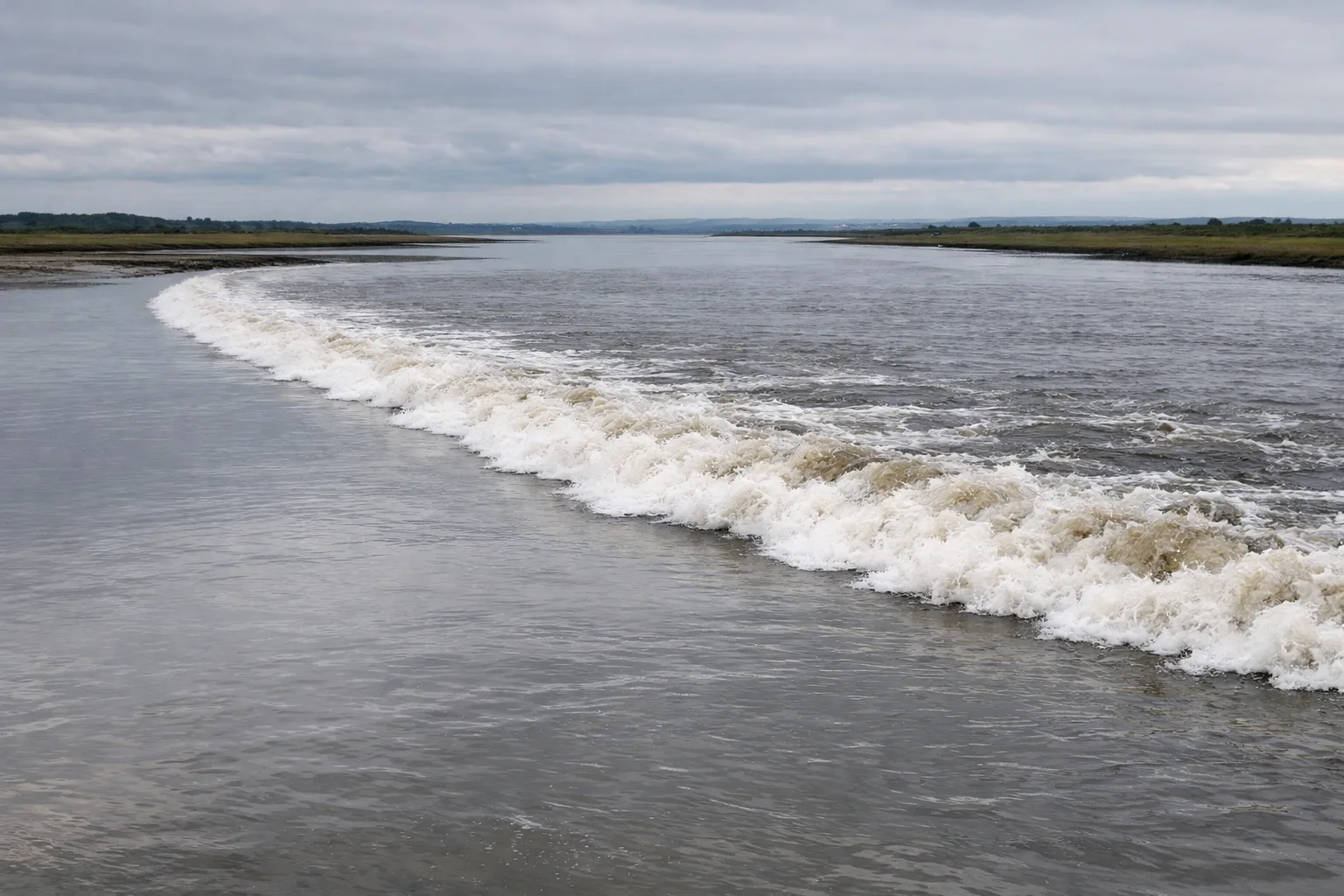
How Tidal Bores Send Waves Upstream
A tidal bore forms when a rising tide is funneled into a shallow river mouth, steepening into a moving front that can surge against the river’s flow.

Why Chameleons Change Color—and What the Colors Signal
Chameleons change color to communicate, respond to temperature and light, and sometimes blend in. Their shifting shades come from both pigments and remarkable skin cells.