Why the Northern Lights Form Colorful Curtains Across the Sky
By WowPebble Editorial
Auroral electrons energize gases high in Earth’s atmosphere. Their emissions produce colours, while magnetic structure and perspective shape the curtains.
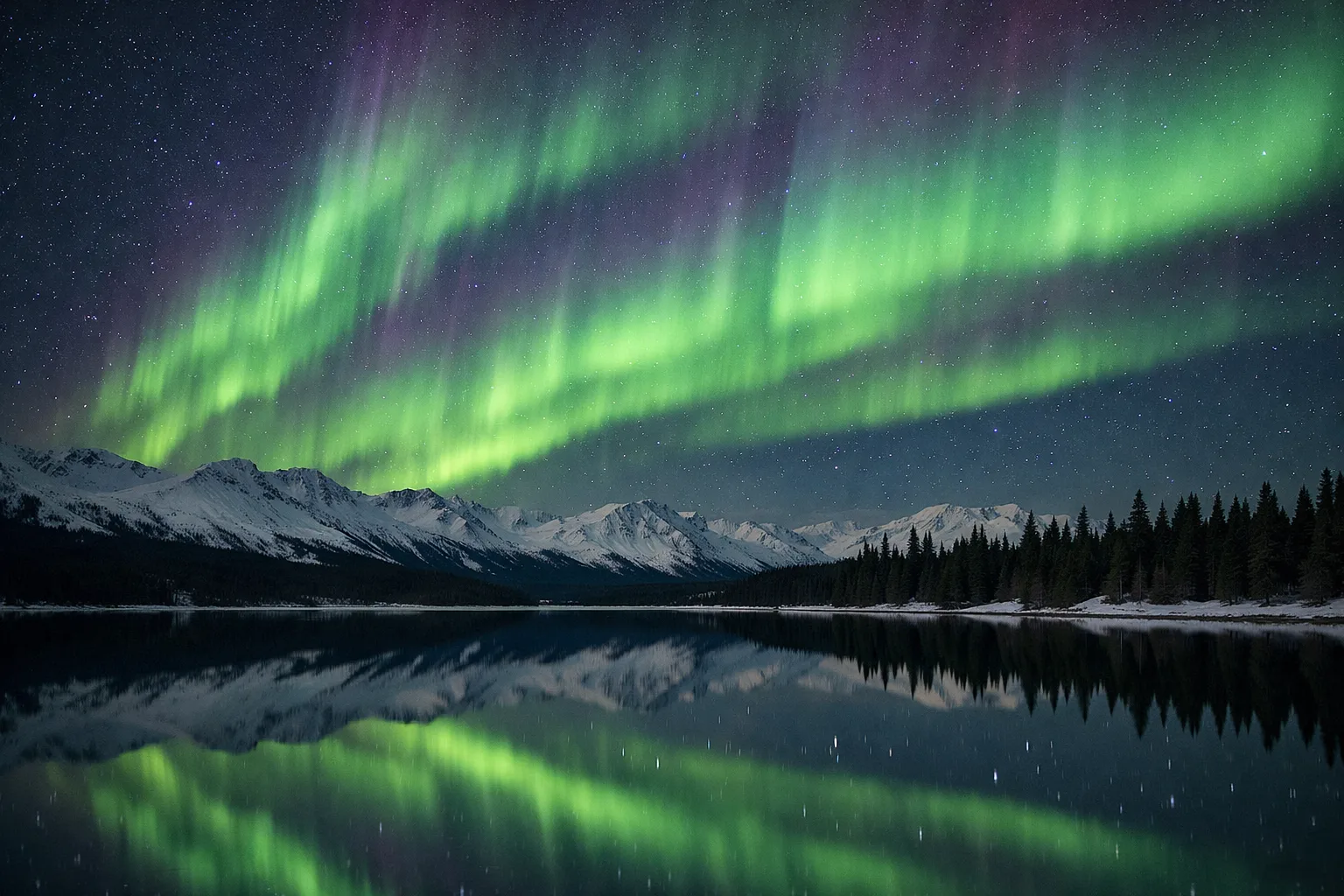
The northern lights can look like a giant curtain being drawn across the night sky: green folds ripple overhead, sometimes edged with red or violet. The display is not sunlight reflecting off clouds. It is light made in the atmosphere when electrically charged particles from space collide with gases above Earth. The colors come from those gases, while the curtain-like shapes trace the influence of Earth’s magnetic field.
How a solar disturbance becomes a sky show
The story begins with energy from the Sun and its interaction with Earth's magnetic environment. The solar wind is a flow of charged particles and magnetic field through space. Its interaction with the magnetosphere can transfer energy that helps drive an auroral display; a disturbance does not merely send an unchanged stream directly into the visible curtain.
As the particles travel downward, they encounter atoms and molecules in the upper atmosphere. Their collisions transfer energy to those gases. The energized atoms and molecules then release some of that energy as light. In this way, the aurora is a visible sign of activity linking the Sun, Earth’s magnetic environment, and the atmosphere.
The process can become more active when conditions on the Sun disturb Earth’s magnetic surroundings. During stronger geomagnetic activity, auroras may brighten or become visible farther from the poles than usual. The details vary from one display to another, but the basic ingredients remain the same: incoming particles, magnetic guidance, and atmospheric gases giving off light.
Why the lights make different colors
NASA’s aurora colour guide relates the light to both the emitting gas and the conditions of excitation. Oxygen produces familiar green and higher-altitude red emissions; nitrogen contributes blue, pink and purple. These are broad patterns, not a way to determine an exact height or gas mixture from any photograph.
These are useful guides, not strict boundaries. The gases and altitudes involved can overlap, and a display’s appearance depends on the particles’ energy and the conditions in the atmosphere. That is why one aurora may appear mostly green, while another has red edges, violet streaks, or several colors at once.
People watching from the ground may not see the same color range captured by a camera. In dim conditions, human vision is less sensitive to color, so a faint aurora can look pale or nearly white to the eye even when a photograph shows green or purple. A bright display is more likely to reveal its colors clearly without a camera.
Why they look like curtains
Auroras often form long arcs and bands that stretch across the sky. These structures are shaped in part by Earth’s magnetic field: charged particles move along magnetic field lines, and auroral emissions often appear in long, aligned forms. From the ground, a broad, curved band can seem to rise overhead as a vast arch.
NOAA’s aurora tutorial describes arcs made up of tall rays, giving the appearance of hanging curtains. Electrons follow the magnetic field into the atmosphere; field-aligned rays and the viewer’s line of sight help produce the apparent folds. The curtain is a glowing region of gas, not a material sheet moving through the sky.
Auroras also change shape because the flow of particles and the magnetic environment are not perfectly steady. Bright patches can shift, bands can break into rays, and the whole display may pulse or ripple. These quick changes give the lights their lively, moving appearance.
Why auroras appear near the poles
NASA’s Earth-aurora explanation describes charged particles, usually electrons, accelerated within Earth's magnetosphere. They follow the magnetic field toward polar regions and excite oxygen and nitrogen in the upper atmosphere. Solar disturbances can supply energy to that system; the display is not simply an unchanged beam travelling straight from the Sun to the air.
The northern display is called the aurora borealis, or northern lights. Its southern counterpart is the aurora australis, or southern lights. They arise from the same basic process in opposite hemispheres. The northern lights are simply more familiar to many people because large areas of land and populated regions lie beneath the northern auroral zone.
Being far north does not guarantee a clear view. Darkness, cloud cover, local light pollution, and the strength of the aurora all matter. Even in a good location, the lights may be faint or appear only briefly. They are best viewed under a dark, clear sky, away from bright artificial lights, with patience for conditions to change.
A natural display with a long human history
People living beneath auroral skies have observed and interpreted them for generations. Different communities have their own stories and traditions connected with the lights, reflecting the importance of the sky in local cultures. There is no single traditional explanation shared by all northern peoples, and accounts should be understood in their own cultural contexts rather than treated as interchangeable myths.
Today, instruments on the ground and in space help researchers study the particles and magnetic changes behind an aurora. But the science does not make the spectacle less remarkable. Each shifting band is a visible trace of a much larger interaction, extending from the Sun to Earth’s magnetic field and high into the atmosphere.
So the northern lights form colorful curtains because charged particles are guided toward polar skies and energize oxygen and nitrogen along the way. Those gases release light in different colors, while magnetic structure and perspective shape the glowing bands into arcs, folds, and rays. What looks like a curtain is really a vast, changing glow in the upper atmosphere.
You might also like
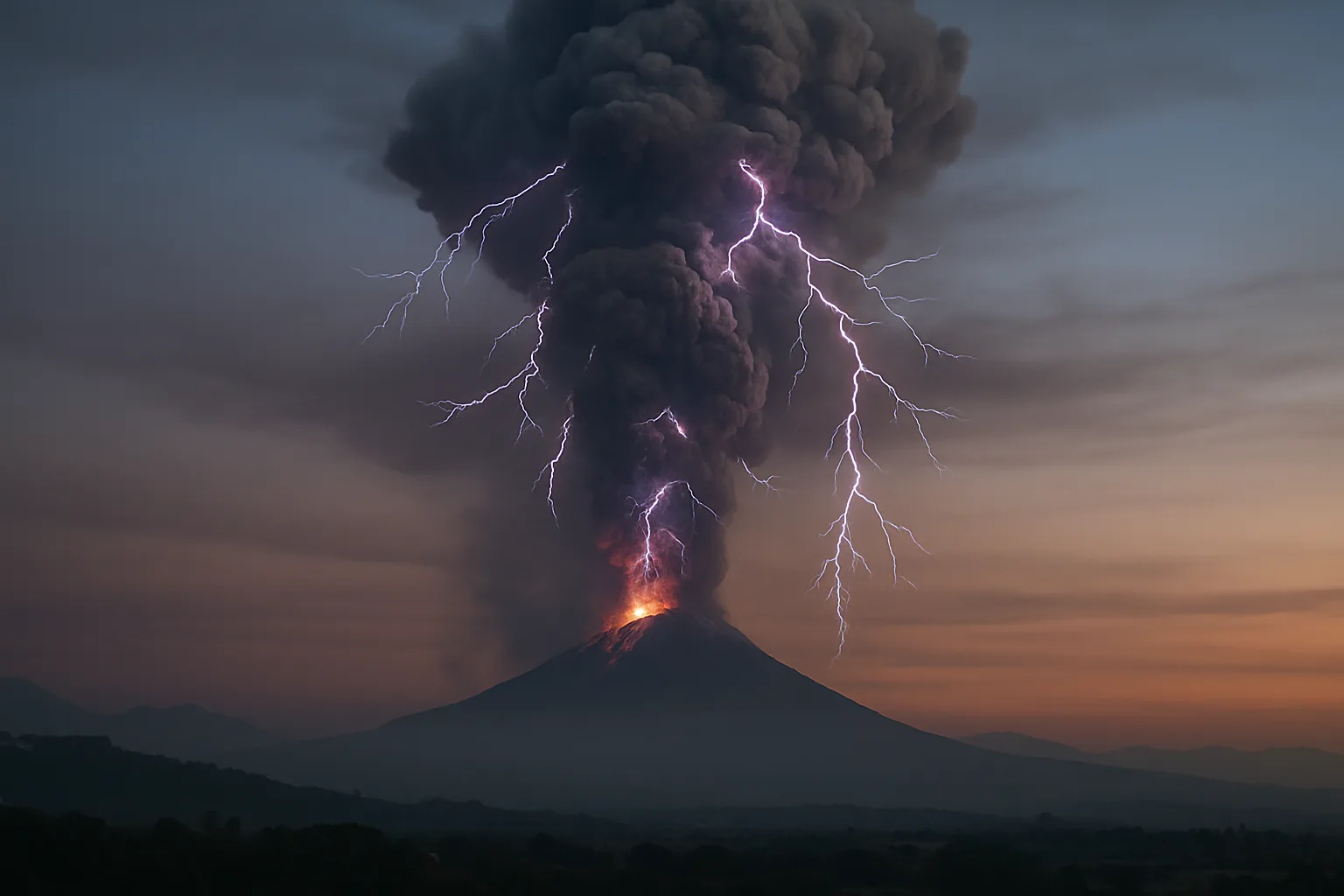
What Creates Lightning Inside Volcanic Ash Clouds?
Volcanic lightning begins when ash, ice, and turbulent air separate electrical charges inside an eruption plume. Here’s how the flashes form—and what they reveal.
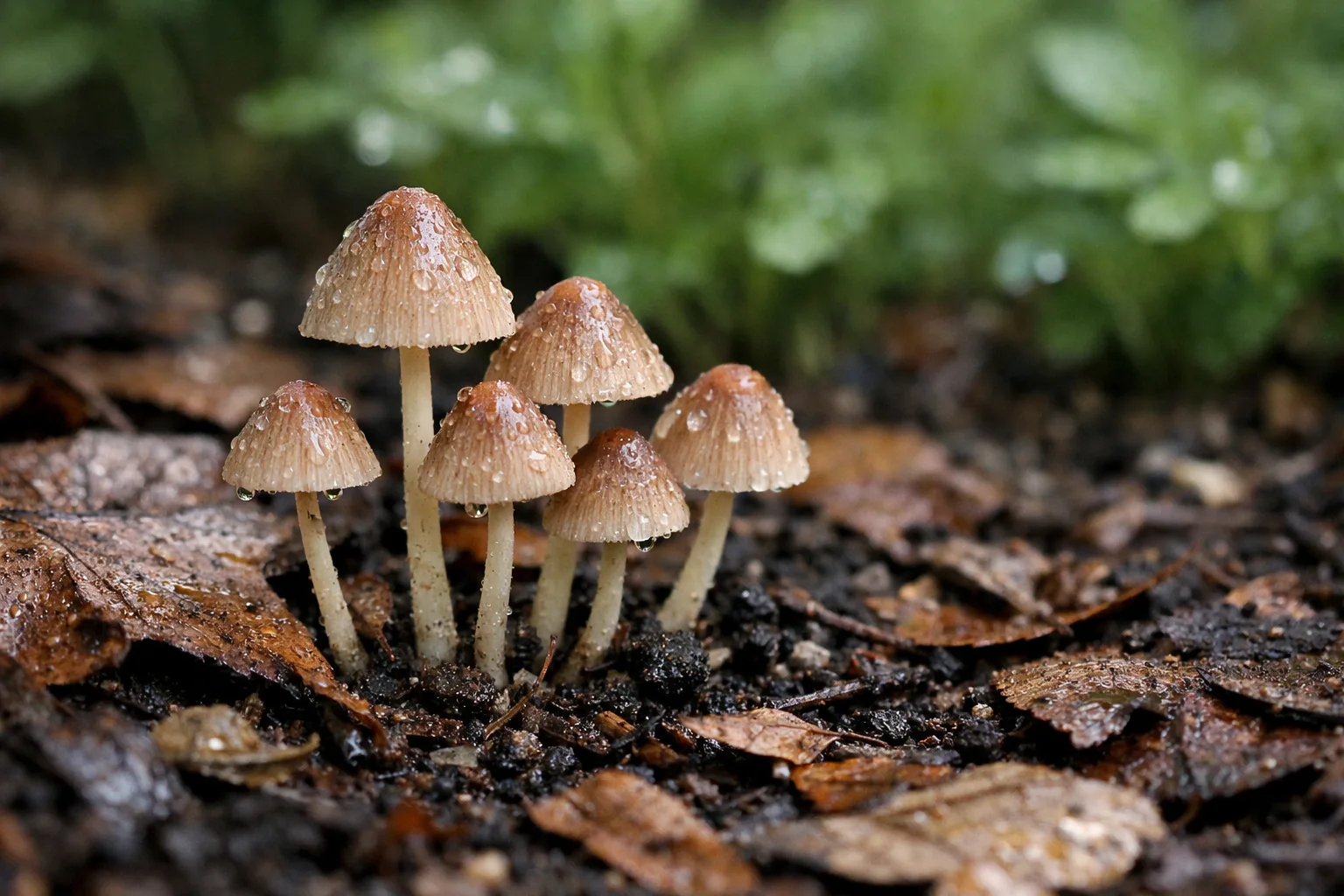
How Do Mushrooms Seem to Appear Overnight?
Mushrooms don’t grow from nothing in a single night. Their hidden fungal network can produce visible fruiting bodies quickly when conditions are right.
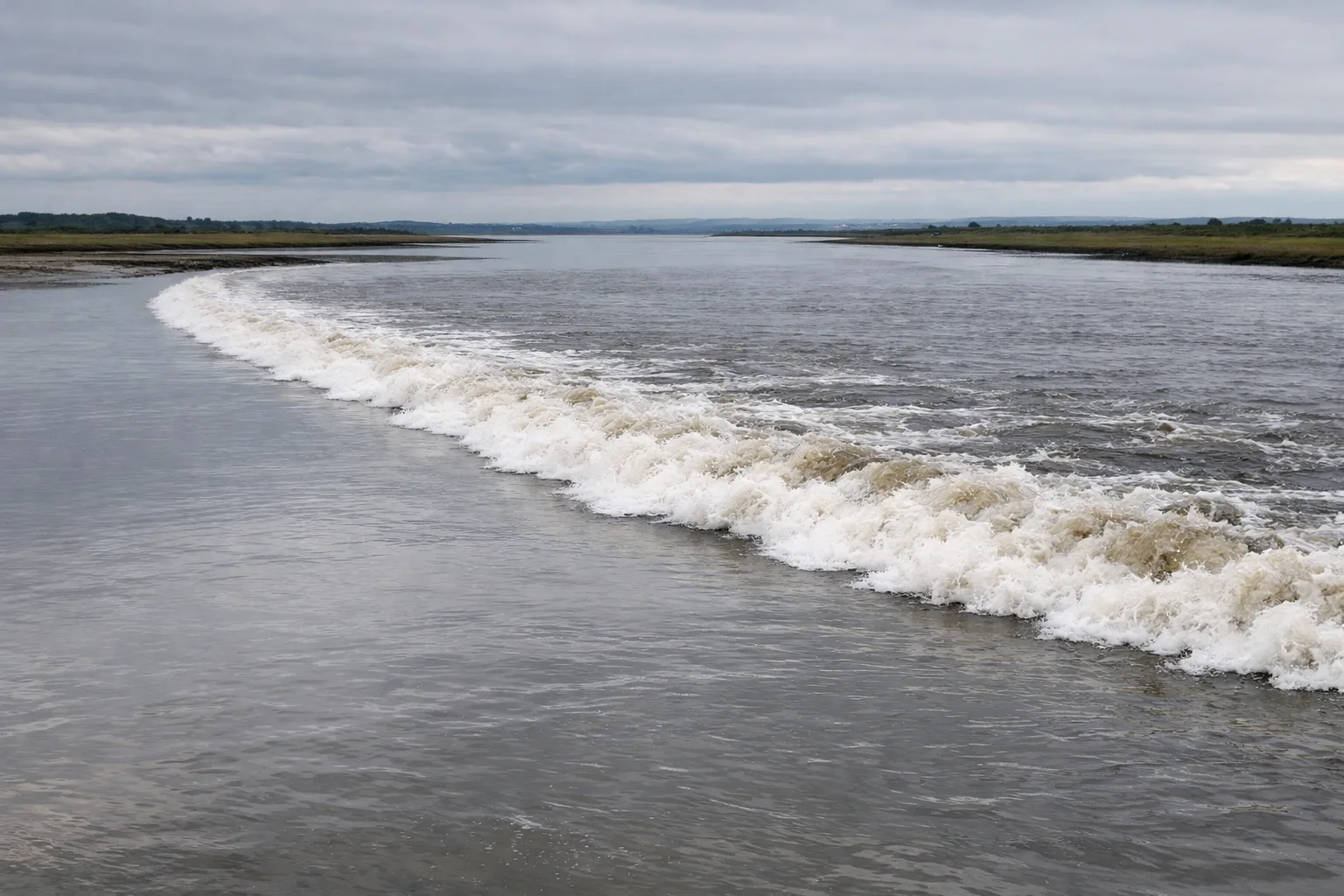
How Tidal Bores Send Waves Upstream
A tidal bore forms when a rising tide is funneled into a shallow river mouth, steepening into a moving front that can surge against the river’s flow.