Why Flamingos Stand on One Leg
By WowPebble Editorial
Flamingos may tuck one leg up to conserve body heat, but temperature is only part of the story. Their anatomy may also make a one-legged stance surprisingly easy.
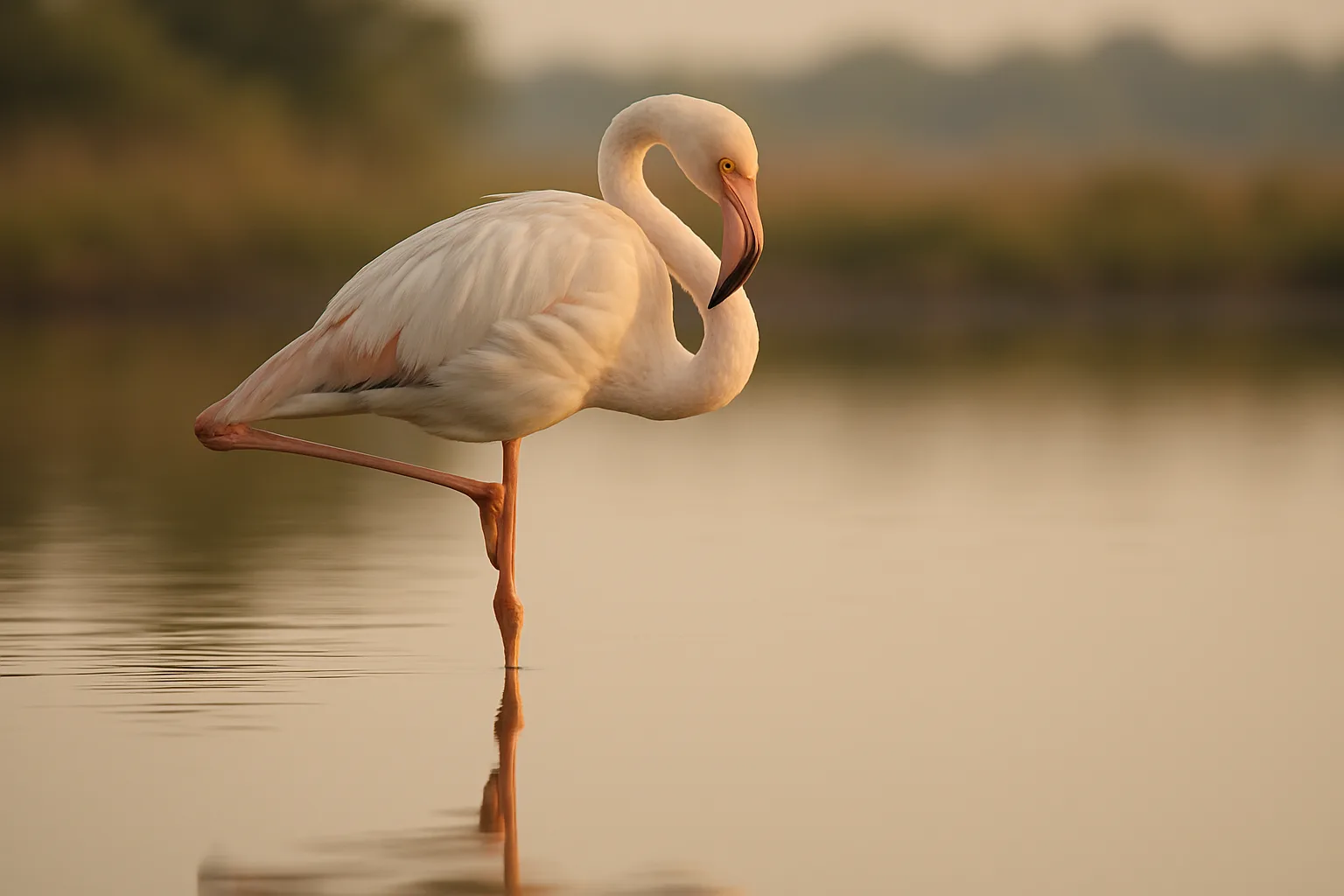
Flamingos can rest on one leg with structural support that may reduce the need for active muscular effort. That addresses how the posture is supported, rather than proving why every bird chooses it. Heat conservation is a separate proposed explanation, and no single cause has been established for every one-legged stance.
Keeping warm in the water
Flamingos often feed and rest in shallow water, where their long, mostly bare legs are exposed to the surroundings. Water can draw heat away from a body faster than air does. Tucking one leg beneath the body and feathers reduces the amount of limb exposed, which may help limit heat loss.
This is an example of thermoregulation: the way an animal maintains a suitable body temperature. The leg held close to the body can benefit from its warmth, while the other remains in the water or air. Whether temperature explains a particular change of posture requires separate evidence; an observed switch alone does not demonstrate its purpose.
The idea makes practical sense, but it should not be treated as a complete answer. Flamingos also stand on one leg on dry ground, and the pose is not limited to especially cold conditions. Temperature may influence when they choose to tuck a leg, but it cannot by itself explain every instance.
A stance that may take less effort than it looks
Chang and Ting’s 2017 study combined experiments on flamingo cadavers with observations of living birds. The cadaver experiments showed passive one-legged weight support. The live-bird observations addressed balance behaviour; these are different kinds of evidence.
The reported reduction in live-bird sway compared quiescent with alert behaviour during one-legged standing. It does not establish that living birds were more stable on one leg than on two. Nor does observing small sway directly measure muscle activity or prove that no active muscular effort is used.
This does not mean that a flamingo is simply locked in place or never uses its muscles. It does suggest that standing on one leg may be surprisingly economical. If the posture is comfortable and stable, the bird has little reason to put both feet down just because a human would find the pose tiring.
The leg that bends the “wrong” way
Part of the visual puzzle comes from flamingo anatomy. What looks like a backward-bending knee is actually the bird’s ankle joint. Its true knee is higher up, close to the body and usually hidden by feathers. The long, visible lower portion of the leg gives the bird its distinctive shape, but it can make the joints difficult to interpret at a glance.
When a flamingo lifts one leg, it draws the foot up toward its body. The standing leg supports its weight, while the tucked leg stays close to the feathers. A flamingo can shift from one side to the other, and the change may be so smooth that it is easy to miss from a distance.
More than a sleeping pose
Flamingos are often pictured standing on one leg while asleep, but they also adopt the posture while resting or simply standing around. It is one of several ways they can pause without needing to lie down. A group of birds may look remarkably still, though individuals shift, preen, feed and change legs over time.
The pose is not unique to flamingos. Other birds also stand on one leg, especially when resting. For a long-legged waterbird, keeping one limb tucked close may be useful in surroundings where the legs are exposed to cold water or air. Flamingos have made the stance particularly familiar because they spend so much time in open, shallow wetlands, where their bright bodies and long legs are easy to see.
Why not stand on both legs?
Standing on two legs might seem like the obvious choice for a large bird. But a flamingo’s balance is not necessarily improved by putting both feet down. If its body and joints can support a one-legged stance passively, lifting a foot may not demand much extra effort. Meanwhile, keeping one leg tucked can reduce exposure to the elements.
There is also no need to assume that every flamingo is making a deliberate calculation. Animals adopt postures that work for their bodies and surroundings. A bird may stand on one leg because the position is comfortable, helps conserve warmth, or both. The reasons can overlap, and they may vary with the weather, the bird’s activity and where it is standing.
A small pose with a bigger lesson
The flamingo’s one-legged stance is a useful reminder that appearances can mislead. What looks like an impressive balancing act may be a naturally stable resting position. And what seems to be a simple trick for staying warm may also reflect the bird’s anatomy and the conditions around it.
The evidence separates the mechanics of supporting a posture from the reasons a bird adopts it. Passive support and quiet balance do not establish a universal motive. Heat conservation remains a proposed explanation here, rather than a demonstrated purpose for every one-legged stance.
You might also like

How Do Mushrooms Seem to Appear Overnight?
Mushrooms don’t grow from nothing in a single night. Their hidden fungal network can produce visible fruiting bodies quickly when conditions are right.
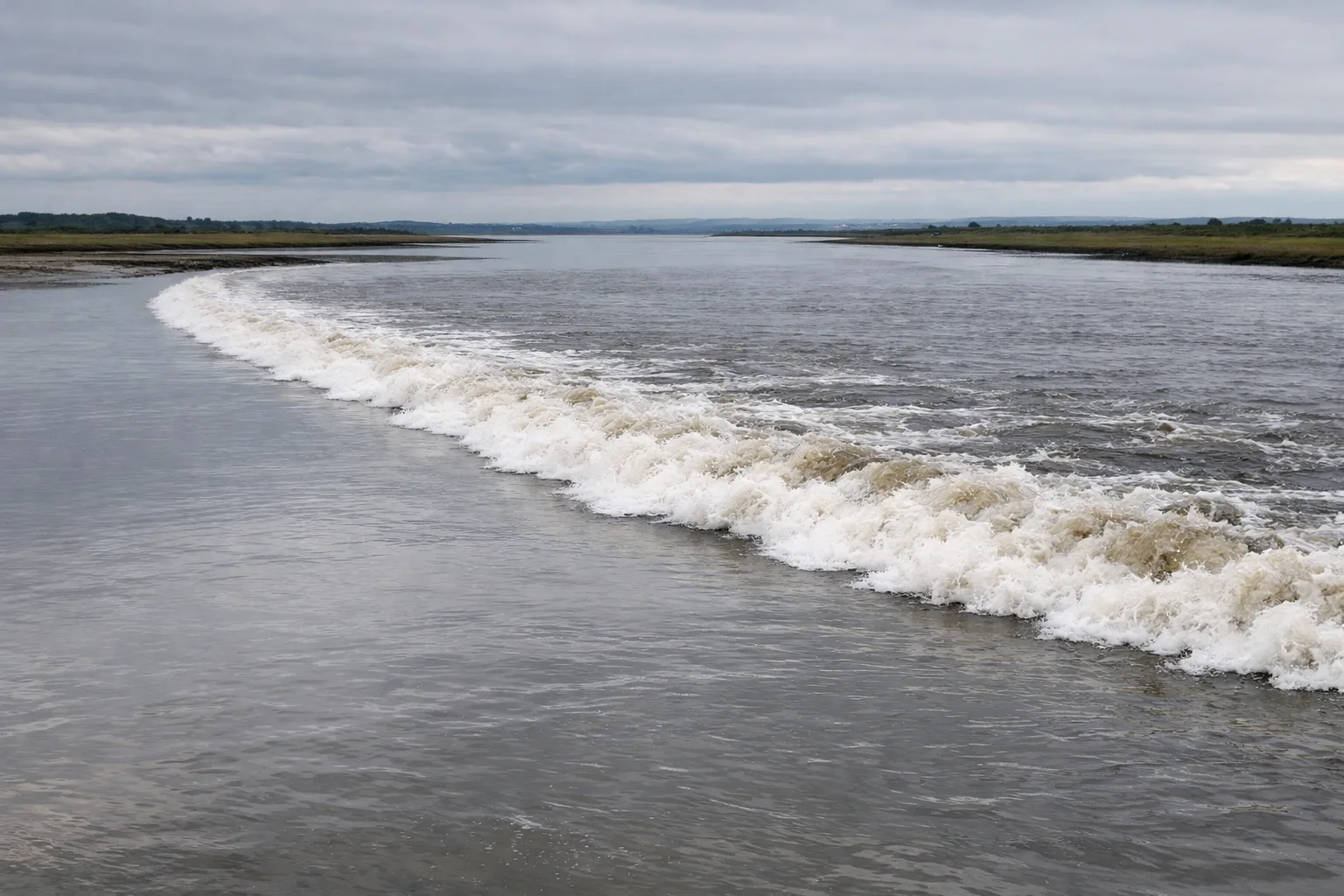
How Tidal Bores Send Waves Upstream
A tidal bore forms when a rising tide is funneled into a shallow river mouth, steepening into a moving front that can surge against the river’s flow.
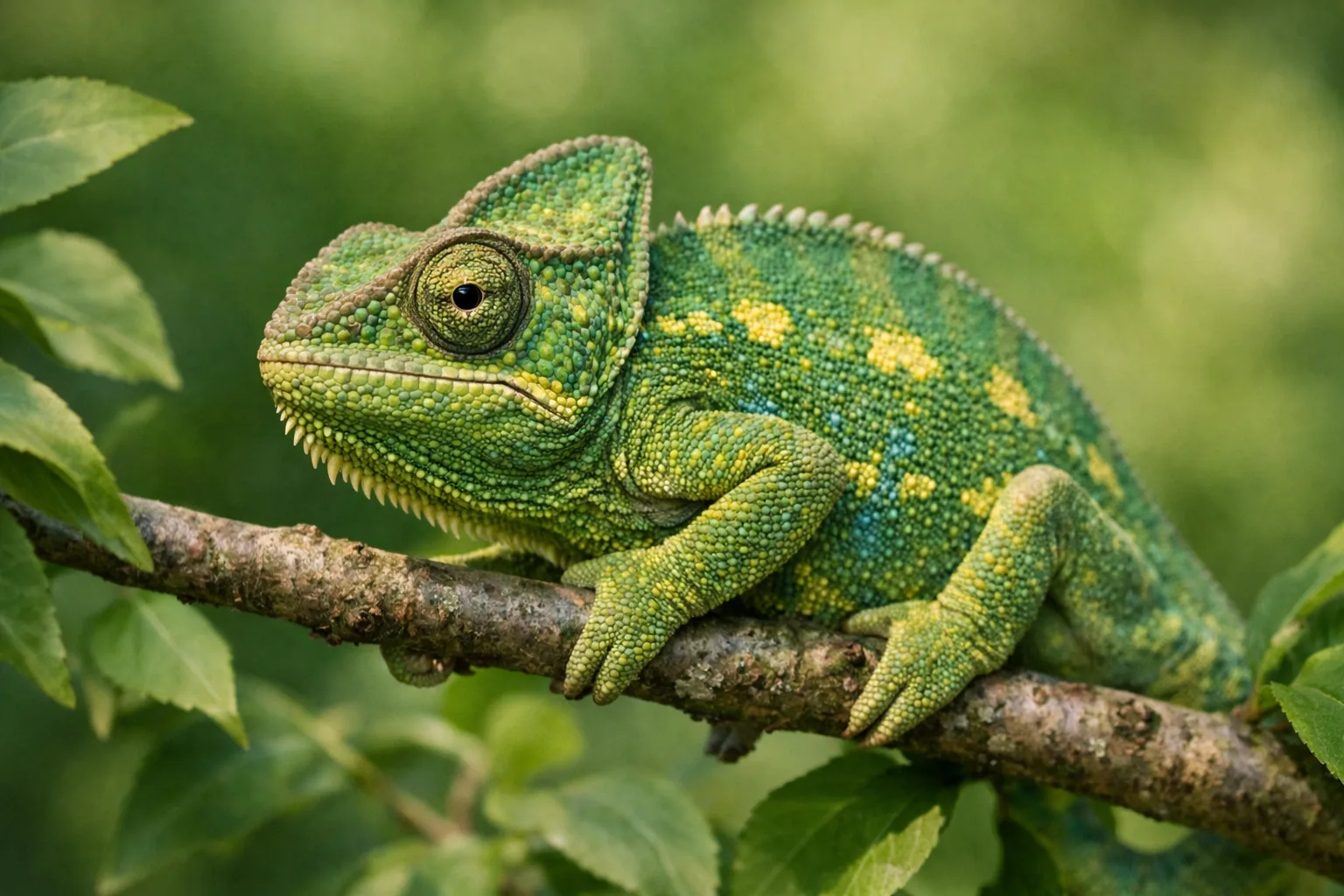
Why Chameleons Change Color—and What the Colors Signal
Chameleons change color to communicate, respond to temperature and light, and sometimes blend in. Their shifting shades come from both pigments and remarkable skin cells.