Why Do Some Bridges Have Gaps Between Their Sections?
By WowPebble Editorial
Those bumps and seams on a bridge have a job: they let the structure move safely as temperatures change, traffic passes, and materials slowly shift.
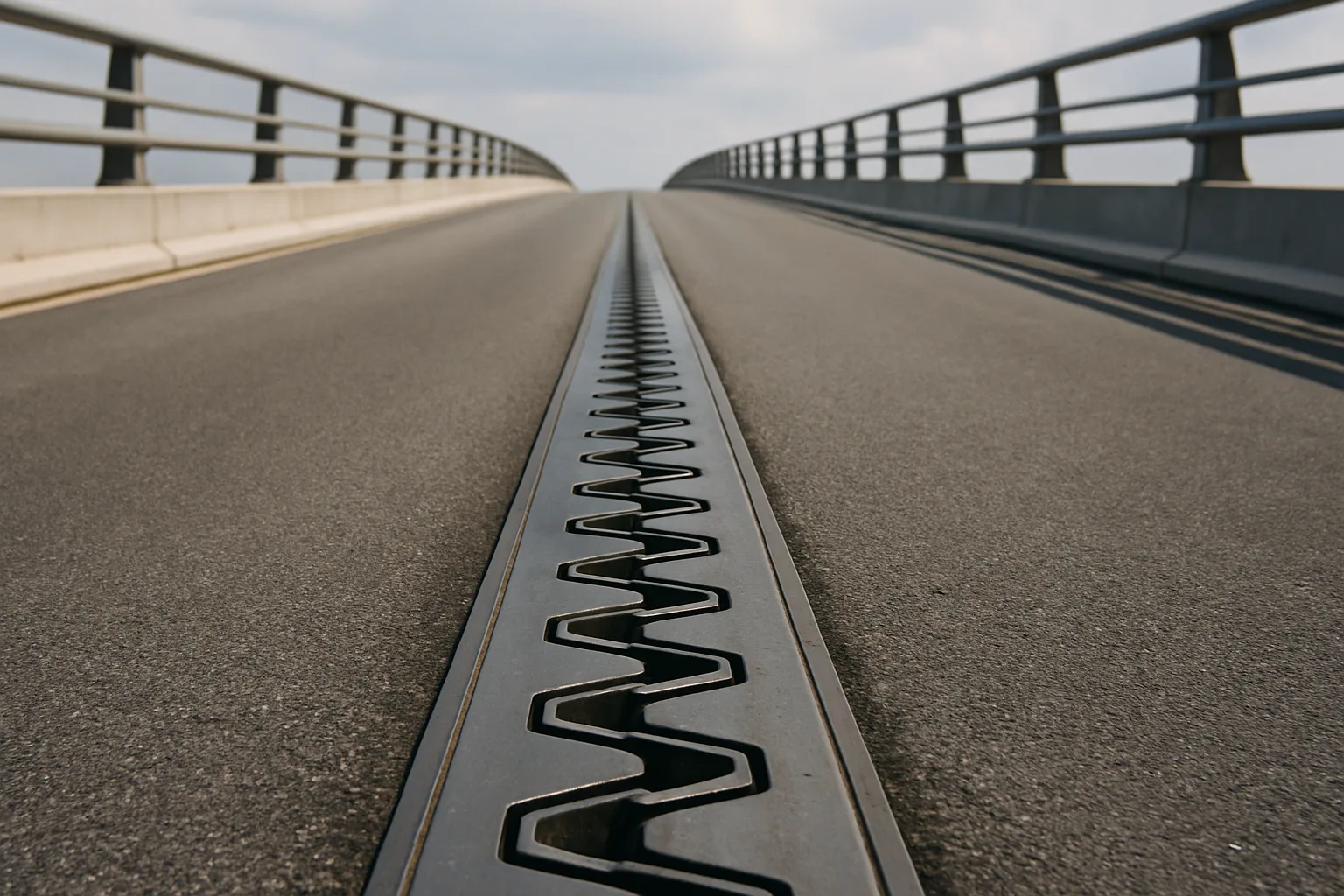
A bridge can look solid and still need room to move. The gaps you see between some sections are usually part of a carefully planned system that lets the bridge expand, contract, and shift slightly without damaging itself. They may also explain the familiar bump you feel when driving over a bridge seam.
These openings are called expansion joints. They are not signs that a bridge has been carelessly left unfinished. They are one way engineers manage the everyday movement of a structure that must carry heavy loads while coping with changing weather and time.
Why bridges need room to move
Materials change size as their temperature changes. Warm steel and concrete expand; when they cool, they contract. The movement in any one piece may be small, but a long bridge can experience enough change for that movement to matter. If its parts were locked rigidly together, temperature changes could create stress, leading to cracking, distortion, or damage to connections.
Temperature is only part of the story. Concrete can shrink as it cures and continue to change gradually over time. Under sustained loads, materials may also deform slowly, a behavior known as creep. Traffic adds repeated forces, while braking and accelerating can push or pull on the deck. In some places, engineers must also account for ground movement, including movement caused by earthquakes.
A bridge needs to carry these forces safely, not remain perfectly still. Expansion joints provide controlled places for certain parts of the deck to move relative to one another or to the road at the bridge’s ends.
What an expansion joint does
An expansion joint is a connection designed to accommodate movement while keeping the roadway usable. Depending on its design, it may include metal plates, flexible seals, sliding surfaces, or interlocking pieces. Some joints are easy to spot as a narrow line across the road; others are larger assemblies that allow more movement.
The size of the opening is planned rather than guessed. Engineers consider the bridge’s length, materials, expected temperature range, structural layout, and the amount of movement the joint must handle. A joint has to leave enough room for the bridge to expand without the ends pressing dangerously against each other. It must also allow contraction without opening so far that the joint can no longer function properly.
Joints are only one part of how a bridge moves. Bearings—components between parts of the structure, such as the deck and its supports—can allow controlled sliding or rotation. In many bridges, bearings and expansion joints work together: the bearings accommodate movement at supports, while joints manage movement at chosen boundaries in the deck.
Why the gaps are not all the same
The joint needed for a short bridge may be quite different from one on a long bridge with a larger movement range. Some designs use flexible material to seal a narrow opening. Others use interlocking steel plates or finger-like elements that reach across a wider gap while still allowing the bridge sections to shift.
A joint also has to deal with water and debris. Rain, grit, leaves, and road salt can collect around it, so many joints include seals or drainage features. These help keep water from reaching parts of the structure where it could contribute to corrosion or other damage. They cannot make the joint maintenance-free, however, and seals can wear out or become damaged.
The visible gap is therefore only part of the system. The joint must accommodate movement, support traffic, provide a reasonably smooth ride, and protect the structure as well as it can.
Why some bridges have no obvious gaps
Not every bridge has a conspicuous seam between its sections. Some are built with a continuous deck, or use a structural arrangement that reduces the need for visible joints along the roadway. Movement can instead be managed through the design of the deck, supports, bearings, and connections. There may still be a joint at an end of the bridge, where the deck meets the approach road, even if the main span looks seamless.
The number and position of joints depend on the bridge’s design. Adding joints is not automatically better: each one is a component that must withstand repeated traffic and weather. Engineers balance the movement a structure needs to accommodate against the practical demands of constructing and maintaining its connections.
Why driving over a bridge joint can feel bumpy
A joint has to make a transition between sections of roadway, and that transition can be felt by vehicle tires. A small change in level, a metal surface, or the shape of the joint can produce a bump or a brief clatter. The noise is often most noticeable when traffic passes over a joint at speed.
A bump does not, by itself, show that a bridge is unsafe. But joints can wear, loosen, lose their seals, or become uneven, so transportation agencies inspect and maintain them. A damaged joint can make the ride rougher and allow water or debris into places they should not go. Repairs may involve replacing seals or other parts, adjusting the roadway transition, or installing a different joint design.
A small opening with a big responsibility
Expansion joints may look like interruptions in a bridge, but their purpose is the opposite: they help the structure work as intended. A bridge must remain strong while its materials respond to heat, cold, traffic, and gradual change. Giving those movements a controlled place to happen can reduce stress elsewhere in the structure.
So when a vehicle crosses a seam with a familiar thump, it is passing over a piece of practical engineering. The gap is not wasted space. It is room that the bridge needs to move.
You might also like

Why Do Bricks Have Holes Through the Middle?
Those holes in bricks are no accident. They help make bricks lighter and more efficient to produce, and can serve practical purposes once the wall is built.
Why Sidewalks Have Raised Bumps Near Crossings
Those raised sidewalk bumps are tactile warnings. They help blind and low-vision pedestrians detect where a sidewalk ramp meets the roadway.

Why Do Mirrors Reverse Left and Right but Not Up and Down?
A mirror does not actually swap left and right. It reverses the direction pointing into the glass—and the way we compare ourselves with the reflection creates the illusion.