Why Do Bricks Have Holes Through the Middle?
By WowPebble Editorial
Those holes in bricks are no accident. They help make bricks lighter and more efficient to produce, and can serve practical purposes once the wall is built.
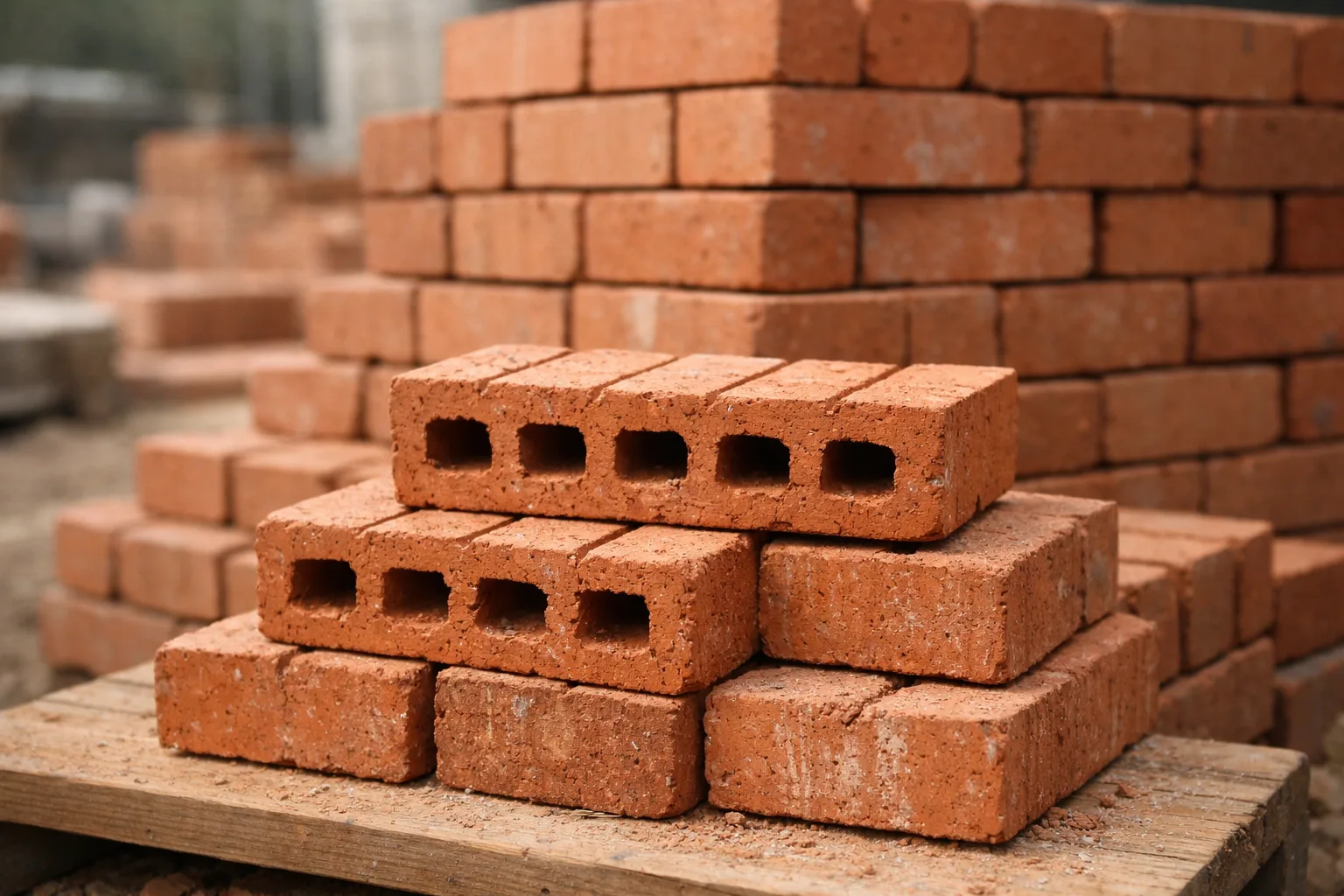
A brick with holes through its middle may look unfinished, but those openings are part of its design. They let manufacturers use less clay and produce lighter units, while also helping heat circulate during firing. Depending on the type of brick and how it is used, the holes can provide benefits in the finished wall, too.
The openings are usually called cores or perforations. They are a feature of many modern fired-clay bricks, though not all bricks have them. Solid bricks remain useful, and the right choice depends on the job, local building practices, and the design of the wall.
Less clay, lighter bricks
One straightforward reason for making holes is to reduce the amount of clay in each brick. Less material means a lighter product, which is easier to handle and transport. It also means manufacturers can make more units from a given amount of raw material.
The openings do not make a brick simply “stronger” or “weaker” in every situation. Strength depends on the brick’s shape, the thickness of the material between its holes, its orientation in the wall, and how it is supported. A perforated brick is engineered to carry loads through the solid sections around its cores. It needs to be laid in the position intended for it, rather than treated as a solid block with a few convenient gaps.
Lighter bricks can make construction easier for workers, especially when many units must be lifted and placed. But the holes are not just a shortcut to a lighter product: their size and arrangement are chosen to balance weight, strength, manufacturing needs, and the brick’s intended use.
Helping bricks dry and fire
Most clay bricks are shaped while the clay is still workable, then dried and fired in a kiln. If a thick piece of clay dries unevenly, its outside can shrink before its interior has lost enough moisture. That difference can contribute to cracking or distortion. Holes reduce the thickness of clay within the brick and give moisture a shorter route out during drying.
Firing also matters. Heat needs to reach through a load of bricks, and openings can help air and heat move around and through individual units. That can support more consistent firing, depending on the kiln and the brick design. The holes do not do the firing by themselves, of course: kiln conditions, clay composition, and the way bricks are stacked all play a part.
Many perforated bricks are made by pushing clay through a shaped opening, a process called extrusion. The shape of the opening helps form the brick’s cores as the clay is pushed out. The long clay column is then cut into individual bricks. This method is well suited to making large numbers of units with a consistent shape.
What the holes do in a finished wall
Once a brick is laid, its cores may contribute to some practical features of the wall. A brick with less solid clay in it weighs less than an otherwise similar solid one. In some wall systems, hollow spaces can also help limit the flow of heat through the material. The actual thermal performance depends on the brick’s design and the whole wall, including mortar, insulation, and any air gaps. A few holes do not automatically make a wall well insulated.
Some hollow masonry units are designed so that cores can be filled with grout or used with reinforcing bars. This can help form reinforced sections of a wall. But that does not mean the holes in every ordinary perforated brick are intended for reinforcement. Builders follow the requirements for the particular product and wall system; the shape and purpose of cores vary.
The openings can also affect how mortar interacts with a brick. In some designs and laying methods, mortar can enter the perforations and help create a mechanical connection. In practice, the bond depends on the brick’s shape, the mortar, and how the masonry is built. It is not a reason to assume that any brick with holes should be laid in any direction or with mortar pushed into every opening.
Why not make every brick hollow?
A hollow design is not automatically better. Some walls need solid units, and some bricks are designed to be used with their cores in a particular orientation. Cutting or drilling a brick can weaken it, and choosing a product based only on its weight or appearance can lead to the wrong material for a project.
There is also a difference between a perforated brick and a hollow block. A perforated brick has holes through it but still has substantial clay around them. Larger hollow masonry units have wider cavities and are designed as a different kind of building product. The names and exact definitions can vary by region, so building plans and product specifications matter more than appearance alone.
Solid bricks have a long history and are still used where their properties suit the work. Bricks made from different materials, such as concrete, can have different shapes and purposes. The familiar row of holes is especially associated with many modern clay bricks, not with every brick ever made.
The short answer
The holes are there mainly to make bricks more efficient to produce and easier to handle: they reduce the amount of clay, cut weight, and can help with drying and heat movement during firing. In certain wall systems, the cores may also contribute to bonding, reinforcement, or thermal performance.
So the next time you see a brick with openings down its middle, you are looking at a small piece of practical engineering. Those gaps are designed around the material that remains, helping a fired block of clay do its job without requiring every brick to be completely solid.
You might also like

Why Some Everyday Objects Have Strange Little Holes
Learn how pen vents, plant-pot drains, window openings and SIM-tray holes work, with documented examples and clear limits for different products.
Why Are Manhole Covers Round? The Clever Logic Beneath the Street
Round manhole covers are more than a familiar street detail. Their shape helps keep them from dropping through openings and makes them easier to handle.

Why Do Some Bridges Have Gaps Between Their Sections?
Those bumps and seams on a bridge have a job: they let the structure move safely as temperatures change, traffic passes, and materials slowly shift.