What Creates the Holes in Swiss Cheese? The Science Behind Its Famous Eyes
By WowPebble Editorial
Swiss cheese’s signature holes are pockets of carbon dioxide made by helpful bacteria as the cheese ripens. Here’s how tiny bubbles become famous eyes.
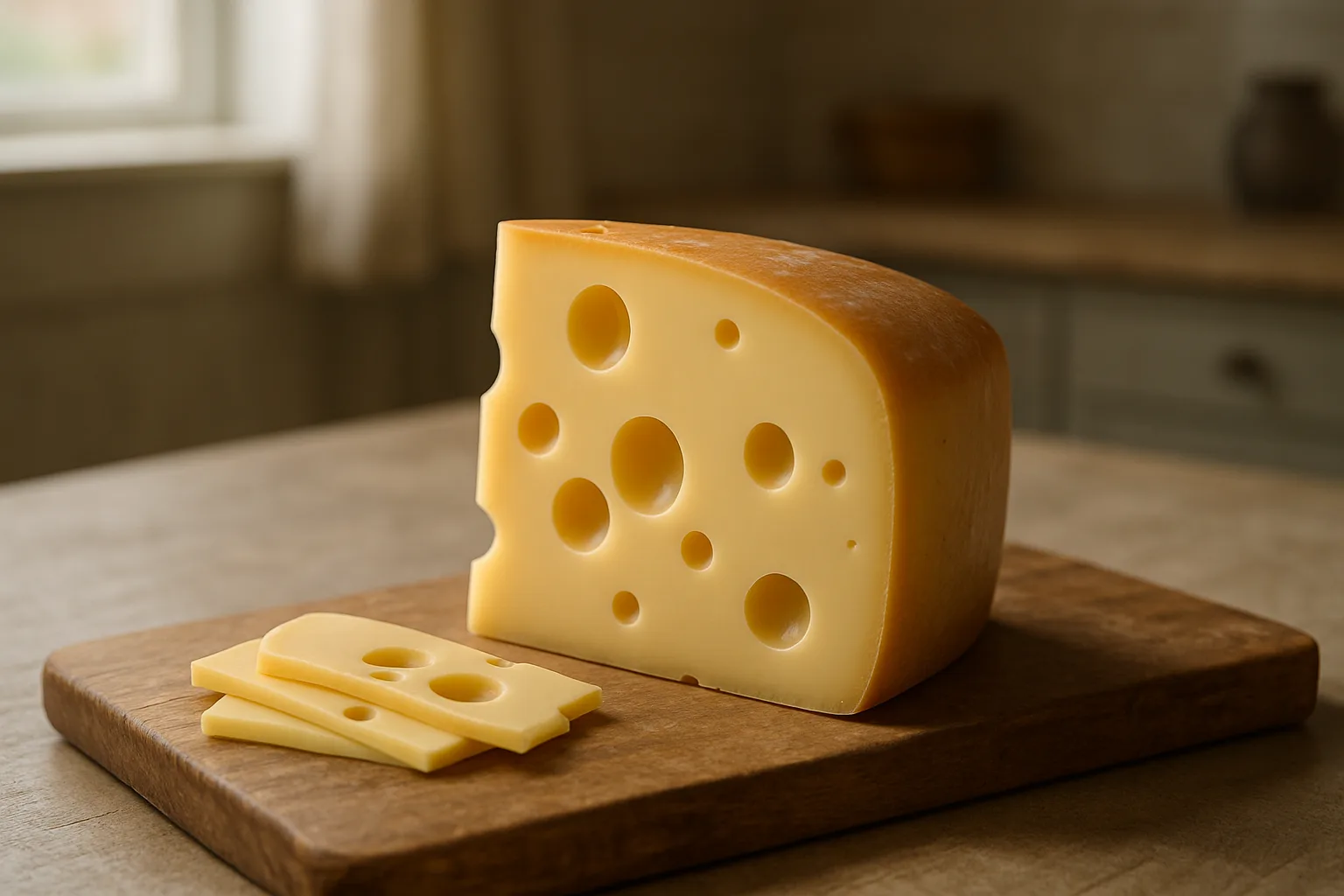
The holes in Swiss cheese aren’t drilled into the wheel or carved out during production. They form naturally as the cheese ripens: helpful bacteria make carbon dioxide, and the gas gathers in pockets inside the curd. As those pockets grow, they become the smooth, round openings that give some Swiss-style cheeses their instantly recognizable appearance.
Cheesemakers call these openings eyes. The process behind them is a small but striking example of how microbes can shape a food’s texture as well as its flavor.
The bacteria that make the gas
Cheese starts with milk, but turning it into a firm wheel involves several steps. Bacteria are added to help ferment the milk, and rennet helps it set into a gel. The gel is cut into curds, which are then heated, drained and pressed. In cheeses such as Emmental—the Swiss cheese especially known for its large eyes—the curd is later aged under conditions that encourage further fermentation.
The Emmentaler AOP consortium’s production account connects its characteristic eyes and flavour with propionic acid fermentation. In this type of cheese, propionibacteria use lactate formed earlier in fermentation; products include propionic acid, acetic acid and carbon dioxide. Gas production and the availability of places for bubbles to start are separate parts of eye formation.
Carbon dioxide diffuses through the cheese: some remains dissolved, some escapes and some enters small gas nuclei. Where enough gas accumulates and the cheese texture permits expansion, a pocket can grow into an eye. It is not a miniature balloon that simply fills until it can hold no more.
How a tiny bubble becomes an eye
Gas needs a place to collect as well as a source. In a 2026 experimental study, available from the authors’ Agroscope repository, researchers used synthetic hollow fibres and tube pieces to test how trapped air can start eye formation. Carbon dioxide can diffuse into these starting points. That distinguishes bubble nucleation from gas production; it does not mean every cheese contains hay or that particles themselves produce the gas.
As carbon dioxide continues to form, a pocket grows around its starting point. The curd is firm but still pliable enough to stretch, so the pocket can enlarge without simply breaking apart. That is why the eyes are often round or oval and have smooth edges. The exact shape depends on the structure of the curd and how the gas develops during aging.
Not every gas nucleus becomes a visible eye. Growth depends on gas supply, diffusion and the cheese’s texture. The Agroscope experiment distinguishes these factors; a particle cannot substitute for the bacteria that generate carbon dioxide.
Why some wheels have bigger holes than others
Cheesemakers can influence the eyes by managing the recipe and ripening process. The bacterial cultures, the curd’s moisture and acidity, the salt, and the temperature during aging all affect how quickly gas forms and how easily the cheese can stretch around it. A warmer stage of ripening can encourage bacterial activity, while the wheel’s texture affects whether gas gathers in large pockets or remains more dispersed.
Small changes in milk handling can matter too. Cleaner, more finely filtered milk may contain fewer tiny particles that can serve as starting points for bubbles. That can contribute to smaller or less numerous eyes. But particles are only part of the picture: cheesemaking conditions and the activity of the cultures also play important roles.
The result is not a simple rule that more holes always mean better cheese. An eye’s size and distribution are characteristics that cheesemakers aim to control for a particular style. A wheel with fewer or smaller eyes may still be properly made and flavorful.
Not all Swiss cheese has holes
“Swiss cheese” can mean different things. In the United States, the name often refers to a mild, pale cheese made in an Emmental-inspired style. In Switzerland, Emmental is a specific cheese, and the country makes many other cheeses with their own textures and methods. Some have small eyes, some have few or none, and some are soft or crumbly rather than firm and hole-filled.
Even Emmental’s eyes can vary from one wheel to another. The familiar large holes are associated with a particular style and production method, not with every cheese made in Switzerland. So a hole-free slice sold as Swiss-style cheese isn’t automatically a mistake; it may simply be a style with fewer visible eyes.
Do the holes change the taste?
The holes themselves are pockets of gas, so they aren’t little reservoirs of a separate flavor. The fermentation that creates them does affect the cheese’s taste: the bacteria produce acids and other compounds as they ripen the wheel. Those changes help give Emmental its characteristic savory, slightly tangy flavor.
The eyes also affect the eating experience. They break up the solid texture and can make a slice feel different from a cheese with a completely uniform interior. But appearance alone doesn’t tell you everything about flavor or quality. The milk, cultures, recipe and aging all contribute to what you taste.
A natural part of the cheesemaking process
Those familiar holes are a visible record of fermentation at work. Bacteria transform compounds in the curd, carbon dioxide collects at tiny starting points, and the cheese slowly stretches around the growing bubbles. What looks like a quirky design is really the result of carefully managed aging—and of gas finding just enough room to make itself seen.
You might also like
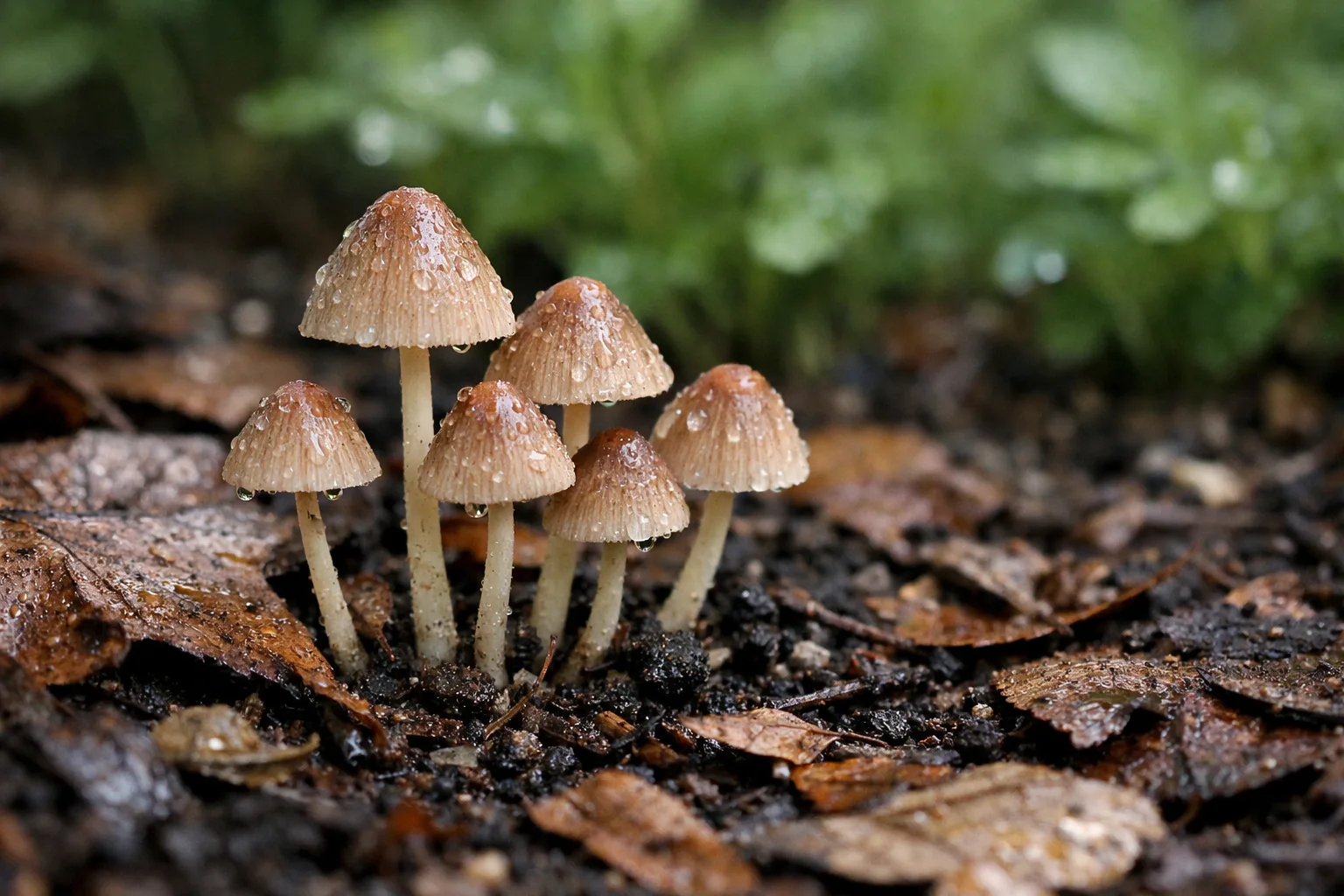
How Do Mushrooms Seem to Appear Overnight?
Mushrooms don’t grow from nothing in a single night. Their hidden fungal network can produce visible fruiting bodies quickly when conditions are right.

How Tidal Bores Send Waves Upstream
A tidal bore forms when a rising tide is funneled into a shallow river mouth, steepening into a moving front that can surge against the river’s flow.
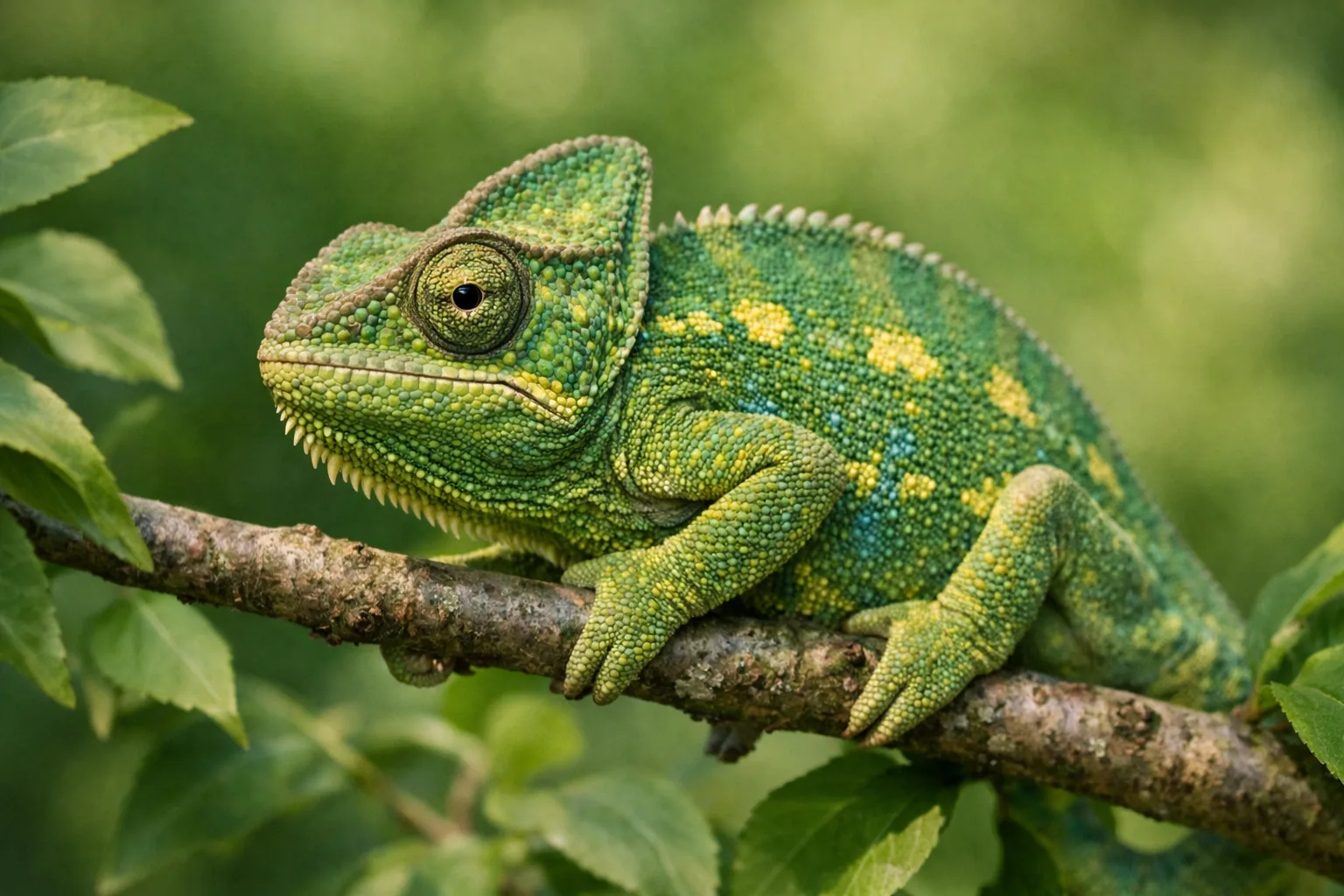
Why Chameleons Change Color—and What the Colors Signal
Chameleons change color to communicate, respond to temperature and light, and sometimes blend in. Their shifting shades come from both pigments and remarkable skin cells.