How to Use a Torque Wrench Without Overtightening a Bolt
By WowPebble Editorial
A torque wrench helps you tighten fasteners to a specified limit—but only if you set it correctly, pull smoothly, and stop at the right moment.
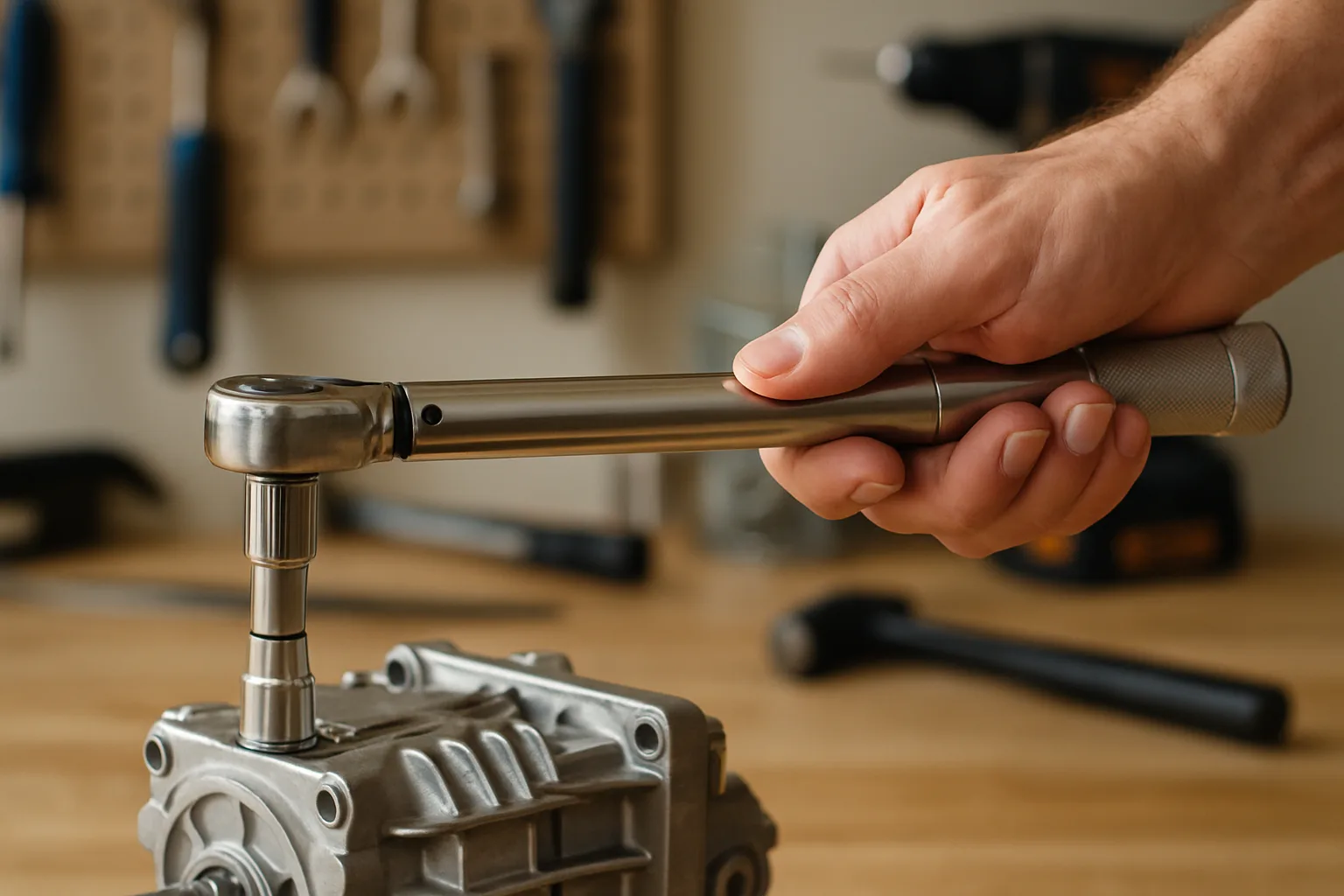
A bolt can feel tight before it reaches its specified torque, and further turning can damage a fastener or the part it holds. A torque wrench indicates or signals applied torque according to its design; an ordinary click wrench does not prevent you from continuing to pull after the signal. You must stop at the specified value using the correct tool and procedure.
That sounds simple, but torque is not a universal measure of how secure a bolt is. The right value depends on the fastener and the parts being joined, while friction from dirt, lubrication, or damaged threads can change how much clamping force a given torque creates. Here’s how to use a torque wrench carefully and get a more reliable result.
Find the correct torque specification first
Before picking up the wrench, find the torque specification for the exact fastener and job. Check the equipment’s service manual, manufacturer instructions, or a reliable repair guide. Do not guess based on how large the bolt looks, how tight it feels, or a general chart that may not match your application.
Specifications can depend on the bolt’s size and material, the material being fastened, and whether the threads are meant to be dry or lubricated. A value specified for dry threads may not be appropriate if you add oil or grease: lubrication reduces friction, so the same torque can produce more clamping force and potentially stretch or break the fastener. Threadlocker and other coatings can also affect the result. Follow the instructions for the specific assembly rather than adding or removing lubricant on your own.
Check the units as well. Torque may be listed in newton-metres (N·m), pound-feet (lb-ft), or inch-pounds (in-lb). These are not interchangeable numbers. If your wrench uses a different unit, convert carefully using a reliable conversion tool and make sure you have not confused inch-pounds with pound-feet.
Choose a wrench that fits the job
Torque wrenches work best within their stated measuring range. A wrench with a range that barely includes your target—or one designed for much higher torque—may not be the right tool. If the required value falls outside the wrench’s range, use an appropriate wrench rather than forcing the tool to do a job it was not designed for.
Common types include click, beam, and digital torque wrenches. A click wrench gives a noticeable click or release at the set torque. A beam wrench shows the reading on a scale as you apply force, while a digital wrench displays a value and may provide an alert. Whatever the type, read the manufacturer’s instructions: settings, locking mechanisms, and signals differ between models.
Use a well-fitting socket that fully engages the fastener. A loose or damaged socket can slip or round off the bolt head. Inspect the threads and mating parts, too. Cross-threaded, dirty, or damaged threads can give misleading results and should be addressed before tightening.
Set the wrench before tightening
On an adjustable wrench, set the target value using the scale or controls, then lock the setting if the model has a lock. Double-check the number and unit before you start. On a beam or digital wrench, confirm that you can read the scale or display clearly and that the device is ready according to its instructions.
Do not add a pipe to the handle. TEKTON’s instructions distinguish handle leverage from off-axis drive tools such as crowfoot adapters, which can change effective length and require a corrected setting. A straight socket extension is a different arrangement; use the instructions for the exact wrench and adapter rather than applying one correction to every accessory.
Tighten with a smooth, steady pull
Seat the socket squarely on the fastener. Hold the wrench at its designated grip point, usually marked on the handle. Applying force somewhere else can change the leverage and make the reading inaccurate.
Pull smoothly and steadily rather than jerking, bouncing, or striking the handle. Keep the force controlled and let the wrench do the measuring. With a click wrench, stop immediately when you feel or hear the click. Do not keep pulling to get a second click, and do not use the click as a signal to give the bolt “one last turn.” That extra movement is precisely how you can overshoot the target.
With a beam wrench, watch the scale as you apply force and stop when it reaches the specified value. With a digital wrench, stop at the indicated target or alert, following the maker’s instructions. Avoid rushing: a slow, even pull makes it easier to notice the reading or signal.
If a bolt needs to be tightened as part of a group—such as several fasteners holding a cover or wheel—follow the specified order and stages. Some assemblies call for tightening in a particular pattern or bringing all fasteners up to torque in steps. Tightening one bolt fully while leaving the others loose can put uneven pressure on the parts. The correct sequence is specific to the job, so consult the manual rather than assuming one pattern fits everything.
Why the “right feel” is not enough
Torque is the turning force applied to a fastener. In a simplified sense, it depends on how hard you pull and how far from the turning point you apply that force. But the wrench does not directly measure how tightly the joined parts are squeezed together. Much of the applied torque is used to overcome friction in the threads and under the bolt head or nut.
That is why a bolt tightened by feel can be unreliable even for someone with experience, and why changing thread lubrication can change the outcome. The wrench provides a controlled, repeatable way to apply the specified torque; it cannot compensate for the wrong specification, damaged threads, or an assembly prepared incorrectly.
Look after the tool
A torque wrench is a measuring instrument. Keep it clean and avoid impacts. For the micrometer type in TEKTON’s manual, storage is at the lowest printed scale value, not below it. Other designs may have different requirements, so use the instructions for your actual model rather than transferring that storage setting to a beam or electronic tool.
Calibration can drift over time, particularly after heavy use, impact, or rough handling. Follow the manufacturer’s guidance on inspection and calibration, and use a trustworthy service if the wrench needs checking. If it has been dropped or behaves inconsistently, do not assume it is still accurate.
A short checklist before the final pull
- Confirm the correct torque specification, unit, and tightening sequence.
- Check whether the specification calls for dry, lubricated, or otherwise prepared threads.
- Make sure the wrench’s range covers the target and the setting is locked if required.
- Use a sound, correctly seated socket and the wrench’s marked grip point.
- Pull smoothly, then stop at the wrench’s signal or specified reading.
Used this way, a torque wrench takes guesswork out of tightening. The safest habit is simple: prepare the joint as instructed, apply the exact specified setting, and stop as soon as the wrench tells you to.
You might also like

What to Keep in a Home Kit for a Power Outage
Build a practical outage kit with lighting, charged power banks, water, easy-to-eat food, essential medicines and supplies suited to your household.
How to Clean a Humidifier and Stop Mineral Buildup
Clean your humidifier regularly to remove scale and reduce residue. Learn how to descale it safely, care for filters and prevent mineral buildup.

How to Remove Burnt Food from a Stainless Steel Pan
Loosen burnt-on food from a stainless steel pan with hot water and gentle scraping. For stubborn residue, add baking soda and scrub without damaging the finish.