How to Remove Water Rings from Wood Furniture Without Making Them Worse
By WowPebble Editorial
A pale water ring may involve the finish, but colour alone cannot diagnose it. Check the surface and care guidance before trying a treatment that could worsen it.
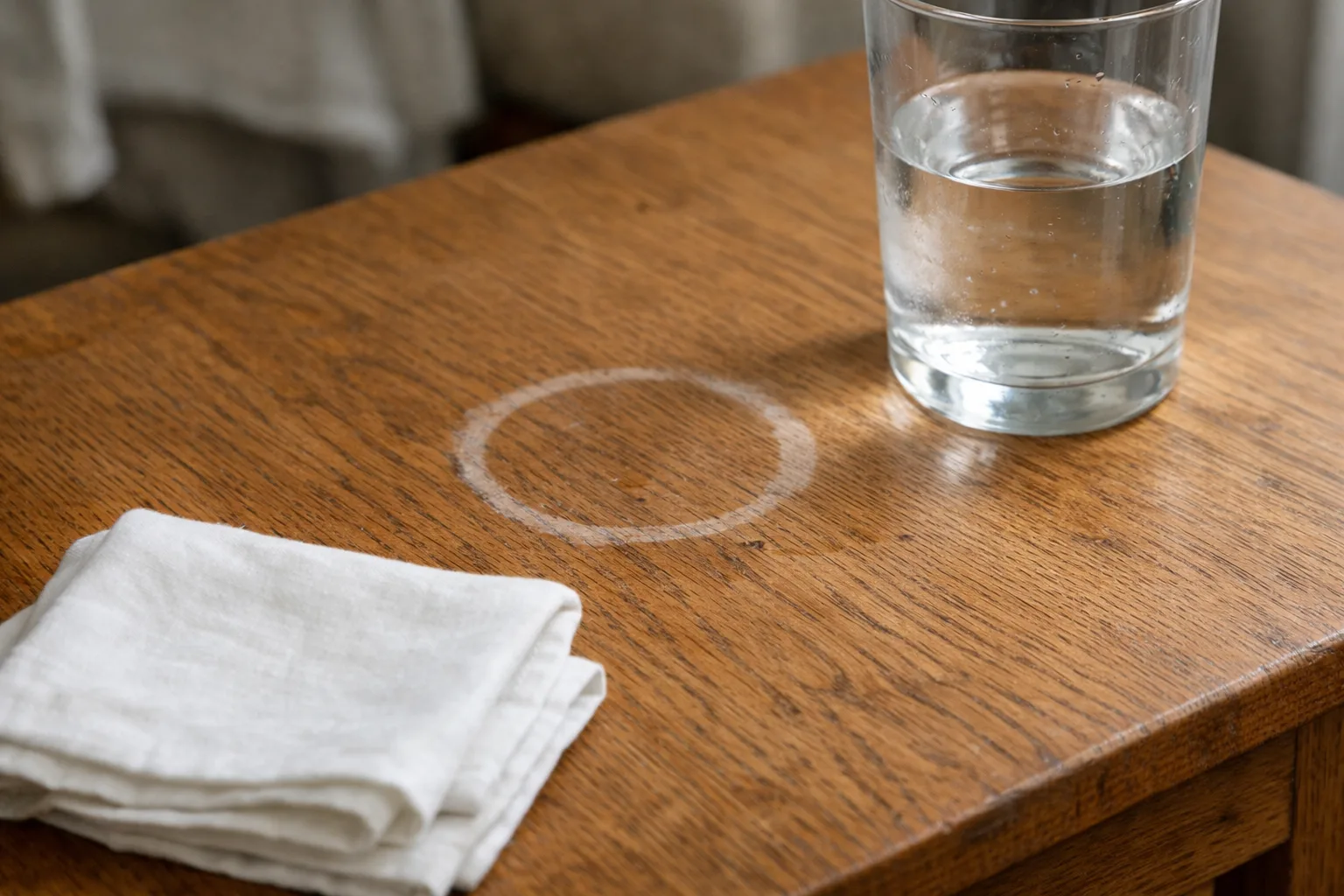
A glass left on a wooden table can leave a cloudy ring that seems to appear out of nowhere. The good news is that many pale water marks affect only the finish, so they may fade with careful treatment. The important first step is to identify what kind of mark you have: a white haze is different from a dark stain, and using the wrong fix can cause more damage than the ring itself.
First, identify the water mark
The Canadian Conservation Institute identifies cloudy white patches as a possible result of water on a finish. Colour alone, however, does not identify the coating or prove how deep the damage runs. Treat it as an observation to report, not a diagnosis that authorises heat or solvents.
A dark mark needs assessment rather than a stronger version of the same surface treatment. Its colour alone does not tell you whether it is in the coating, the wood or another material. Avoid sanding or bleaching a finished piece on that visual clue.
A ring can also be caused by something other than water. Heat, alcohol, cleaning products, and damaged or worn finish can leave similar-looking marks. If the spot feels sticky, rough, or raised, or if the finish is peeling or cracked, don’t apply heat or rub at it. Consider asking a furniture repair professional to assess it.
Begin with the gentlest approach
Check the furniture's care instructions first. Lift dry dust gently with a clean, soft cloth. Use moisture only if those instructions permit it, then dry as directed; do not soak the surface. CCI’s unfinished-wood guidance specifically excludes wet cleaning as a general approach for bare wood, so a method for a sealed table must not be transferred to it.
After drying an accidental spill, leave the surface free of damp objects and let it return to normal room conditions. Do not promise that a particular stain will disappear after a fixed number of hours. Keep the piece away from intense heat and direct sun rather than accelerating drying with a heater.
Check before considering any heat
Do not choose a heat treatment from the pale colour of a ring alone. A hair dryer or an iron can soften a finish or affect a veneer or adhesive, and a low setting does not identify the surface's tolerance.
Use heat only when the furniture or finish maker expressly permits the exact method, or after a qualified restorer has assessed the piece. If the finish is unknown, antique, sticky, cracked or otherwise damaged, stay with the non-invasive steps and ask for assessment. A hidden-spot test is not permission to apply an unapproved method across an unfamiliar surface.
Use products cautiously
Furniture polish or a product made for the particular finish may improve the appearance of a light haze, but it may not remove the moisture mark itself. Read the label and test the product somewhere hidden first. A finish that looks like wood may be varnish, lacquer, shellac, oil, wax, or a modern coating, and products that suit one surface may harm another.
Avoid scrubbing with baking soda, abrasive pads, or gritty cleaners. Toothpaste is also abrasive and can dull or scratch a finish. Don’t reach for nail-polish remover, ammonia, bleach, or strong solvents: these can strip or discolor the coating. Oil-based kitchen remedies may leave a greasy residue, attract dust, or make later refinishing more difficult. When in doubt, use less, not more.
What to do about dark rings
If a mark persists or its cause and finish are uncertain, record what was spilled and what has already been applied. A clear photo and the furniture's care information help a restorer assess the next step. Do not add more products to disguise the mark before that assessment.
A valuable table, heirloom, veneer or damaged coating deserves a conservator's or qualified restorer's advice before sanding, bleaching or refinishing. Those operations alter material and may change more than the visible ring.
Prevent the next ring
Coasters are the simplest defense, particularly under cold glasses that can collect condensation. Wipe up spills promptly, and use mats or trivets under hot dishes. Keep plant pots on waterproof trays, and avoid leaving damp cloths or objects on a wood surface.
If you clean furniture, follow its care instructions and dry it afterward. Regularly checking for worn or cracked finish can also help you spot areas where moisture may get through more easily.
The useful first step is to identify what is marked: the finish, the wood underneath or an unknown coating. Dry the spill, avoid further damage and check the maker's care guidance. A persistent or uncertain mark is a reason for assessment, rather than for escalating through heat and abrasive remedies.
You might also like
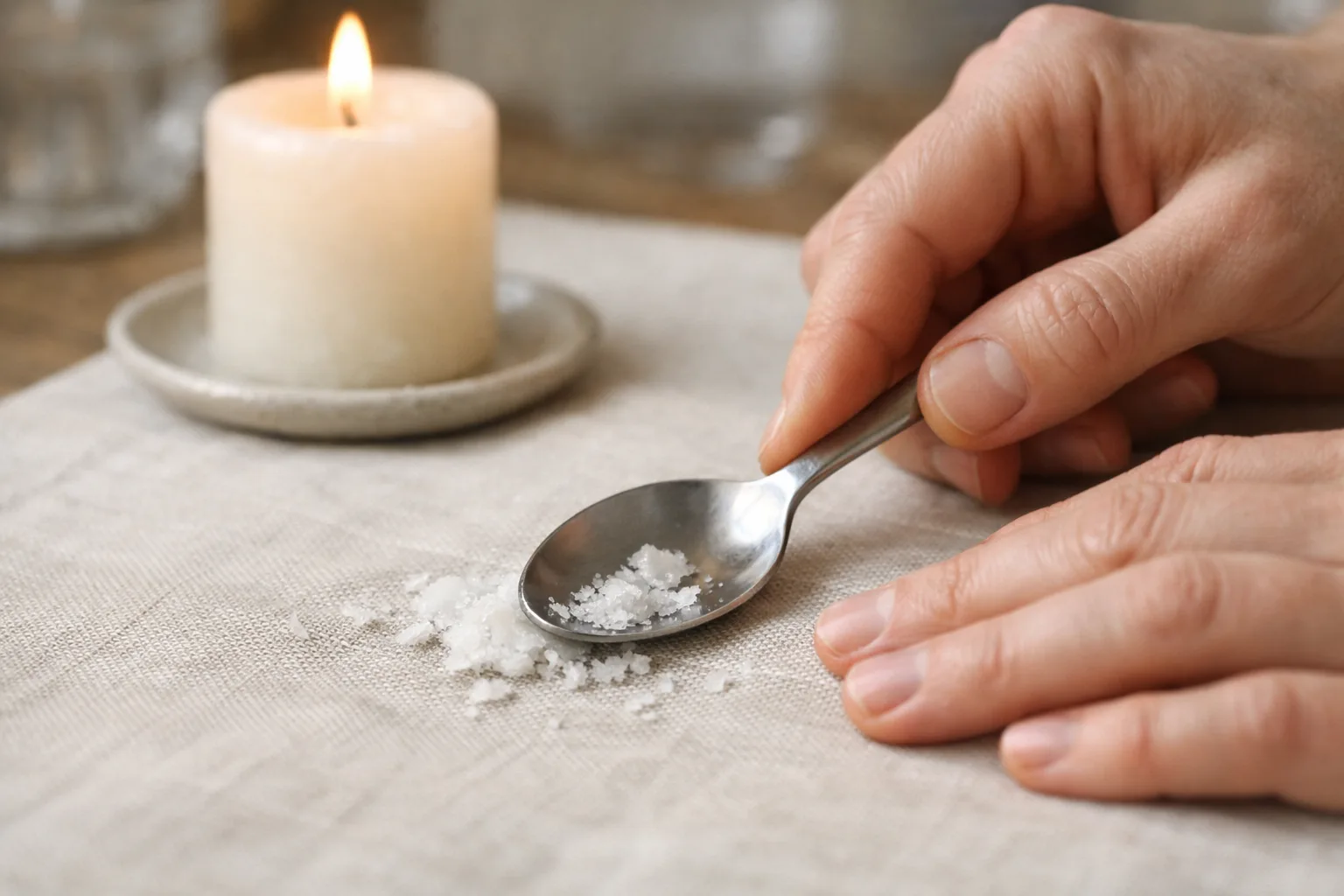
How to Remove Candle Wax from Fabric Without Damaging It
Candle wax can look like a permanent stain, but the right order makes removal easier: harden it, lift the excess, then treat any residue carefully.
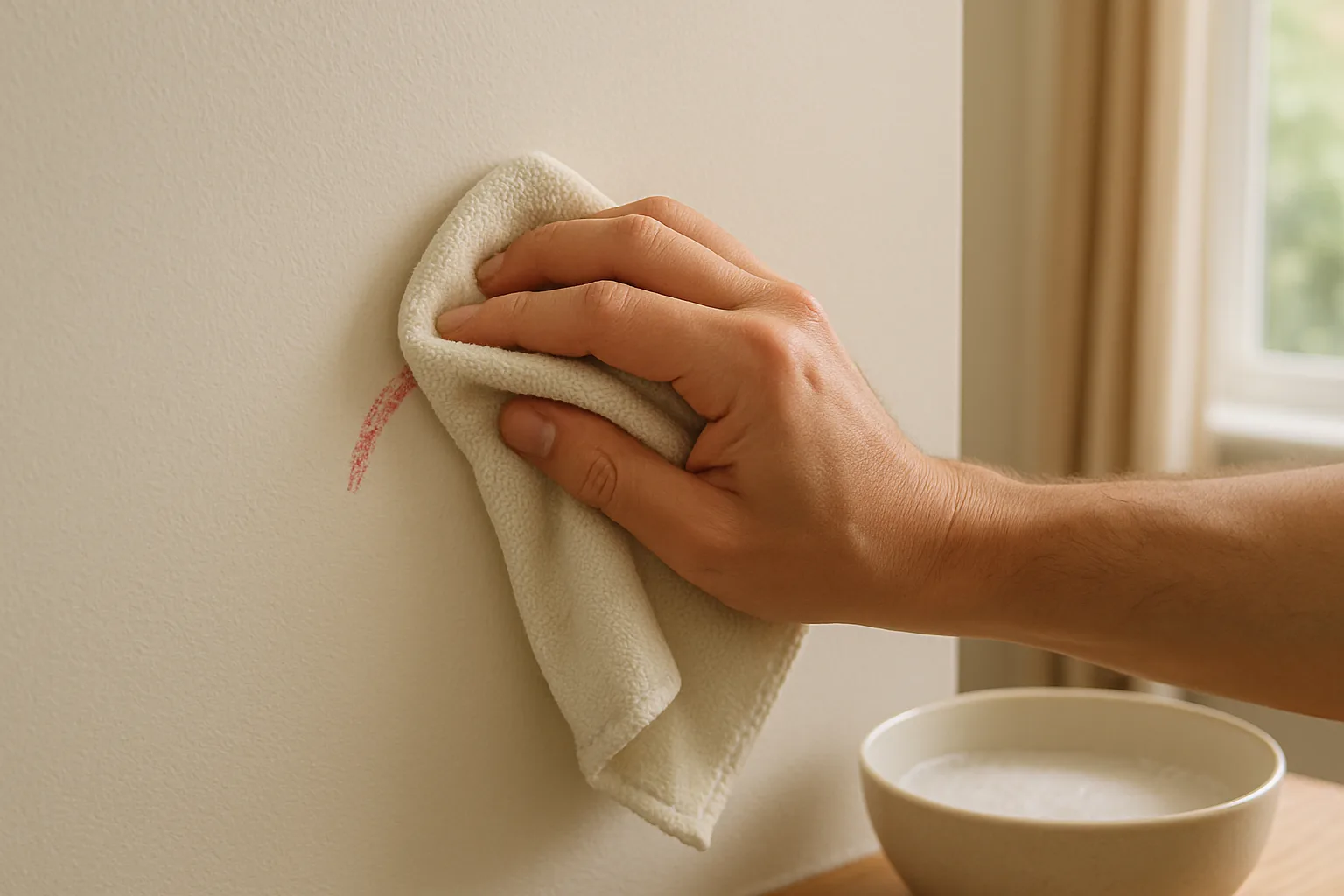
How to Remove Crayon Marks from Painted Walls Without Damage
Crayon marks can usually be lifted from painted walls with mild soap and a soft cloth. Learn a careful, low-risk method—and what to avoid.
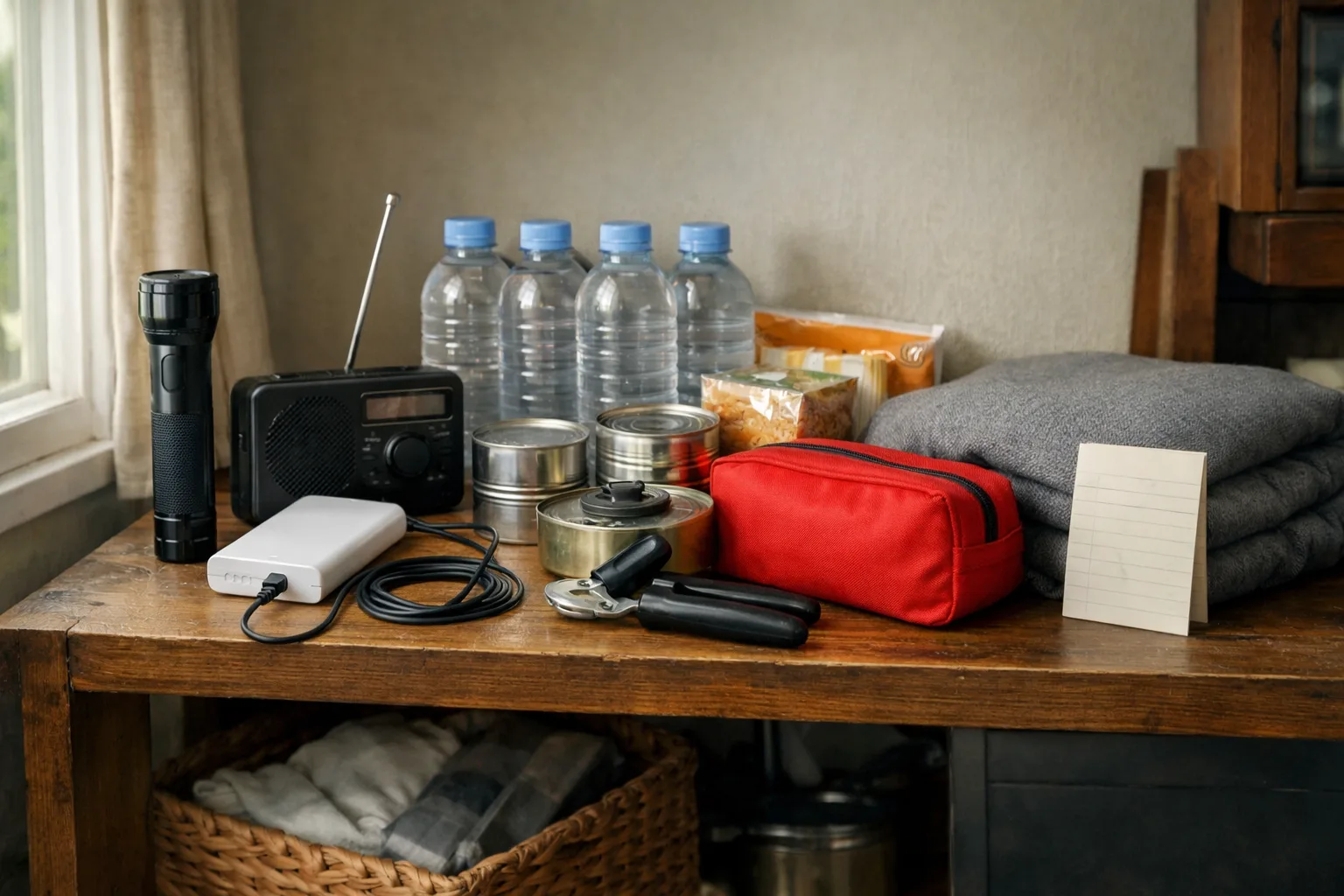
What to Keep in a Home Kit for a Power Outage
Build a practical outage kit with lighting, charged power banks, water, easy-to-eat food, essential medicines and supplies suited to your household.