How to Clean Cast Iron Without Damaging Its Seasoning
By WowPebble Editorial
Clean cast iron with hot water, a little dish soap, and a quick dry. Here’s how to remove stuck-on food, protect the seasoning, and handle rust.
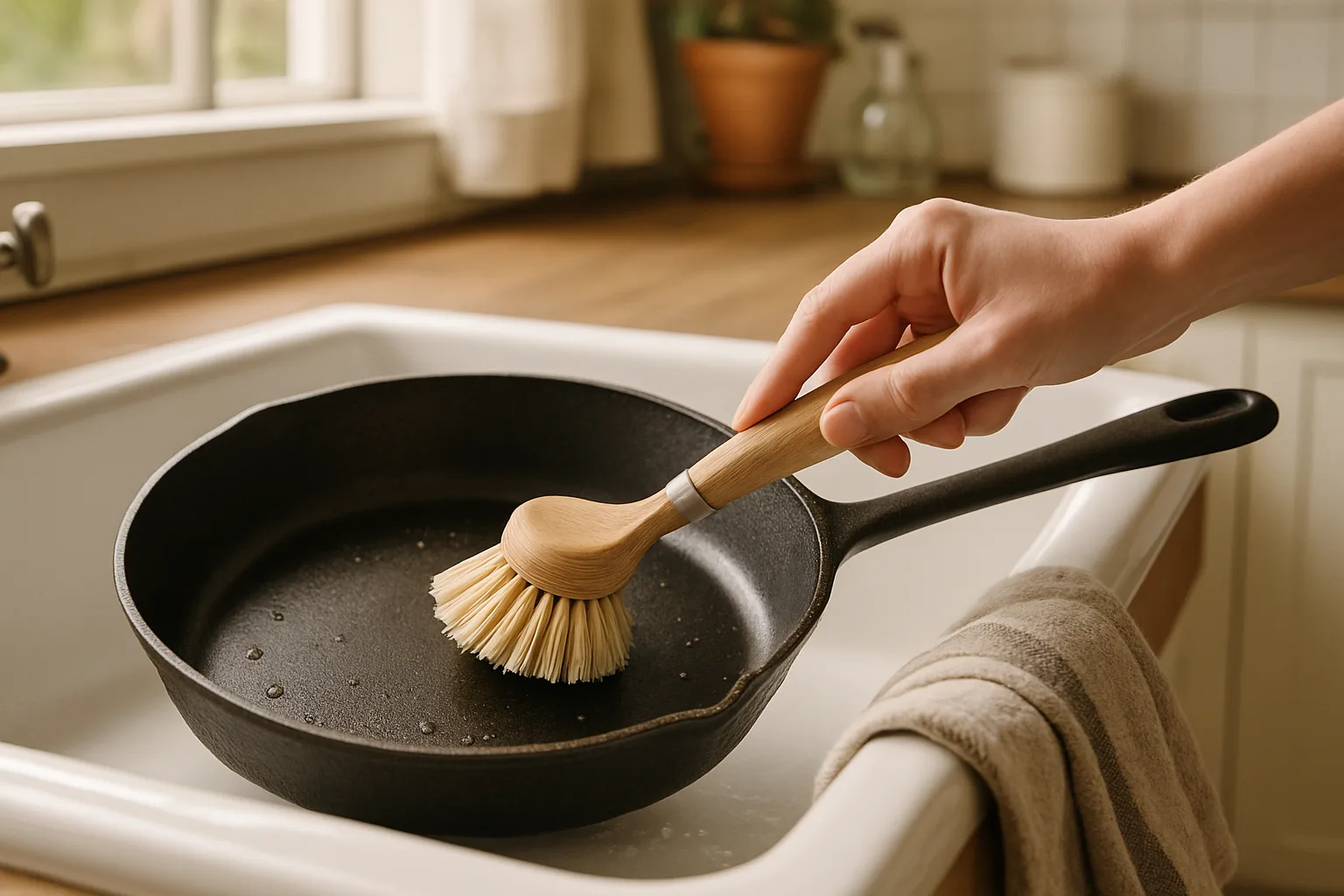
This cleaning routine is for seasoned, uncoated cast iron, not enamelled cookware. Lodge’s care instructions allow mild dish soap for its seasoned pans and distinguish ordinary cleaning from rust removal and reseasoning. Follow the maker's directions for your pan, especially coatings and accessories, rather than applying an uncoated-pan treatment to every cast-iron item.
The key is to understand what seasoning is. It is not a loose layer of grease that needs to be preserved at all costs. Seasoning forms when a thin coating of oil is heated and bonds to the iron, creating a dark, protective surface that helps food release and helps prevent rust. Clean the pan without leaving it wet, and everyday washing is unlikely to harm that surface.
The simple cleaning routine
For most meals, you need only warm or hot water, a dishcloth or nonabrasive sponge, and a clean towel. A soft pan brush or plastic scraper can help with bits that cling to the surface.
- Let the pan cool slightly. A very hot pan can be uncomfortable to handle, and adding cold water to screaming-hot cast iron may cause thermal shock. Give it a moment before washing.
- Rinse and scrub. Use warm water and a sponge, cloth, or brush to loosen food. For routine cleaning, a small amount of ordinary dish soap is fine. Scrub gently but thoroughly rather than worrying that every touch will strip the seasoning.
- Lift stubborn food. Use a plastic scraper or a wooden or silicone utensil. If residue will not budge, add a little water to the pan and warm it briefly on the stove to loosen the debris, then scrub again. Avoid leaving the pan to soak in the sink.
- Rinse and dry immediately. Wipe the pan well with a clean towel. For extra assurance, set it over low heat for a few minutes until all visible moisture has evaporated. Keep an eye on it; there is no need to heat it for a long time.
- Add oil only if needed. If the surface looks dry or dull after cleaning, rub on a few drops of cooking oil and wipe away the excess. The pan should look nearly dry, not slick. Too much oil can leave a sticky film.
That routine is enough for most well-seasoned pans. There is no need to re-season cast iron after every use.
What to do about stuck-on food
Food that is baked onto the pan often looks worse than it is. Start with a soak-free approach: loosen the residue under warm running water with a brush or scraper. A chain-mail scrubber made for cookware can also remove stubborn bits without the same cutting action as a harsh abrasive pad, though it should be used with moderate pressure.
A brush or the pan maker's approved scraper is enough to try before adding another cleaning material. Do not assume a household abrasive is appropriate for every surface simply because another bare-iron pan tolerates it. Enamel and other coatings remain outside this routine.
If food remains stuck, add enough water to cover the residue and bring it to a brief simmer. Turn off the heat, let the pan cool until it is safe to handle, and scrape or brush the softened food away. Do not leave it filled with water for hours or overnight.
Soap, scouring pads, and other common worries
Lodge explicitly permits dish soap for its seasoned cookware. That supports a current cleaning instruction, not a universal history of every old soap formulation. Follow the pan's actual care directions and do not mistake a water-only preference for a rule that food residue should remain on the surface.
The abrasive matters more than the word “soap.” A soft sponge, dishcloth, or pan brush is suitable for regular cleaning. Steel wool and aggressive scouring pads can remove seasoning along with stubborn grime, so avoid them unless you are deliberately stripping or restoring the pan. Never put a traditional bare cast-iron skillet in the dishwasher: long exposure to water and detergent can encourage rust and damage its finish.
A little dark residue on a cloth does not automatically mean the seasoning is coming off. Cast iron can release small amounts of cooking residue, especially when a pan is new or has not been cleaned thoroughly. If the surface is flaking, however, it may have built-up, poorly bonded layers rather than a sound seasoning coat. Scrub away loose flakes, dry the pan, and build the surface back up if needed.
If rust appears
Rust is a sign that bare iron has been exposed to moisture, not a reason to throw the pan away. For a small patch, scrub the rust with a suitable abrasive pad or steel wool until the orange discoloration is gone. Wash the area, dry the pan completely, then apply a very thin layer of oil. If the affected area is large or the seasoning is badly flaking, the pan may need a more thorough cleaning and re-seasoning.
To re-season, coat the clean, dry pan with a very thin layer of suitable cooking oil, wiping off any visible excess. Place it upside down in an oven and heat it according to the oil and cookware maker’s guidance, using a baking sheet or foil below to catch drips. Let it cool safely before handling. Re-seasoning is useful after rust removal or significant damage, but it is not a routine step after every wash.
A few habits that prevent problems
- Wash the pan soon after cooking, once it is safe to handle. Food is easier to remove before it dries and hardens.
- Do not store cast iron in water or let it sit wet in the sink.
- Dry it thoroughly before putting it away, especially in a humid kitchen.
- If you stack pans, place a paper towel or other dry barrier between them to help protect the surfaces and absorb moisture.
- Avoid leaving acidic food in a bare cast-iron pan for a long time, particularly if the seasoning is new or thin. Acidic ingredients can react with exposed iron and may affect the surface.
These tips apply to bare cast iron. Enameled cast-iron cookware has a glass-like coating and different care requirements, so follow its maker’s instructions and avoid treating its enamel like an uncoated seasoning surface.
The bottom line
Good cast-iron care is not about avoiding water or soap. It is about cleaning away food, skipping long soaks, and drying the pan promptly. Use a little oil only when the surface needs it, and reserve more intensive scrubbing or re-seasoning for real damage. With that simple routine, a well-used skillet can keep cooking beautifully without turning cleanup into a ritual.
You might also like
How to Remove Burnt Food from a Stainless Steel Pan
Loosen burnt-on food from a stainless steel pan with hot water and gentle scraping. For stubborn residue, add baking soda and scrub without damaging the finish.
What to Keep in a Home Kit for a Power Outage
Build a practical outage kit with lighting, charged power banks, water, easy-to-eat food, essential medicines and supplies suited to your household.
How to Clean a Humidifier and Stop Mineral Buildup
Clean your humidifier regularly to remove scale and reduce residue. Learn how to descale it safely, care for filters and prevent mineral buildup.