How to Organize a Small Entryway Without Adding More Storage
By WowPebble Editorial
A calmer entryway doesn’t require another shelf or basket. Make better use of what you already have with a few simple zones, clear limits, and daily habits.
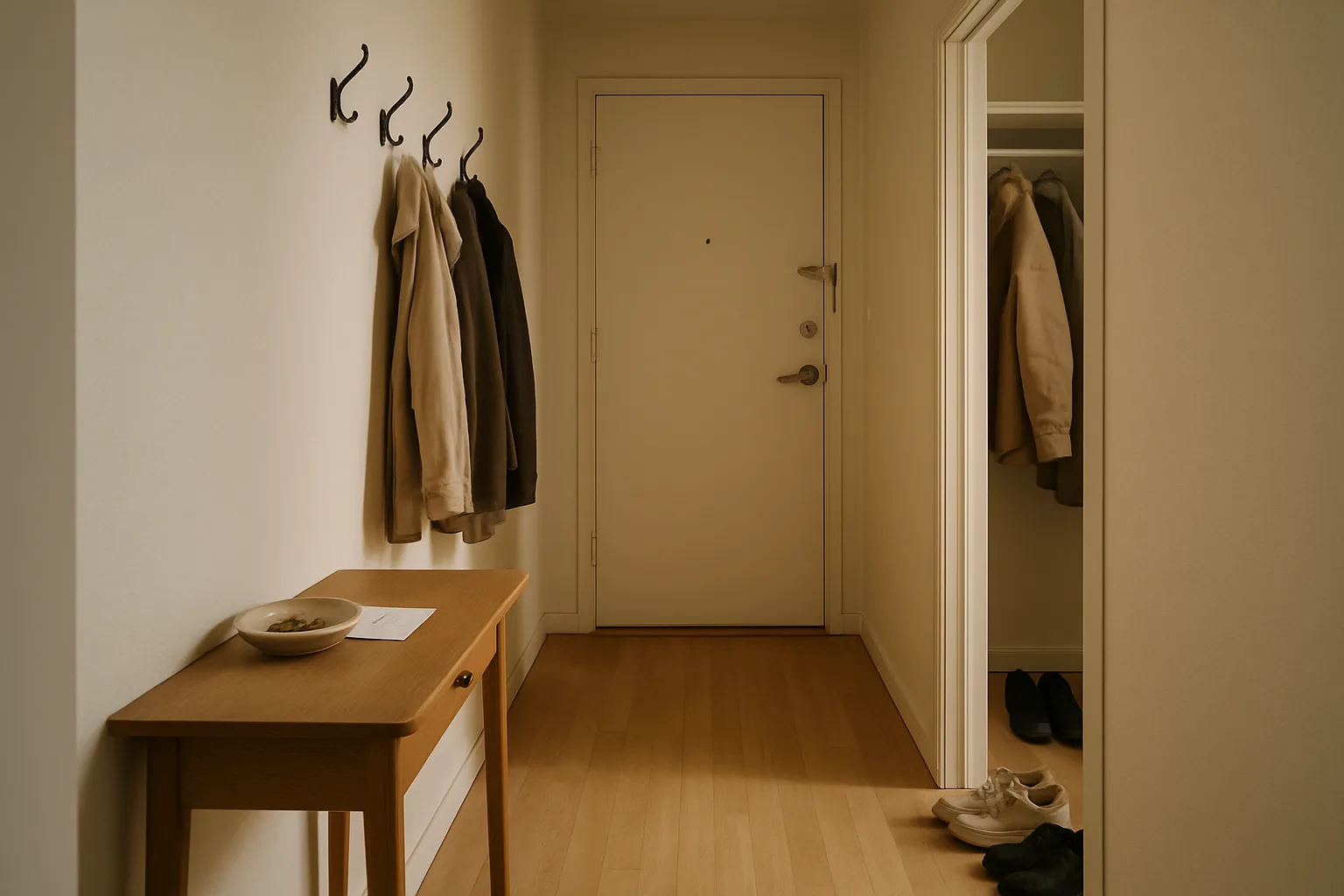
A small entryway can become a landing zone for everything you carry in—and a bottleneck when you try to leave. The fix isn’t necessarily another shelf, basket, or set of hooks. Often, it’s deciding what truly belongs there, giving existing items a clear purpose, and making it easy to put things away.
That distinction matters: storage adds capacity, but organization makes better use of the capacity you already have. In a narrow hallway or compact apartment entrance, reducing what collects by the door can be more useful than finding another place to pile it.
Start by clearing the landing zone
Take everything out of the entryway, including items tucked into an existing closet or drawer. Sort it into three groups: things you use every time you leave, things you need occasionally, and things that don’t belong near the door.
Everyday essentials might include a frequently used coat, your current bag, keys, and shoes you wear often. Occasional items could be a spare umbrella or a coat for a different season. The last group may include mail, shopping bags, sports equipment, or belongings that have simply been dropped there.
Return only what has a clear reason to live in the entryway. Put occasional items where they are already stored elsewhere, and take unrelated belongings to their proper rooms. If you find duplicates, keep the most useful version near the door and relocate or donate the rest as appropriate.
This first edit is important because the available space hasn’t changed. The goal is to stop asking it to accommodate things that don’t support coming and going.
Give existing surfaces specific jobs
Look at the furniture and features you already have: a console, a shelf, a chair, a windowsill, a closet, or even a clear patch of floor. Give each one a narrow purpose rather than letting every surface become a general drop zone.
A console top, for example, could be reserved for keys and the day’s mail. A chair might be a temporary place to set down a bag while taking off shoes, not a permanent home for coats and parcels. If you already own a small dish or bowl, it can keep keys together; if not, a consistent spot on an existing surface works just as well.
Keep the number of items on display low. A clear surface is easier to use, easier to wipe down, and less likely to invite another pile. The same idea applies to the floor: leave a defined area for the shoes currently in use rather than allowing pairs to spread across the doorway.
Make the closet work harder, if you have one
An entry closet can be useful even when it is small, but it may be crowded by things that don’t need to be there. Start by removing anything that belongs elsewhere. Then make the remaining space easier to reach and understand.
Keep the coats used most often at the front. Move off-season outerwear to a closet or cupboard where you already keep clothing, if space allows. If the closet has a shelf, use the space for items that are genuinely needed at the entrance, rather than treating it as a catchall. Avoid stacking so much that retrieving one item disturbs everything else.
If several people share the closet, decide where each person’s everyday coat and bag go. That doesn’t require labels or new organizers; it simply makes the arrangement predictable. When the most-used items are easy to return, the closet is less likely to spill into the hallway.
Set a realistic limit for shoes and coats
A small entryway can’t comfortably display every pair of shoes and every coat in the household. Choose a practical limit based on the space: perhaps the shoes worn most often stay by the door, while other pairs return to bedroom closets. Keep wet or dirty footwear contained in an existing tray or on a surface that can be cleaned, if you already have one.
The same principle works for coats. Keep the current season’s everyday layers accessible, and put rarely used ones away with the rest of your clothing. This is not about making the entrance look perfect. It is about keeping enough room to walk through and find what you need without moving a pile first.
For a shared home, agree on the limit together. A rule everyone understands—such as one everyday pair of shoes per person by the door—is easier to maintain than a vague request to keep things tidy.
Stop incoming clutter before it settles
Mail, deliveries, reusable bags, and borrowed items often create entryway clutter because no one has decided what happens to them next. Give each category a destination that already exists in your home.
Carry mail to the place where you normally sort or recycle it instead of letting it sit indefinitely by the door. Put reusable bags back with your other shopping supplies after unpacking. Take returns or borrowed items directly to a room, car, or designated spot elsewhere rather than leaving them in the walkway as a reminder.
A brief reset can help: when you come home, hang up your coat, return your keys to their usual place, and move anything that doesn’t belong in the entryway. When you leave, take outgoing items with you. These small actions work because they prevent a temporary drop from becoming the room’s permanent arrangement.
Use a simple routine, not a perfect system
An entryway has to function in real life. If your arrangement depends on careful folding, elaborate sorting, or putting every small object in a different place, it may be hard to keep up when you’re tired or in a hurry.
Make the default actions obvious. Keep the everyday coat within easy reach. Put keys in the same place. Leave enough floor space to remove shoes without blocking the door. If something repeatedly lands in the wrong spot, treat that as useful information: its assigned home may be inconvenient, or it may not belong in the entryway at all.
Once a week, take a minute to return stray items to their proper rooms and check whether the current mix still suits the season. This isn’t a call to constantly reorganize. It’s a light reset that keeps the space from slowly filling up again.
Organize around the way you leave home
Before adding anything, ask what you need at the door, what can live elsewhere, and whether the things you use most are easy to reach and put back. Clear the surfaces, limit the shoes and coats, and assign existing furniture and closet space defined roles.
A small entryway may never hold everything you own—and it doesn’t need to. When it contains only the items that help you arrive and leave, the space can feel more open without gaining a single new storage unit.
You might also like
How to Keep a Small Closet Organized Without Buying More Storage
A tidy small closet doesn’t require new bins or shelves. Make better use of the space you have by editing your belongings and giving each item a clear place.
How to Set Up a Pantry So Everyday Ingredients Are Easy to Find
A well-organized pantry saves time, cuts down on forgotten food, and makes cooking easier. Build a simple system around what you use most.
Simple Ways to Make Your Morning Less Chaotic
Find the recurring delays in your morning, prepare only what helps, and build a departure routine around your household’s actual needs and schedule.