How to Tell If a Watermelon Is Ripe Before You Cut It
By WowPebble Editorial
A ripe watermelon gives a few useful clues before you slice it. Learn how to check its field spot, weight, shape and sound—and which signs to treat cautiously.
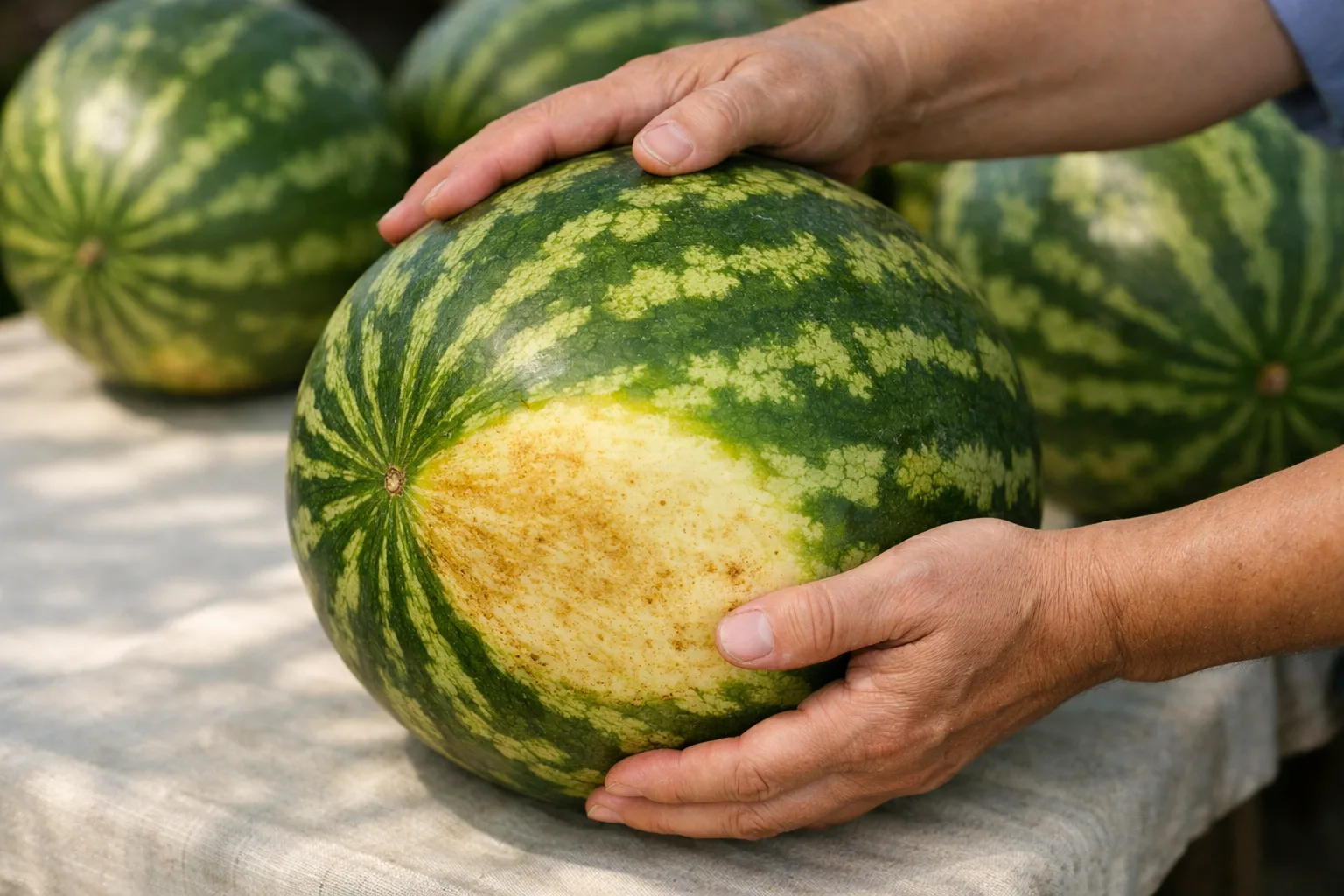
A whole watermelon can look like a sealed box: the best part is hidden, and there is no easy way to check its sweetness without cutting it open. Still, a few clues can help you choose a better one. Look first for the spot where the melon rested on the ground, then consider its weight, shape and rind. No single test guarantees a sweet, ripe watermelon, but together these signs are more useful than a dramatic thump.
Start with the field spot
The field spot—also called the ground spot—is the patch on the rind that rested on the soil as the watermelon grew. Turn the melon gently and look for it. A creamy yellow or golden patch is generally a better sign of maturity than a pale white or greenish-white one. The spot usually becomes more pronounced as the fruit matures on the vine.
This is one of the most practical clues because it reflects how the melon developed, rather than how shiny or attractive it looks. The spot may be hard to see on some varieties, and its exact color can vary, so treat it as a helpful sign rather than a guarantee. If you can compare several melons, look for one with a clearly creamy or yellow resting patch.
Illinois Extension’s watermelon guide supports using rind and ground-spot clues together and explains why harvest timing matters: the melon does not continue to ripen after removal from the vine. These indicators are not a sugar measurement.
Pick it up: weight matters
A ripe watermelon should feel heavy for its size. Much of a watermelon is water, so a fruit that feels dense and weighty compared with another of similar size is often a promising choice. If you are shopping, lift a couple of melons rather than judging one in isolation.
Weight is not a sweetness test, and differences in variety and size matter. But it is a useful companion to the field spot: a melon with a mature-looking patch that also feels heavy is a stronger candidate than one that feels unusually light.
Look for a consistent shape
Shape varies with the cultivar, so “rounder” is not a universal measure of ripeness. Avoid damaged or deteriorating fruit, but do not treat an unusual outline or rind pattern alone as a sweetness test.
Check the rind for serious bruises, soft spots, cracks or cuts. Small surface marks are not necessarily a problem, but damaged areas can make the fruit more vulnerable to spoilage. A healthy-looking rind should be firm rather than soft or sunken.
Check the rind—but do not rely on shine alone
Many shoppers look for a dull rather than glossy rind, since a mature watermelon may have a less shiny appearance. This can be a useful supporting clue, but it is not as dependable as people sometimes suggest: rind appearance varies among varieties, and handling or lighting can affect what you see.
The rind should feel firm, and the color pattern should look typical for that kind of melon. Do not assume that the darkest green watermelon is automatically the ripest. Different varieties have different rind colors and patterns, so compare fruits of the same type when possible.
What about thumping?
The familiar advice is to tap a watermelon and listen for a deep, hollow sound. Some experienced shoppers use this as one more clue, but the sound can be difficult to interpret. It changes with the fruit's size, shape and condition, and people may disagree about what counts as “hollow.” A melon that sounds different from the others could be worth a closer look, but thumping should not outweigh a good field spot, a heavy feel and an intact rind.
There is no need to hit the fruit hard. A gentle tap is enough if you want to try the method. Think of the sound as a tie-breaker, not a verdict.
If it is still on the vine
Gardeners can look for additional signs because they can see how the fruit is attached to the plant. A tendril near the stem of the watermelon may dry and turn brown as the fruit matures. The nearest tendril is more relevant than a random one farther along the vine, but even this clue is not foolproof: timing and growing conditions vary.
Iowa State Extension specifically notes that a nearby tendril can brown before maturity in some varieties. Do not turn a brown tendril into a universal harvest deadline or confuse it with the colour of a cut stem in a shop.
For a documented growing example, Illinois Extension describes changes in the ground spot and the nearby tendril, with a qualification about varieties. It also warns that the hollow-sound test is unreliable for newer firm varieties. These clues are not a guarantee of the sweetness of every harvested melon.
The fruit's ground spot can also turn from pale to creamy or yellow as it develops. A combination of these changes is more informative than any one sign alone. If you are unsure, it is generally better to wait and check again than to pick too early, because the fruit will not become sweeter once it has been harvested.
Why a watermelon will not sweeten on the counter
Watermelons do not continue ripening in the same way some fruits do after picking. Once harvested, they do not build up more sweetness as they sit on your kitchen counter. The flesh may change in texture over time, but leaving an unripe watermelon at room temperature will not turn it into a sweet one. That is why choosing well at the market—or waiting for the right signs in the garden—matters.
This also explains why a very green stem is not a dependable ripeness test in a shop. A stem's appearance can tell you something about handling or how recently the fruit was cut from the vine, but it does not prove that the watermelon reached ideal sweetness before harvest.
A simple checklist at the store
Before choosing, use this quick sequence:
- Find a creamy yellow or golden field spot, if visible.
- Lift the melon and choose one that feels heavy for its size.
- Look for a reasonably even shape and a firm, undamaged rind.
- Compare it with other watermelons of the same variety, if you can.
- Use a gentle tap only as an extra clue, not the deciding test.
Seedless watermelons can be judged by the same external signs. The absence of mature black seeds inside does not mean a seedless melon is unripe; seedless varieties are produced differently, and their ripeness is still best assessed by the fruit's overall signs.
No outside check can promise exactly how sweet a watermelon will taste. Variety, growing conditions and the point at which it was harvested all play a part. But a heavy fruit with a mature-looking field spot, a rind appropriate to its variety and no damage gives you a better basis for choosing than appearance or thumping alone. When those clues agree, you have a good reason to bring it home.
You might also like
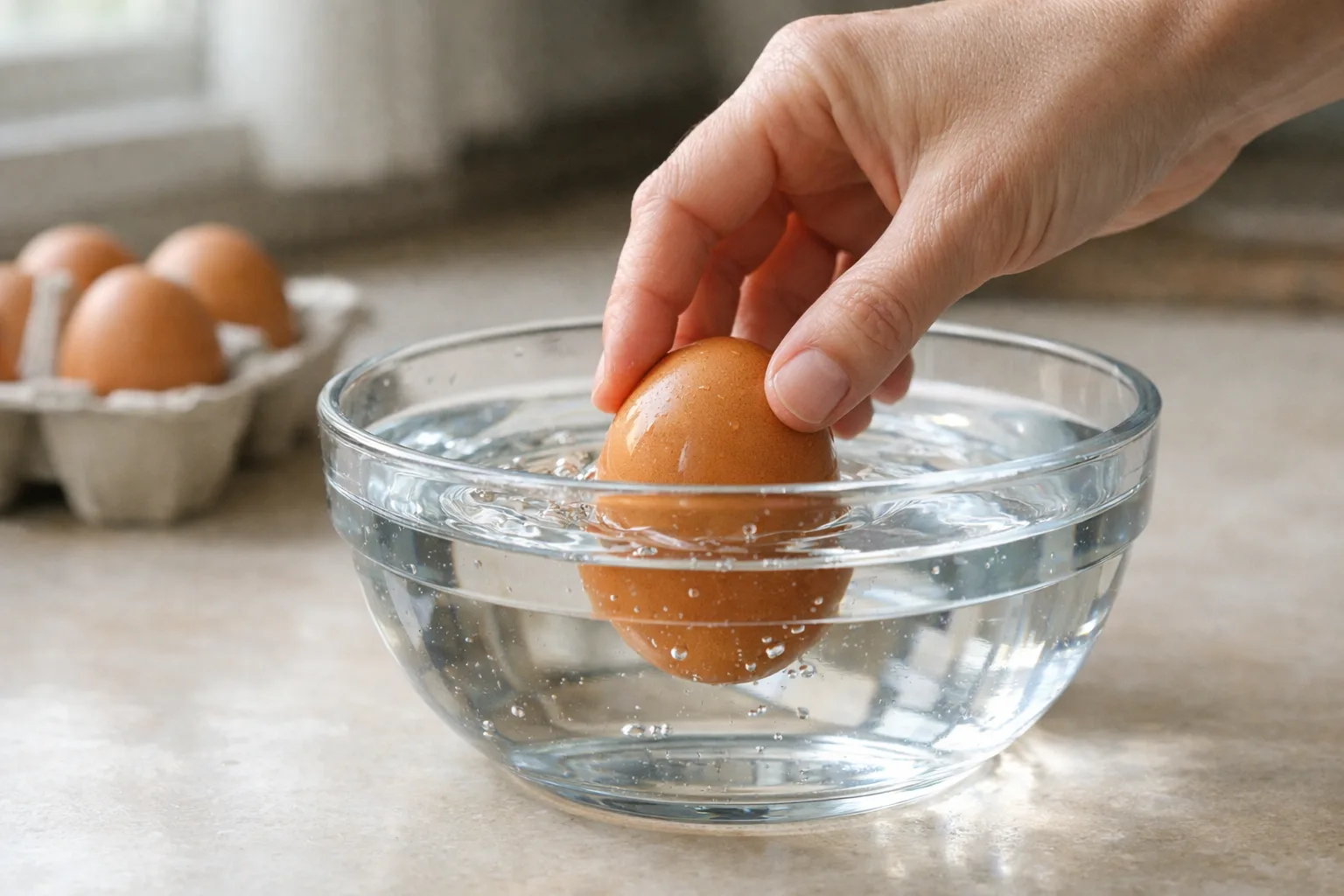
How to Tell If an Egg Is Fresh Without Cracking It
A bowl of water can offer a clue to an egg’s age—but it can’t prove the egg is safe. Learn what the float test, shell, and carton can tell you.
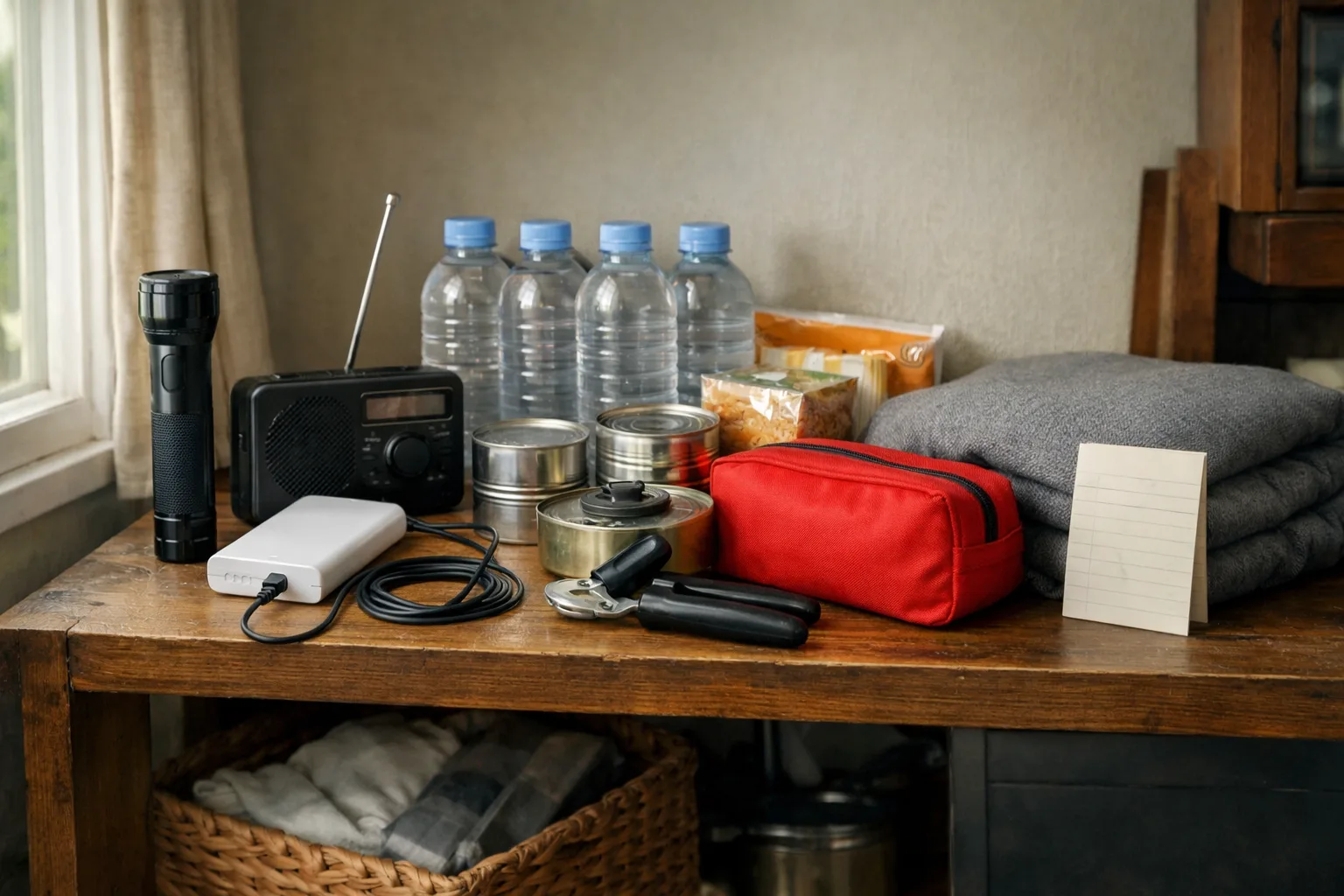
What to Keep in a Home Kit for a Power Outage
Build a practical outage kit with lighting, charged power banks, water, easy-to-eat food, essential medicines and supplies suited to your household.

How to Clean a Humidifier and Stop Mineral Buildup
Clean your humidifier regularly to remove scale and reduce residue. Learn how to descale it safely, care for filters and prevent mineral buildup.