How to Measure for Curtains Before You Order or Sew
By WowPebble Editorial
Get curtain measurements right the first time. Learn how to measure width and length, choose fullness, account for hardware, and avoid common ordering mistakes.
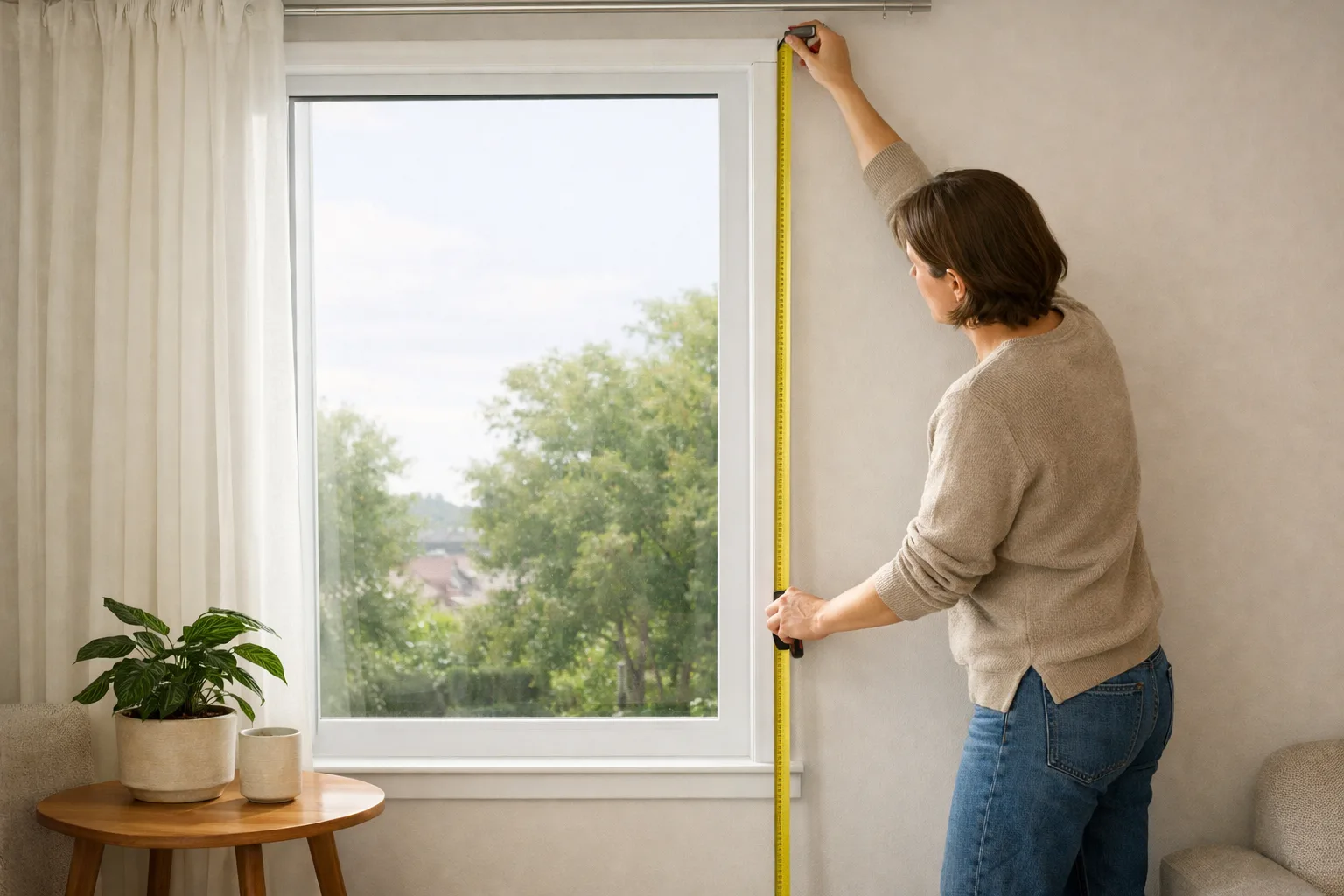
Curtains can make a room feel finished, soften incoming light, and add privacy—but even beautiful fabric can look wrong if it is too narrow or too short. The key is to measure the curtain hardware and the place where the fabric will hang, not simply the glass. A few careful measurements can help you order the right size or plan fabric for a sewing project.
Start with the curtain hardware
Before measuring, decide how the curtains will hang. A curtain pole, a track, rings, clips, tabs, and eyelets all affect where the curtain begins and how much space it needs. If the hardware is already installed, measure it first. If it is not, decide where it will go before calculating curtain dimensions.
For curtains that cover the window from outside the frame, the pole or track usually extends beyond the window on both sides. This gives the open curtains somewhere to sit and lets more light into the room. The exact extension depends on the space, the curtains, and any nearby walls, doors, or furniture. Check that the planned hardware will not obstruct a handle, radiator, or adjoining window.
For an inside mount, where the curtains sit within a window recess, check that the hardware and fabric can fit without catching on handles or trim. Recesses may not be perfectly square, so measure in more than one place.
How to measure curtain width
For an installed pole or track, measure the usable width from one end to the other. Do not include decorative finials at the ends of a pole. If your pole has not been installed, first decide how far it will extend past the window, then use that planned pole or track width as your curtain-width starting point.
For a curtain inside a recess, measure the recess width at the top, middle, and bottom. Use the narrowest measurement when checking that the finished curtains will fit. Follow the instructions from your curtain supplier or hardware maker, since brackets and tracks can affect the usable space.
The curtain fabric generally needs to be wider than the pole or track so it can form folds when closed. This extra width is called fullness. As a broad starting point, gathered or pleated curtains often use a total finished width around 1.5 to 2 times the width they will cover. The right amount depends on the heading style, the look you want, and the fabric: heavier or stiffer material may not gather like lightweight fabric.
Use this simple calculation:
Curtain track or pole width × desired fullness = total finished curtain width
For example, if the usable track is 80 inches wide and you choose 1.5 times fullness, the total finished curtain width is 120 inches. If you want two panels that meet in the middle, divide that total by two, giving 60 inches per panel.
This is the finished width, not necessarily the width of fabric to buy. Sewing requires extra fabric for side hems, seams, and the heading, and patterned fabric may need additional material to match the design. For ready-made curtains, check whether the listed width applies to one panel or to a pair. Also check whether the seller describes a panel’s flat width or its finished width; product conventions can vary.
How to measure curtain length
Measure from the point where the curtain will hang to the intended bottom edge. That starting point depends on the heading and hardware. With clips, for instance, the curtain hangs from the clip; with a track and hooks, it hangs from the hook position. Eyelet curtains sit differently on a pole than curtains attached by rings. Check the product’s measuring guide so your measurement uses the same reference point as its listed length.
Choose the bottom position before measuring. Common options include:
- Sill length: The curtain ends at or just above the sill. This can suit a window where longer fabric would meet furniture or a radiator.
- Below the sill: The fabric extends a little past the sill for extra coverage, while staying clear of items below the window.
- Floor length: The curtain ends just above the floor or lightly touches it. This gives a neat line, but the gap or contact point should be consistent across the pair.
- Puddled: Extra fabric rests on the floor. This creates a softer, more decorative effect, but can collect dust and may be less practical in busy areas.
For an outside-mounted curtain, measure from the chosen hanging point down to your selected endpoint. For a curtain inside a recess, measure the available height at the left, center, and right. If the recess varies, consider how the fabric will sit along the sill or floor; use the supplier’s instructions when ordering for a close-fitting recess.
Floors and window trim are not always level. If a floor-length curtain will span a wide window, check the drop at both ends rather than assuming one measurement will suit the whole opening. Decide whether you prefer a small, even gap or a light touch on the floor, and make any adjustment deliberately.
Measuring for sewing rather than ordering
When sewing, distinguish the finished curtain size from the amount of fabric you need to cut. The finished width must account for fullness, but the cut width also needs enough material for side hems, seams, and the chosen heading. The cut length needs allowances for the top treatment and bottom hem. Those allowances vary with the pattern and construction, so plan them before cutting rather than adding a standard amount by guesswork.
If the fabric is washable, follow its care instructions and consider whether it should be washed or otherwise prepared before measuring and cutting. Fabric can change during care, and preparing it in the way you intend to maintain it helps avoid an ill-fitting finished curtain. For a patterned fabric, check the pattern repeat and decide how motifs should line up across panels; matching repeats can require extra yardage.
Common measuring mistakes to avoid
- Measuring only the glass: The curtain usually covers a larger area than the glass, especially when mounted outside the frame.
- Forgetting fullness: One flat panel the same width as the window will not provide the same gathered look as a fuller curtain.
- Including finials in pole width: Measure the usable span, not decorative ends.
- Using the wrong top reference: Measure from where the curtain actually hangs, and follow the seller’s convention for listed lengths.
- Assuming a pair matches a single-panel listing: Confirm whether the stated width is for one curtain or both.
- Cutting before checking everything: Recheck width, drop, heading, hems, pattern placement, and the direction each panel will open.
A quick checklist before ordering
Write down the hardware type, usable width, desired finished length, number of panels, and the chosen fullness. Note whether the curtains will hang inside or outside the frame and whether they need to clear a sill, radiator, handle, or furniture. For a custom order, send the measurements in the format the maker requests; for ready-made curtains, compare your figures with the product’s stated measuring method.
A tape measure and a few minutes of planning can save a costly mismatch. Measure the place the curtains will actually hang, decide how much fabric you want to see when they are closed, and verify the product’s sizing rules before ordering or cutting.
You might also like
How to Measure a Room’s Floor Area, Including Alcoves
Measure a room with a tape or laser, sketch its outline, then split it into simple shapes. Here’s how to include alcoves without counting any floor twice.

What to Keep in a Home Kit for a Power Outage
Build a practical outage kit with lighting, charged power banks, water, easy-to-eat food, essential medicines and supplies suited to your household.

How to Clean a Humidifier and Stop Mineral Buildup
Clean your humidifier regularly to remove scale and reduce residue. Learn how to descale it safely, care for filters and prevent mineral buildup.