How to Keep Cut Flowers Fresh Longer in a Vase
By WowPebble Editorial
Clean water, freshly trimmed stems, and a cool spot can make a striking difference. Learn the simple science and everyday steps that help cut flowers last.
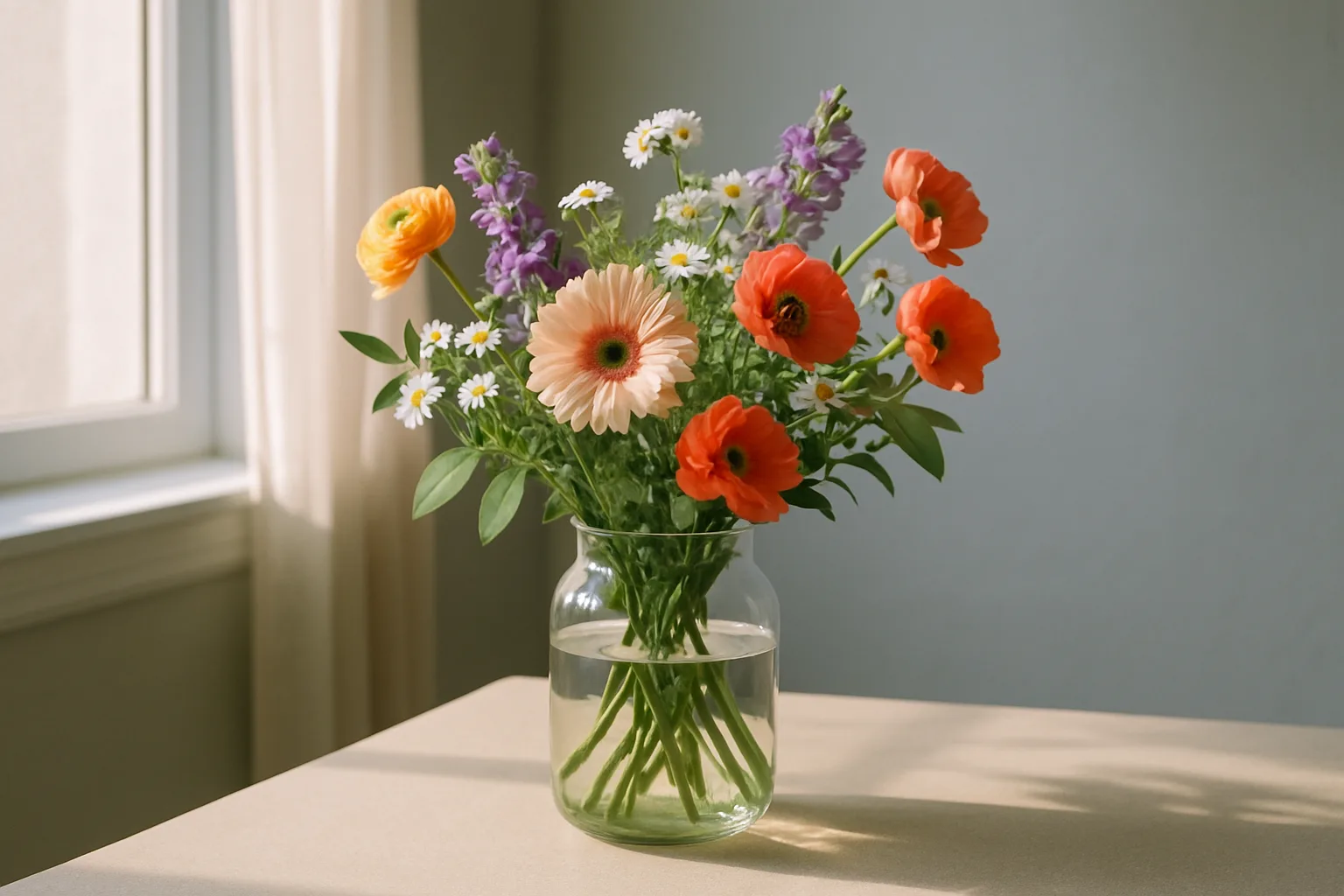
A vase of fresh flowers can brighten a room for days—but how long the display lasts depends on more than the blooms themselves. Once cut, flowers can no longer draw water and nutrients from their roots, so they rely on the stems to take up water from the vase. Clean water, an unobstructed stem, and a cool place all help slow wilting and keep that supply moving.
The good news is that you do not need elaborate equipment or a complicated recipe. A few careful habits, starting with a clean vase and a fresh stem cut, can make a noticeable difference.
Start with a clean vase
Wash the vase with hot, soapy water before arranging flowers, then rinse it well. A vase that looks clean may still have residue or microorganisms from a previous bouquet. As bacteria and other microbes multiply in vase water, they can contribute to the blockage of the stems’ water-conducting vessels. That makes it harder for flowers to stay hydrated.
If you are reusing a vase, take a moment to clean the inside and around the neck, where grime can collect. Use a vase that is tall and stable enough to support the stems, and fill it with fresh water. Follow any instructions that come with the flowers or the flower-food packet, since the recommended amount of water can vary by arrangement.
Trim the stems before arranging
Use clean, sharp scissors or garden shears to trim a small amount from the bottom of each stem. A fresh cut removes the dried or damaged end and gives the flower a better chance of taking up water. Cut at a slight angle if you like; the most important points are to use a sharp tool and avoid crushing the stem.
Trim the stems just before placing them in water. If flowers have been out of water for a while, or if the ends look dry, trim them again. Recutting every few days can also help keep the ends fresh, particularly if you are changing the water at the same time.
Remove leaves that would sit below the waterline. Submerged foliage decays quickly and adds organic material to the water, encouraging the conditions that make it cloudy and unpleasant. Keep leaves above the water where possible, but do not strip away healthy foliage unnecessarily.
Use flower food as directed
The small packet that comes with many bouquets is worth using. Commercial flower food is generally formulated to provide sugar, adjust the water’s acidity, and limit microbial growth. Together, those functions can support the flowers and help water move through their stems.
Mix the packet into the amount of water specified on its label. Adding extra powder is not a shortcut: a stronger mixture is not necessarily better for the flowers. If you run out, plain fresh water and a clean vase are a better fallback than an improvised recipe.
Household suggestions such as adding sugar, aspirin, or other kitchen ingredients are common, but they are not a dependable substitute for a properly balanced flower-food product. Too much sugar, in particular, can feed microbes rather than help the arrangement. Avoid mixing cleaners or other chemicals into the vase.
Refresh the water regularly
Check the water level each day, since flowers can drink more than you expect. Top it up with fresh water as needed, and replace it every couple of days—or sooner if it looks cloudy or smells off. When changing the water, rinse the vase and remove any fallen leaves or petals. A quick stem trim at this point can be useful too.
This routine is simple, but it addresses two common problems at once: flowers running short of water and microbes building up in the vase. Keep the waterline high enough for the stem ends to remain submerged, while making sure no leaves are sitting in it.
Choose the right spot
Heat speeds up the processes that make flowers age, while warm, dry air can increase water loss. Place the vase somewhere cool, away from direct sunlight, radiators, ovens, and other heat sources. Avoid strong drafts as well; air blowing directly on the blooms can dry them out.
Keep flowers away from ripening fruit when possible. Some fruits release ethylene, a plant hormone that can hasten the aging of sensitive flowers. A fruit bowl across the room is not usually cause for alarm, but a vase right beside a bowl of ripening produce is an easy arrangement to avoid.
If you want to keep flowers overnight, a cool room is generally preferable to a warm one. Avoid putting them somewhere they could be exposed to freezing temperatures, and keep the vase out of a spot where it might be knocked over.
Give different flowers a little room to differ
Not every flower behaves in the same way. Some, including tulips, may continue to grow after being cut, so their stems can shift or bend as they develop. Daffodils release sap when cut that can affect other flowers in a mixed arrangement. If combining them with other blooms, condition daffodils in water separately first, then avoid recutting their stems when you add them to the bouquet.
For most mixed arrangements, the general routine still applies: clean vase, fresh water, trimmed stems, and a cool location. If a particular flower comes with care instructions, follow those too. Flowers bought from a florist may already have been conditioned, while garden-cut blooms may need extra trimming and a thorough check for leaves below the waterline.
A quick routine for longer-lasting flowers
When you bring flowers home, clean the vase, add fresh water and flower food according to the packet, and trim the stems with a sharp tool. Remove any leaves that would be underwater, then arrange the flowers and place them away from heat, direct sun, and ripening fruit. Check the water daily, replace it when it becomes cloudy or after a couple of days, and recut the stems as needed.
No routine can keep cut flowers fresh indefinitely: they are living parts of a plant that have been separated from their source of water and nourishment. But by keeping their stems clear, their water clean, and their surroundings cool, you can give a bouquet a better chance to remain lively for as long as possible.
You might also like
How to Keep Lettuce Crisp in the Refrigerator Longer
A little moisture control can make the difference between crisp lettuce and a soggy bag. Learn how to store whole heads, washed leaves, and leftovers.
How to Keep Houseplants Watered While You’re Away for a Weekend
Most houseplants can manage a short trip without elaborate gear. Water well before you leave, adjust their spot, and use a simple backup for thirsty plants.
How to Store Bread So It Stays Fresh Longer
Bread storage balances texture, mould risk and keeping time. Learn when room-temperature storage makes sense, how refrigeration differs, and when to freeze.