How to Keep Lettuce Crisp in the Refrigerator Longer
By WowPebble Editorial
A little moisture control can make the difference between crisp lettuce and a soggy bag. Learn how to store whole heads, washed leaves, and leftovers.
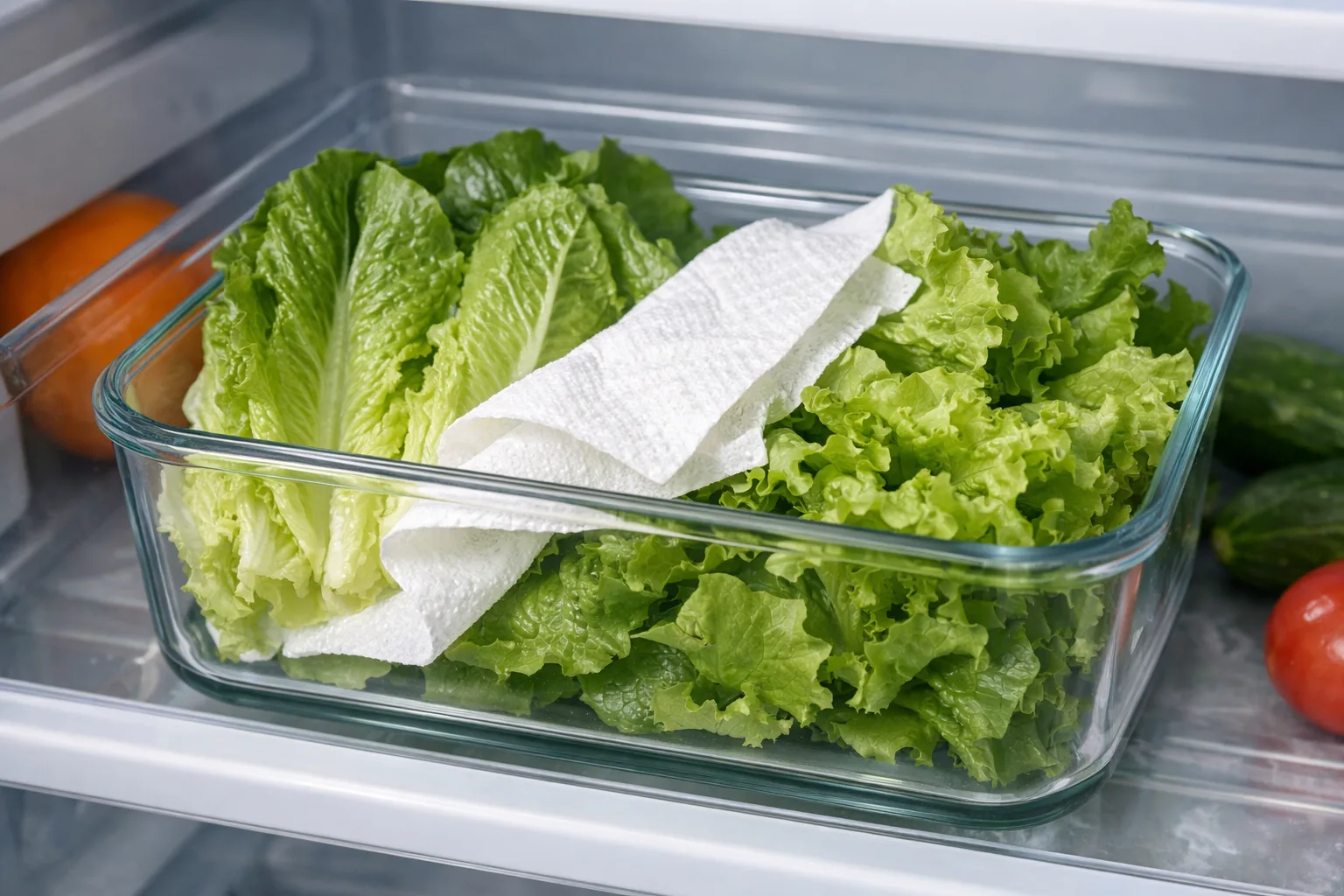
Lettuce can go from crisp to limp surprisingly quickly, but the fix is usually simple: keep it cold, prevent excess moisture from collecting, and avoid letting the leaves dry out. A few small changes to how you prepare and store it can help your lettuce stay fresher and ready for salads, sandwiches, and wraps.
The balance matters because lettuce needs water to stay firm, but wet leaves and standing water can encourage decay. The goal is not to dry lettuce out. It is to keep the leaves cool and lightly protected while absorbing moisture that would otherwise pool around them.
Start with fresh, dry lettuce
Storage can slow deterioration, but it cannot restore lettuce that was already old or damaged when you bought it. Choose leaves that look firm and lively, without widespread browning, slimy patches, or crushed areas. At home, remove any damaged outer leaves. They can trap moisture against the rest of the head and may spoil sooner.
If you are storing a whole head, it is usually easiest to leave it unwashed until you are ready to eat it. Extra water left between tightly packed leaves can make them deteriorate faster. Keep the head intact, and avoid cutting into it until needed.
The University of Minnesota’s home-storage guide likewise keeps an unwashed head attached and refrigerated and lists packaging or paper towel options. Use the condition of the actual leaves, not a promised shelf life for every variety.
Already-washed, bagged lettuce is a different case: follow the package instructions and keep it refrigerated. Once opened, remove any leaves that are damaged and check whether moisture has collected inside the bag.
Use a container and a dry paper towel
For loose leaves or cut lettuce, place the leaves in a clean container with a paper towel. The towel helps absorb excess moisture, while the container limits exposure to dry refrigerator air. A lidded food-storage container works well; a clean produce bag can also do the job.
The leaves should be dry to the touch before they go in. If you have washed them, use a salad spinner or gently pat them dry with a clean towel. Then line the container with a fresh paper towel, add the lettuce without packing it tightly, and place another towel on top if the container is deep. Close the lid without crushing the leaves.
Check the towel every few days. If it feels damp, replace it. A saturated towel cannot absorb much more moisture, and leaving it in place can keep the leaves wet. On the other hand, if the lettuce seems to be drying out, make sure the container or bag is closed well enough to protect it from refrigerator air.
For a whole head, you can wrap it loosely in a clean, dry paper towel and put it in a produce bag or container. The wrap should not be wet or tight. This gives excess moisture somewhere to go without leaving the lettuce uncovered.
Choose a good spot in the refrigerator
Store lettuce in the refrigerator’s crisper drawer or another consistently cold area, away from the warmest parts of the door. The drawer helps protect delicate leaves from being jostled and exposed to changing temperatures. Keep the lettuce away from the back wall if items there sometimes freeze.
Lettuce is also sensitive to ethylene, a natural gas released by some fruits and vegetables as they ripen. Apples, pears, and some other produce can release enough ethylene to speed up deterioration in sensitive greens. If possible, keep lettuce separated from ethylene-producing produce rather than storing everything together in one crowded drawer.
The UC Davis iceberg-lettuce fact sheet documents ethylene-related russet spotting. Its commercial controlled-storage conditions and durations are not a claim about how many days a household container will keep lettuce safe.
Avoid cramming the drawer full. Air needs room to circulate, and heavy items can bruise or crush the leaves. Keep lettuce away from raw meat, poultry, and seafood, too, so juices cannot drip onto ready-to-eat produce.
Should you wash lettuce before storing it?
If you have time to dry it thoroughly, washing loose leaves before storage can be convenient. The key is removing as much surface water as possible. A salad spinner is especially useful, but it is worth checking the bottom of the storage container later and changing the paper towel if it becomes damp.
Packaged lettuce marked “pre-washed” or “ready-to-eat” is a different starting point. FDA says it can be used without further washing. Follow the package; if you choose to wash it again, avoid unclean surfaces and utensils rather than assuming the extra wash is automatically safer.
If you do not have a way to dry the leaves well, wait and wash them just before serving. Rinse produce under clean running water; soap and household cleaners are not meant for washing food. Dry the leaves gently so dressing will cling better and the salad will not become watery.
Keep different kinds of lettuce in mind
Whole heads, such as iceberg or romaine, tend to hold together better than delicate loose-leaf varieties. Store whole heads intact and remove individual leaves as you need them. If you cut a head, use a clean knife and transfer the unused portion promptly to a covered container in the refrigerator.
Tender leaves are more easily bruised, so handle them gently and avoid pressing them into a small container. For chopped lettuce, use a shallow container if that helps prevent the pieces at the bottom from being crushed. In every case, clean hands and utensils help keep ready-to-eat leaves in good condition.
How long lettuce lasts varies with its type, how fresh it was when purchased, and how it has been handled. Rather than relying on a fixed number of days, check it regularly and use the leaves while they still look and smell fresh.
Can limp lettuce be revived?
For slightly limp leaves that are still sound and safely handled, a brief cold-water soak may improve firmness. A municipal food-waste recipe card describes this texture-refresh approach. Dry the leaves after washing; do not use appearance after soaking to decide whether old, damaged or mishandled lettuce is safe.
Discard leaves that are slimy, have an unpleasant smell, or show substantial decay. A little browning at a cut edge can happen as lettuce is exposed to air; by itself, it does not necessarily mean the whole batch is spoiled. Remove affected pieces and assess the rest for freshness.
A simple routine for crisp lettuce
For the best chance of keeping lettuce crisp, start with fresh leaves, remove damaged pieces, and store the rest cold. Keep whole heads intact when you can. For washed or cut lettuce, dry it well, use a clean container with a paper towel, and replace the towel when it becomes damp. Keep the container away from bruising, warm spots, and ripening fruit.
These steps do not stop lettuce from aging, but they help manage the two things that most often undermine its texture: moisture loss and excess water. With a little attention when you put it away, the next handful is much more likely to be crisp.
You might also like
What Your Refrigerator’s Crisper Drawer Is Actually Designed to Do
That special drawer in your fridge is more than a produce bin. Here’s how its humidity control works—and how to use it to help fruits and vegetables last.
How to Store Bread So It Stays Fresh Longer
Bread storage balances texture, mould risk and keeping time. Learn when room-temperature storage makes sense, how refrigeration differs, and when to freeze.

How to Keep Cut Flowers Fresh Longer in a Vase
Clean water, freshly trimmed stems, and a cool spot can make a striking difference. Learn the simple science and everyday steps that help cut flowers last.