Why Popcorn Pops Into a Light, Fluffy Shape
By WowPebble Editorial
A popcorn kernel turns fluffy when trapped moisture builds pressure, then bursts through its hull and expands the softened starch into a porous foam.
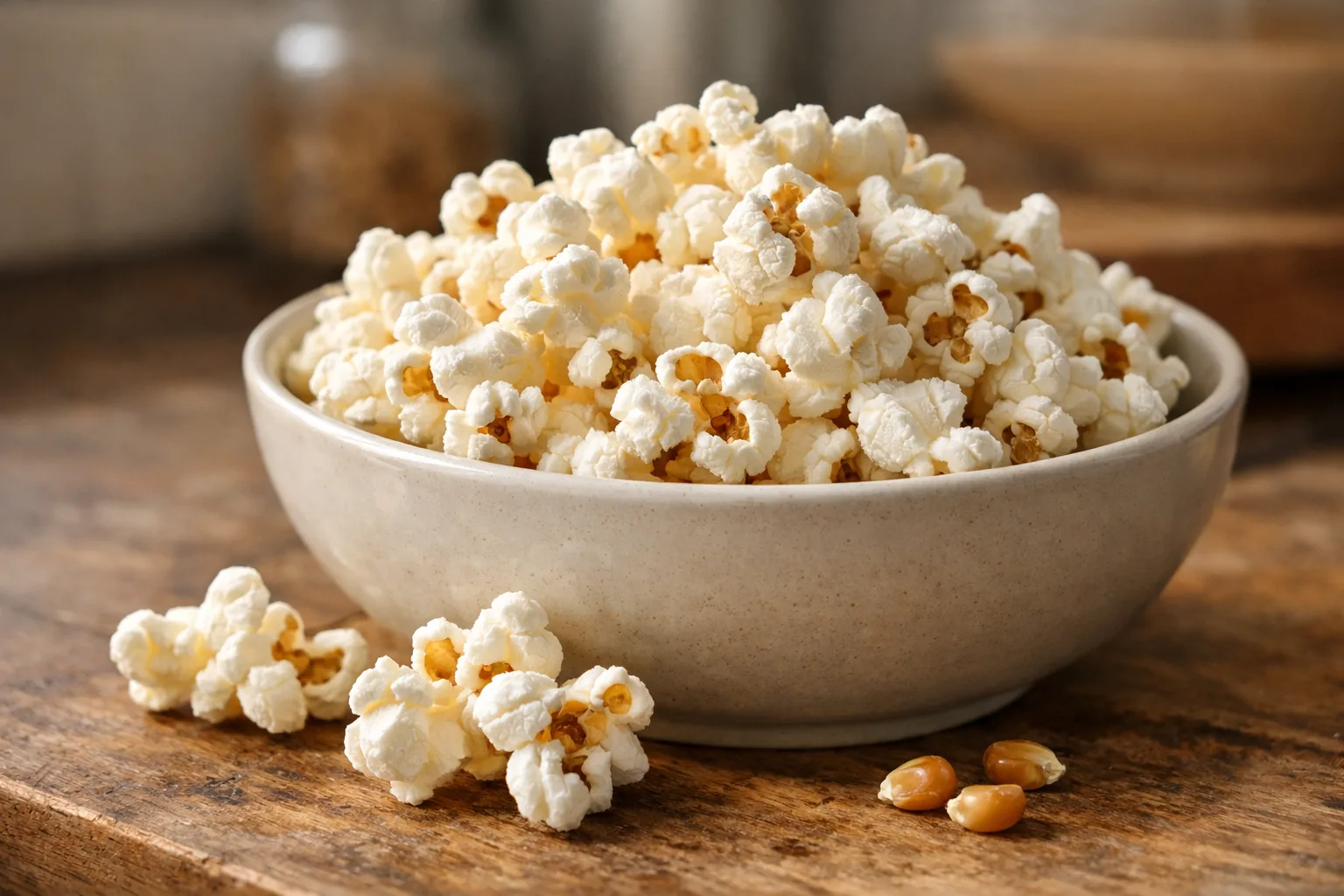
Popcorn becomes light and fluffy because heat turns moisture inside each kernel into pressure-building vapor. When the hard outer hull finally splits, the pressure drops suddenly and the hot, softened starch expands into a foam. As it cools, that foam sets into the familiar crisp, airy piece.
What happens inside a kernel
A popcorn kernel has three important parts: a tough outer hull, a small amount of water, and starchy material inside. The hull is strong enough to hold in heat and pressure while the kernel warms. Meanwhile, its moisture heats up and forms vapor. The starch softens in the heat, becoming pliable enough to expand.
Eventually, pressure inside the kernel becomes greater than the hull can contain. The hull cracks, and the sudden release lets the pressurized moisture expand rapidly. The starch bursts outward with it, forming bubbles and thin walls—much like a foam. The escaping vapor helps drive the expansion, and the starch cools and firms up almost immediately, preserving the puffed shape.
That quick change is the key: the kernel does not simply dry out or split open. Its softened interior expands before it can cool, creating a structure full of small air spaces. Those spaces make popcorn much lighter and more tender than the dense kernel it came from.
Why the popped pieces have different shapes
Popcorn commonly pops into two broad shapes. Butterfly popcorn has irregular wings and lobes, while mushroom popcorn is rounder and more compact. These shapes result from differences in how the kernel’s hull breaks and how the starch expands through the opening. The type of popcorn and the conditions during popping can affect the result, so not every kernel from one batch will look identical.
Both shapes are made by the same basic process: a pressure-driven burst of softened starch. The difference is in the pattern of expansion, not in a separate popping mechanism. Butterfly pieces are familiar as a light, uneven snack; the rounder mushroom form is often useful when a more robust shape is wanted, such as for coating.
Why some kernels stay hard
A kernel needs the right combination of moisture, a hull that can hold pressure, and enough heat to soften its starch. If it loses too much moisture before popping, it may not build enough pressure to expand properly. A damaged hull can also let vapor escape too early. In either case, the kernel may remain unpopped or open only partly.
So the fluffy shape is the result of a brief transformation: a sealed kernel heats up, pressure builds, the hull gives way, and expanding starch sets into foam. The crisp piece left behind is, in effect, a tiny edible structure made by steam and a sudden burst of heat.
You might also like
Why Jar Lids Pop When You First Open Them
That sharp pop is more than a satisfying kitchen sound: it’s a tiny pressure change as air enters a sealed jar and its lid shifts.
How Do Mushrooms Seem to Appear Overnight?
Mushrooms don’t grow from nothing in a single night. Their hidden fungal network can produce visible fruiting bodies quickly when conditions are right.
How Tidal Bores Send Waves Upstream
A tidal bore forms when a rising tide is funneled into a shallow river mouth, steepening into a moving front that can surge against the river’s flow.