How Sinkholes Form—and Why Some Open Up Suddenly
By WowPebble Editorial
Sinkholes can take years to develop beneath the surface, then appear in moments. Here’s what causes them, what can trigger a collapse, and how to stay safe.
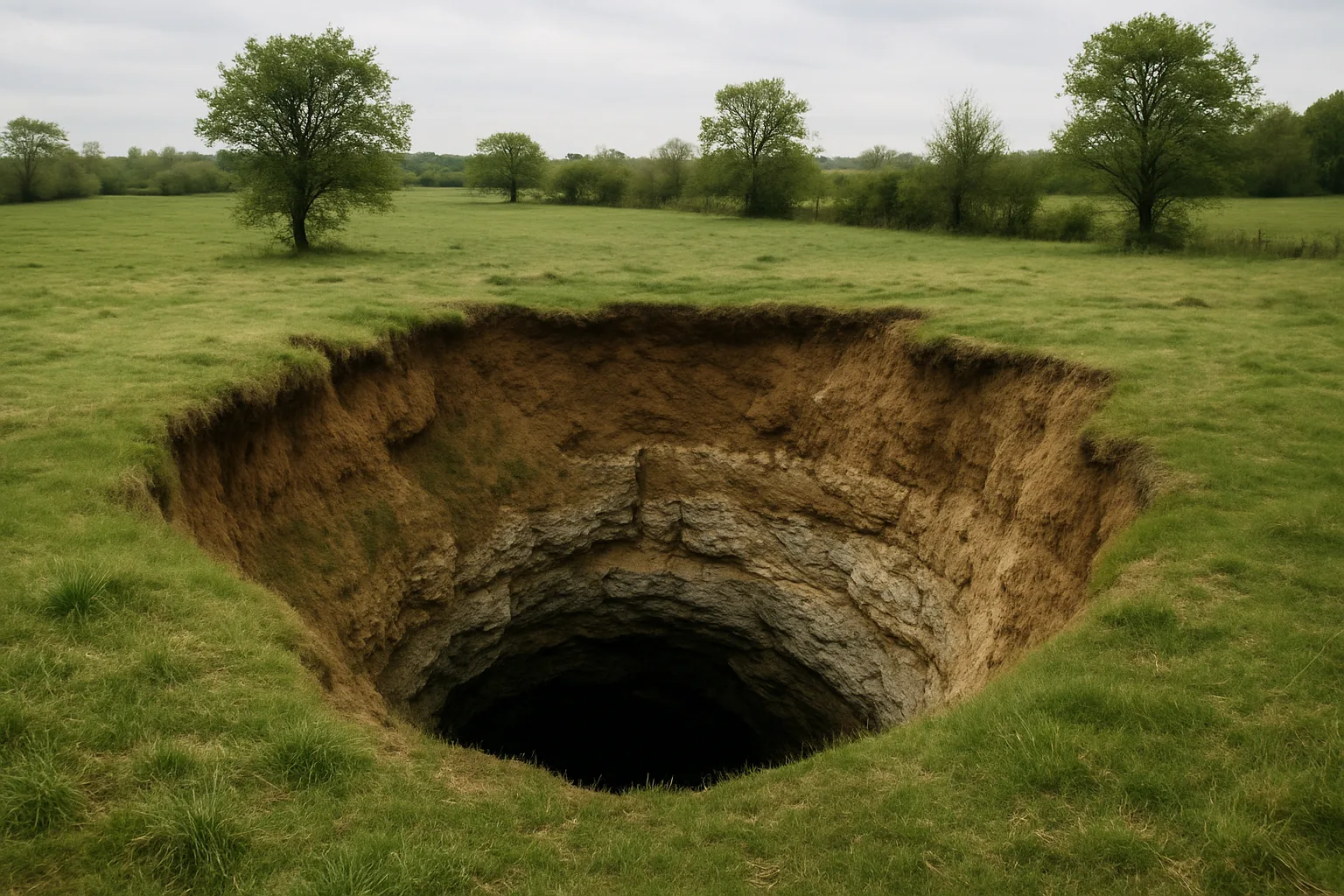
A sinkhole can look as if the ground has vanished in an instant. Often, though, the conditions behind it have been developing underground for years. Water gradually dissolves rock or carries soil into a hidden gap; eventually, the ground above can no longer hold its weight. When that support gives way, a gradual geological process becomes a sudden surface collapse.
The key to understanding sinkholes is that the visible hole is often only the final stage of a problem beneath the ground. Some sinkholes grow slowly and leave warning signs. Others stay hidden until a thin layer of soil or rock breaks through.
What is a sinkhole?
A sinkhole is a depression or hole formed when ground at the surface subsides or collapses into space below. Sinkholes are especially common in places with karst terrain: landscapes where water can dissolve the underlying rock and create cracks, cavities, underground channels, and caves.
The rocks most often associated with this process are limestone, gypsum, and salt. Rainwater becomes slightly acidic as it absorbs carbon dioxide from the air and soil. As it seeps through the ground, it can slowly dissolve these rocks. Over time, small openings may widen into larger passages or chambers.
The landscape above may not show what is happening below. A layer of soil can cover the soluble rock, hiding cavities from view. That is one reason sinkholes can seem to appear without warning: the process is underground, while the collapse is visible all at once.
Three ways sinkholes develop
Sinkholes do not all form in the same way. Geologists commonly describe three broad patterns, though real examples can involve more than one process.
Solution sinkholes develop where soluble rock is exposed at the surface. Rainwater dissolves the rock gradually, and the ground settles into a shallow depression. Water may collect in the low area, while soil and plant material accumulate there. These features tend to form slowly rather than opening as a deep hole in a moment.
Cover-subsidence sinkholes form where loose material such as sand covers dissolving rock. As soil grains move into openings below, the surface gradually sinks. The result may be a broad, subtle depression rather than a dramatic crater.
Cover-collapse sinkholes can appear much more abruptly. Here, soil or other material forms a roof over an underground cavity. The roof may hold for a time, even as the gap below grows. If the remaining support becomes too weak, the cover can collapse, dropping soil and anything on it into the cavity.
Why can one appear suddenly?
A sudden collapse usually means that the ground had been changing out of sight. A cavity may slowly enlarge, or soil may gradually wash down through cracks. Above it, a relatively firm layer can bridge the gap, supporting the surface like a temporary roof.
That roof is not necessarily strong. Its stability depends on factors such as the thickness and type of material, the size and shape of the cavity, and how much weight the ground must carry. When the balance finally tips, the break can happen quickly. The sinkhole may seem to have formed in minutes, even though the conditions that made it possible took far longer to develop.
Changes in water can help trigger a failure. Heavy rain may saturate soil, add weight, or carry loose material into underground openings. A sudden change in groundwater levels can also affect support below the surface. In some places, drought followed by heavy rain can alter soil and water conditions, but there is no single weather pattern that explains every collapse. A rainstorm can be a trigger in a susceptible area; it does not create every sinkhole from scratch.
How people can contribute
Sinkholes can also be associated with human activity, especially where water flow or underground support has been changed. Leaking water or sewer pipes may wash soil away. Construction, excavation, and changes to drainage can alter how water moves through the ground. Pumping large amounts of groundwater can lower water levels and affect the material that had been supported by that water.
Mining and abandoned underground workings can also lead to ground collapse. These are not always natural sinkholes in the strict geological sense, but they can produce similar-looking holes or subsidence at the surface. The cause matters: different hazards call for different investigations and responses.
Where are sinkholes common?
Sinkholes are most likely in regions with soluble bedrock, but the risk varies from place to place. Karst landscapes occur around the world, including parts of the United States, Europe, and Asia. Even within a region, the ground may change over short distances: one property can sit over soluble rock while another nearby does not.
In Mexico’s Yucatán Peninsula, limestone sinkholes known as cenotes are a familiar feature of the landscape. Some hold groundwater and have long been important local water sources. They are also culturally significant, including in the history of the Maya. Cenotes show that not every sinkhole is a sudden disaster: some are longstanding openings that form part of a region’s water system and natural landscape.
Are there warning signs?
Some sinkholes offer clues before a major collapse, though these signs are not proof that one is forming. Watch for a new, unexplained depression; cracks in the ground or nearby structures; doors or windows that suddenly become difficult to open; leaning trees or fence posts; or water collecting where it did not before. A change in a well’s water level or clarity may also be worth reporting.
These signs can have other causes, and some sinkholes provide little visible warning. If a depression is growing, the ground is cracking, or a building appears unstable, keep people and pets away. Do not walk onto the edge to inspect it: the surrounding ground may be unsupported too. Contact local emergency services or the relevant public authority, and follow their advice. Suspected problems on private property should be assessed by qualified professionals rather than filled in as a do-it-yourself fix.
A sudden hole, a long story
A sinkhole’s dramatic appearance can make it seem like a random event, but the collapse is often the final chapter in a longer underground story. Water dissolves rock, shifts soil, or changes the support beneath the surface; a hidden cavity grows; and, in some cases, the cover eventually gives way.
That distinction helps explain both the science and the practical risk. Sinkholes cannot always be predicted from the surface, but knowing how they form can make warning signs easier to recognize—and make clear why a new or expanding hole should be treated cautiously.
You might also like
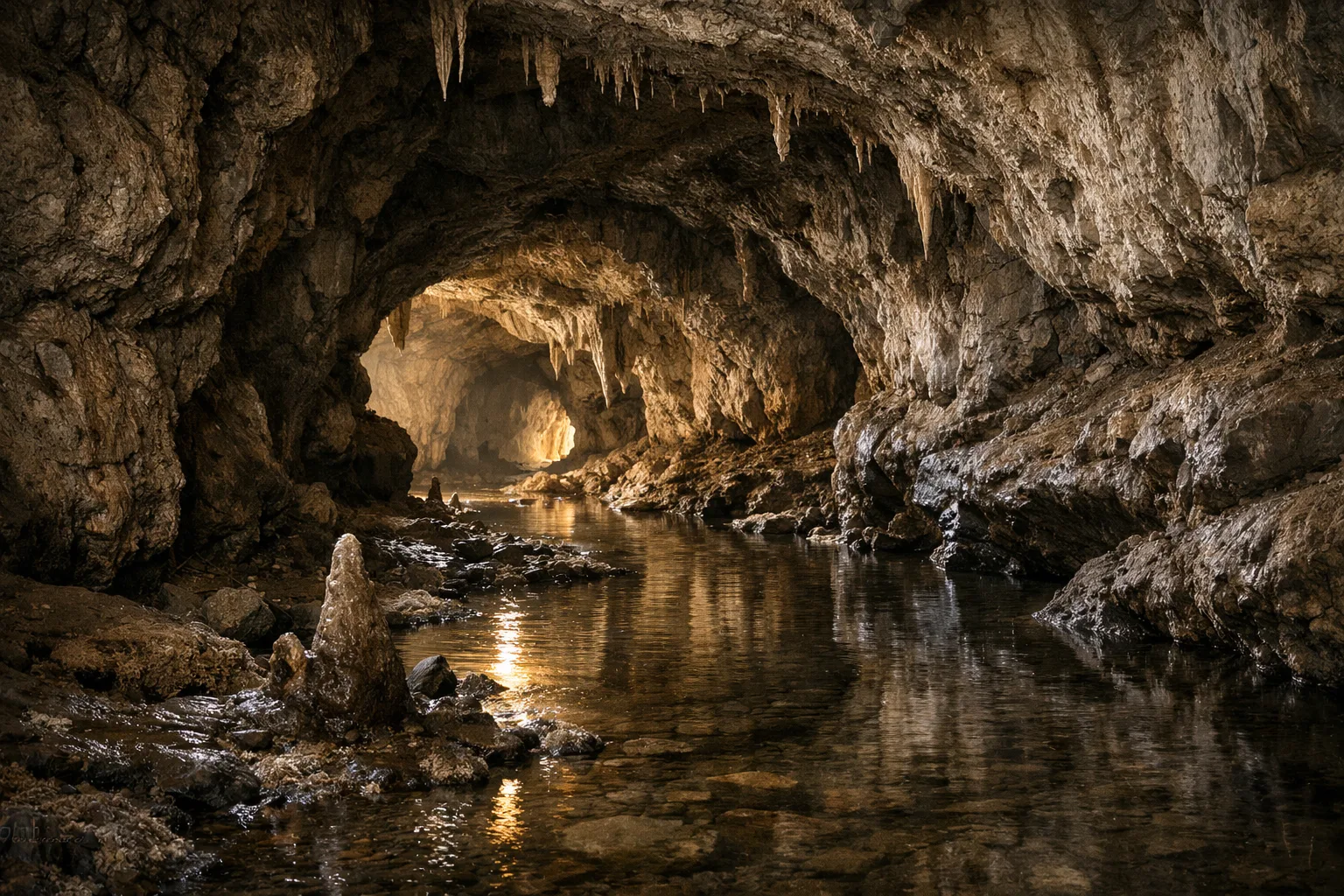
How Caves Form: The Slow Work That Shapes Rock
Caves form as water dissolves rock, waves carve coastlines, or lava drains from cooling flows. Discover how tiny cracks grow into underground passages.

How Do Mushrooms Seem to Appear Overnight?
Mushrooms don’t grow from nothing in a single night. Their hidden fungal network can produce visible fruiting bodies quickly when conditions are right.
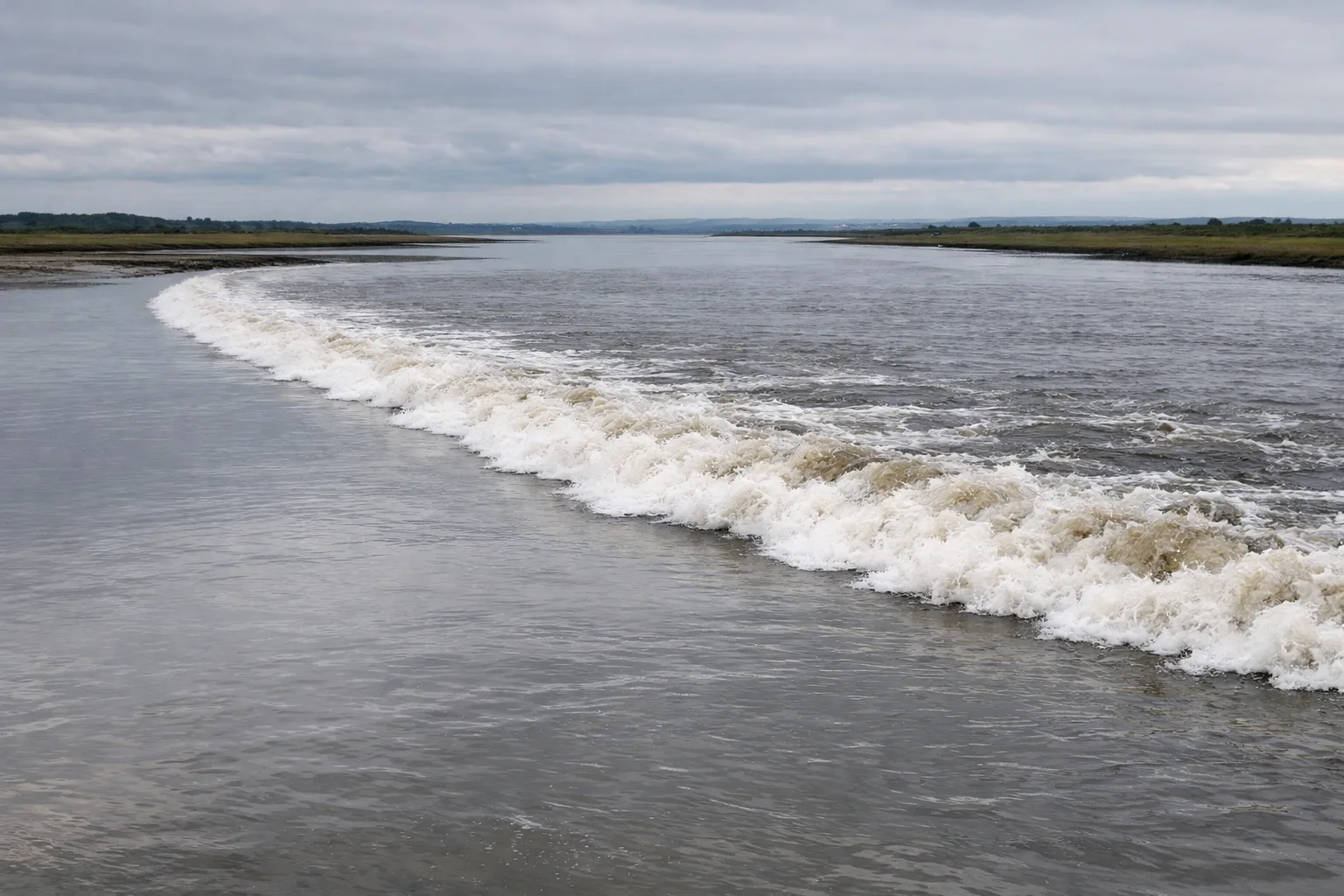
How Tidal Bores Send Waves Upstream
A tidal bore forms when a rising tide is funneled into a shallow river mouth, steepening into a moving front that can surge against the river’s flow.