How Do Scientists Estimate the Age of the Earth?
By WowPebble Editorial
Earth is about 4.54 billion years old. Scientists reached that estimate by dating meteorites and ancient minerals with the predictable decay of radioactive atoms.
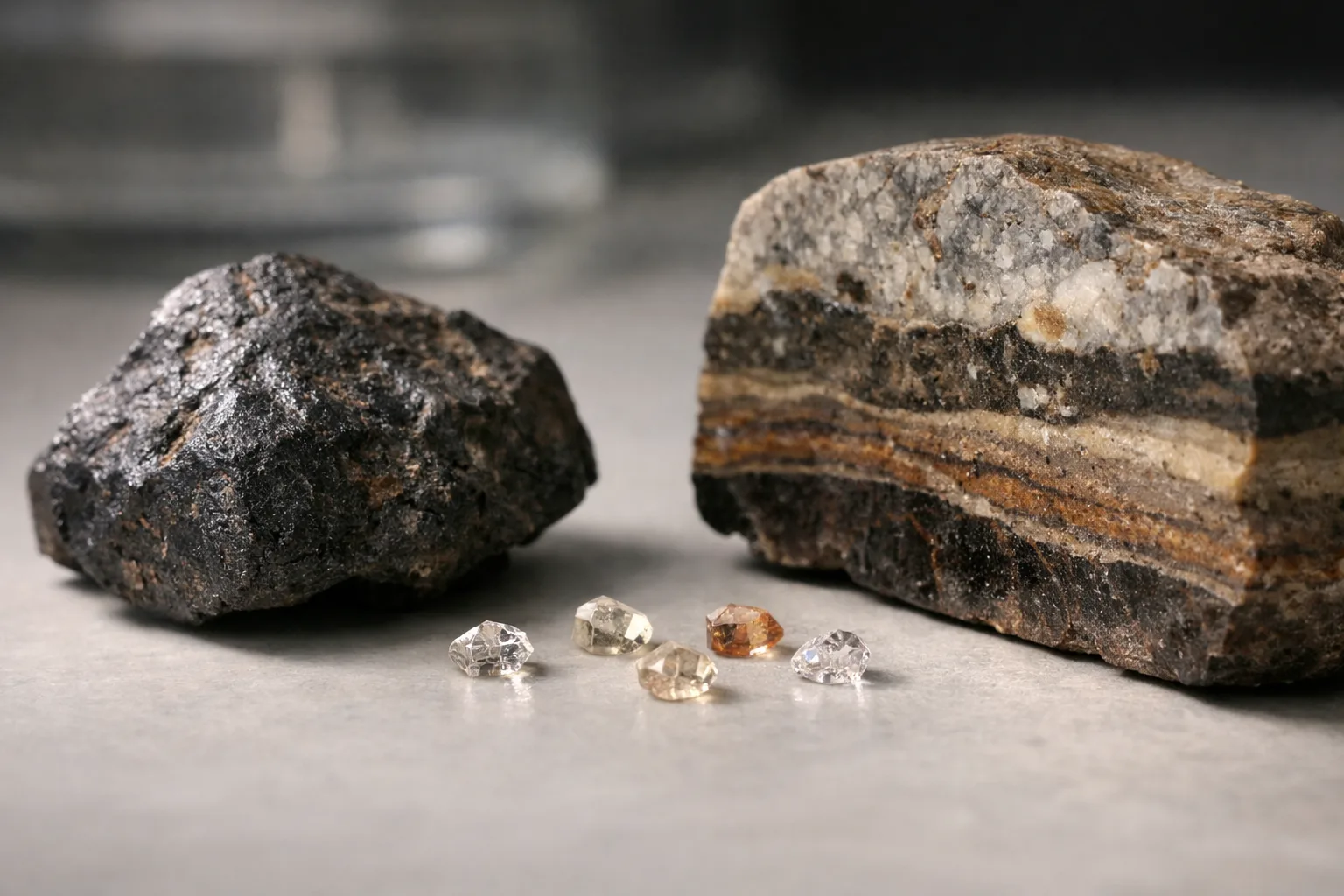
Earth is about 4.54 billion years old. Scientists did not arrive at that figure by finding one ancient rock and reading its age like a date on a label. Instead, they combined evidence from radioactive atoms in meteorites, Earth’s oldest minerals, and the materials that formed the early solar system.
The USGS explanation of Earth’s age links the estimate to meteorite and lead-isotope evidence, rather than equating the age of one surviving terrestrial rock with the planet's formation. Its older inventory of the oldest rocks should not be treated as an up-to-date record list.
The key is that some atoms change into other atoms at a steady, measurable rate. By measuring how much of the original material remains—and how much of its decay product has accumulated—researchers can work out how long that change has been taking place. This method, called radiometric dating, gives scientists a way to estimate ages far beyond the reach of written history.
A clock inside certain atoms
Some forms of elements are unstable. These radioactive isotopes gradually transform into other isotopes through radioactive decay. For example, uranium isotopes decay into lead isotopes. The rate of decay is described by a half-life: the time it takes for half of a given amount of a radioactive isotope to decay.
A half-life does not mean that scientists can identify the age of a sample by simply counting what remains. They measure the proportions of the parent isotope and the daughter isotope—the original radioactive material and the product it becomes. Because the decay rate is known, those proportions can reveal how much time has passed, provided the sample has behaved like a reliable clock.
That last condition matters. A sample should not have gained or lost the relevant isotopes in a way that disrupts the calculation. Heat, melting, or chemical changes can alter a rock’s isotopic record. Scientists therefore choose suitable minerals, study their history, and compare results from different dating methods where possible.
Why meteorites help date Earth
The oldest rocks on Earth are not necessarily as old as the planet itself. Earth’s surface has been repeatedly reshaped by melting, volcanic activity, erosion, and the movement of tectonic plates. Those processes can destroy early rocks or reset the clocks in their minerals. As a result, the oldest surviving terrestrial rocks and minerals provide important clues, but they do not preserve a complete record of the planet’s formation.
Meteorites offer another kind of evidence. Many formed from material left over when the solar system was taking shape. Since Earth and meteorites formed from the same broad reservoir of early solar-system material, meteorites can help scientists estimate when that formation began. They preserve early solar-system evidence that is older than the surviving rocks on Earth.
Researchers use isotope measurements, including uranium-lead and lead-lead methods, to study these samples. They also examine how the lead isotopes in meteorites relate to those in Earth materials. Taken together, this evidence points to Earth forming soon after the earliest solids in the solar system—not at the exact same instant, but within the same early period of planetary formation.
The widely accepted estimate for Earth’s age is about 4.54 billion years, often given with an uncertainty of roughly 50 million years. That uncertainty is not a sign that the estimate is a guess. It reflects the limits of measurements and the challenge of reconstructing events that happened more than four billion years ago.
What Earth’s oldest minerals can tell us
Meteorites are not the only evidence. Some ancient minerals found on Earth have survived even though the rocks around them have changed or disappeared. Tiny zircon crystals are especially useful because they can incorporate uranium when they form while excluding much of the lead. As uranium decays, lead accumulates inside the crystal, giving scientists a way to estimate when it crystallized.
A 2014 investigation involving Western University checked a zircon core dated to about 4.4 billion years using atom-probe analysis. It is evidence that ancient crustal material existed by then, not a direct date for Earth’s formation or a claim about the current oldest-sample record. Meteorite evidence provides the wider formation constraint.
This distinction explains why the age of the oldest rock is not the same as the age of Earth. A planet can be much older than the rocks that remain on its surface. Earth’s geological activity has continually recycled its crust, leaving only scattered fragments of its earliest history.
How scientists check the estimate
No single measurement has to carry the entire argument. Scientists compare samples, isotope systems, and assumptions. If different kinds of evidence point to compatible ages, confidence in the overall picture grows. If a sample has been disturbed or its history is unclear, researchers can identify that problem or avoid relying on it as a straightforward clock.
Radiometric dating is also useful well beyond the question of Earth’s age. Different isotope systems work over different timescales and in different materials. Geologists use them to investigate the timing of events such as the formation of minerals, volcanic activity, and changes in ancient rocks. The basic principle remains the same: radioactive decay happens at a predictable rate, and the isotope record can preserve evidence of elapsed time.
The estimate of 4.54 billion years is therefore not based on one ancient object that has remained untouched since the planet formed. It comes from a wider reconstruction: dating early solar-system material, comparing isotopic evidence, and interpreting the oldest surviving minerals on Earth.
From cooling rocks to radioactive clocks
The question has not always had such a precise answer. In the nineteenth century, physicist William Thomson, later known as Lord Kelvin, tried to estimate Earth’s age by calculating how long it would take a hot planet to cool. His calculations produced an age far younger than the modern estimate.
A quantitative reassessment of Kelvin and Perry’s arguments emphasizes heat transport: Kelvin’s conductive cooling model did not capture interior convection. Perry had raised that objection before radioactivity was discovered. Radioactive decay later added both an internal heat source and a dating method, but “Kelvin forgot radioactivity” is not a complete explanation of the cooling-model error.
A number built from evidence
Earth’s age is best understood as a carefully tested estimate, not a date read directly from the planet. Meteorites preserve clues from the solar system’s beginnings, radioactive isotopes provide a clock, and ancient minerals offer evidence of Earth’s early crust. Because the planet has continually changed, scientists bring these lines of evidence together rather than depending on a single rock.
The result—about 4.54 billion years—places human history in perspective. Recorded history occupies only a tiny sliver of Earth’s past, while the rocks beneath our feet preserve traces of processes that began billions of years before people appeared.
You might also like

How Do Mushrooms Seem to Appear Overnight?
Mushrooms don’t grow from nothing in a single night. Their hidden fungal network can produce visible fruiting bodies quickly when conditions are right.
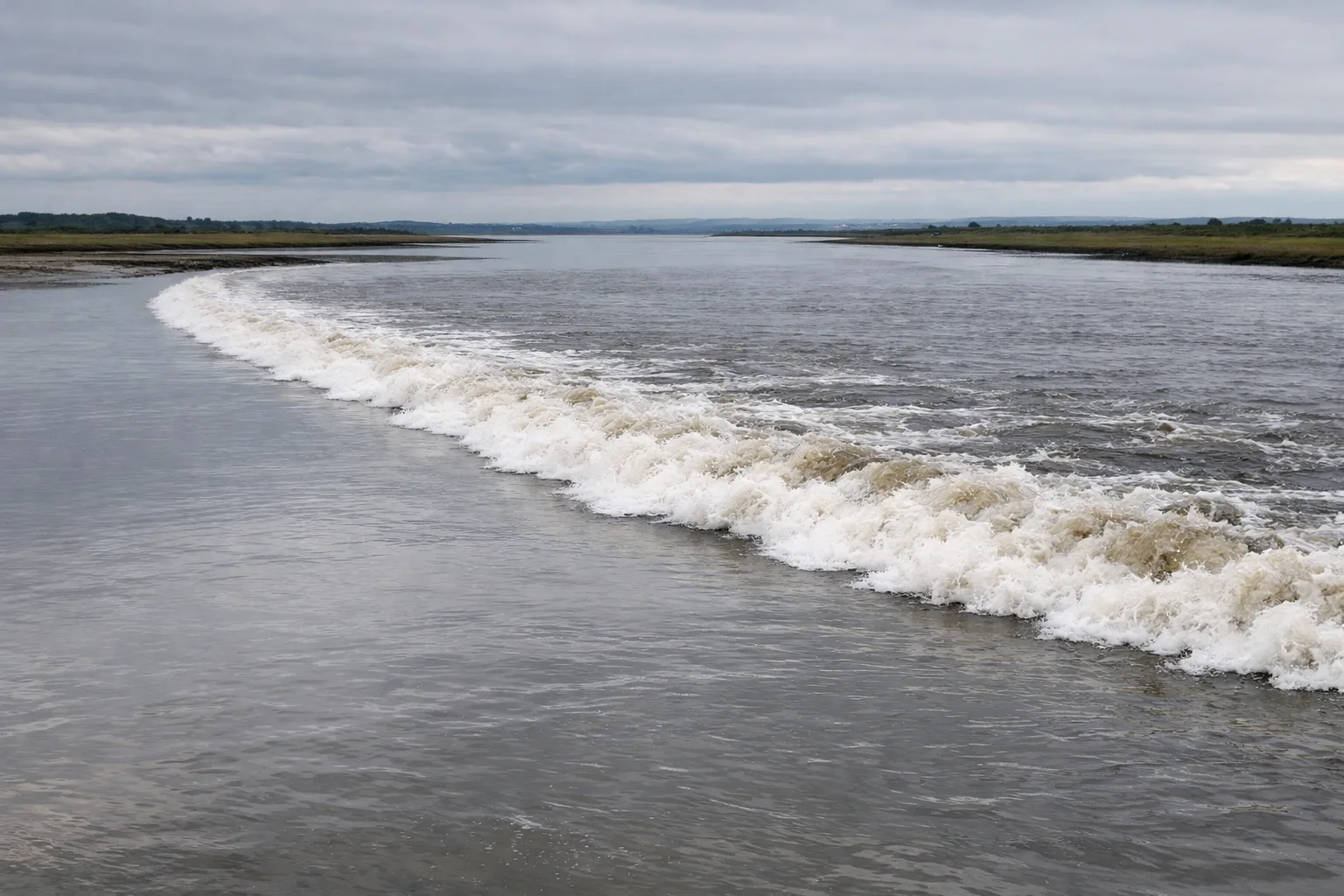
How Tidal Bores Send Waves Upstream
A tidal bore forms when a rising tide is funneled into a shallow river mouth, steepening into a moving front that can surge against the river’s flow.

Why Chameleons Change Color—and What the Colors Signal
Chameleons change color to communicate, respond to temperature and light, and sometimes blend in. Their shifting shades come from both pigments and remarkable skin cells.