How Glaciers Carve U-Shaped Valleys
By WowPebble Editorial
Rivers tend to cut narrow V-shaped valleys, but glaciers reshape them into broad U’s. Here’s how moving ice and rock debris transform a landscape.
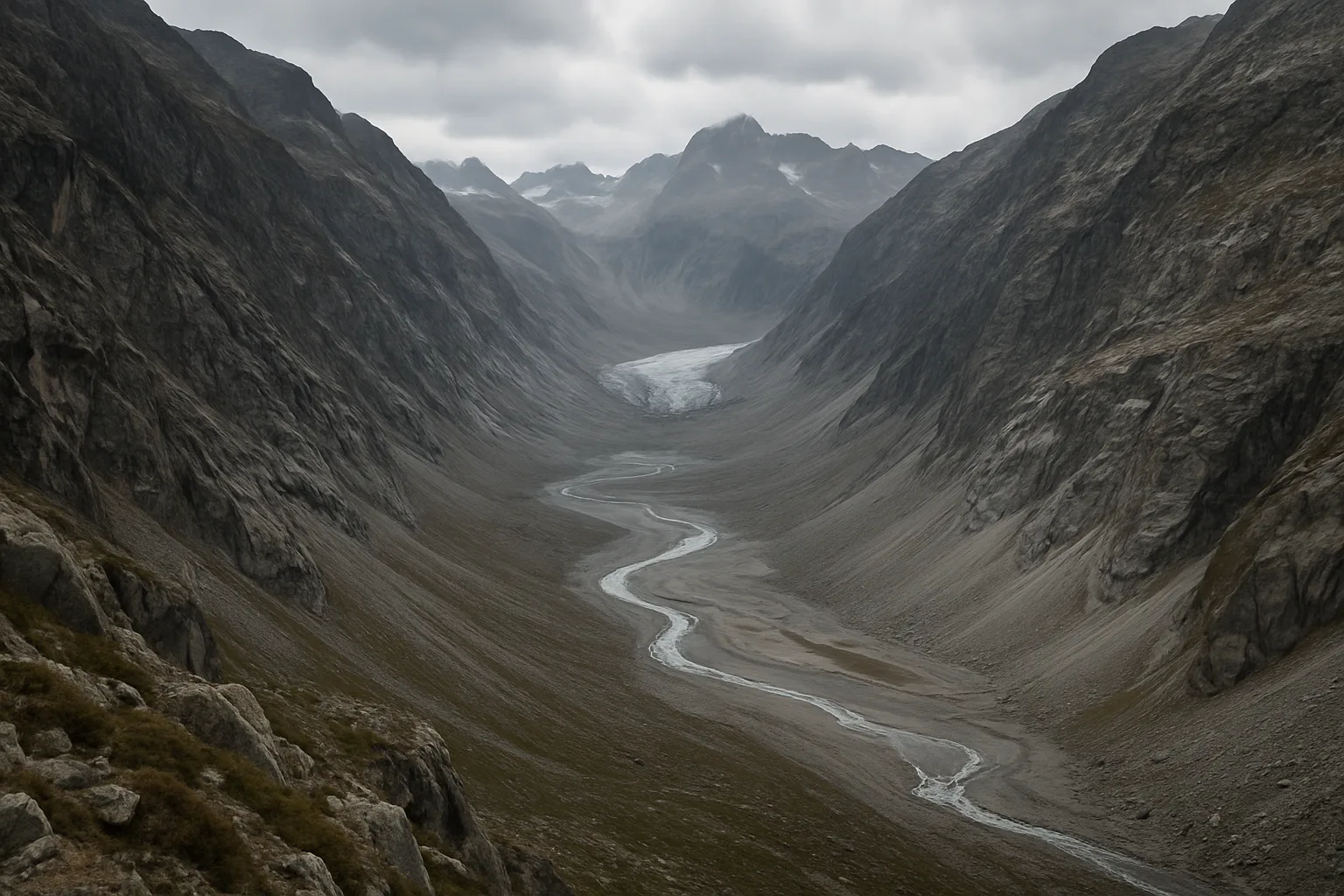
A river valley often narrows toward its floor, forming a V-shaped cross-section. A glacier can turn that same valley into something much broader: a U, with steep sides and a wide floor. The change happens because a thick, moving mass of ice erodes not just the channel beneath it, but also the valley walls.
The ice does much of its work with rock fragments trapped underneath it. As a glacier slides through a valley, these fragments scrape and grind the bedrock, while pieces of rock can also be pulled away. Over time, the glacier deepens and widens the valley, leaving the distinctive shape that gives U-shaped valleys their name.
From river valley to glacial trough
Many glaciers that carve valleys begin in high mountains, where snow accumulates year after year. When more snow falls than melts, layers build up. The weight presses the lower snow into ice, and, once the ice becomes thick enough, gravity draws it downhill.
A valley glacier usually follows an existing route, often one first shaped by streams and rivers. Running water tends to cut downward into a relatively narrow channel, creating a V-shaped valley. A glacier is different: it fills much more of the valley, reaching up its sides as it flows. Its great thickness allows it to erode the floor and lower slopes at the same time.
The result is not a clean cut made in a single pass. Glacial valleys develop through sustained erosion, and the land’s shape, rock type and the glacier’s movement all influence the final form. In places where ice advances and retreats repeatedly, later glaciers can further alter a valley already shaped by earlier ones.
How the ice wears away rock
Two processes are especially important: abrasion and plucking.
Abrasion is the grinding action of rock debris carried at the glacier’s base. Stones and finer sediment press against the bedrock as the ice moves. Like sandpaper on a surface, they scratch, polish and wear it down. Some glaciers leave long grooves in exposed rock that indicate the direction of ice movement.
Plucking, also called quarrying, removes larger pieces. Ice can attach to fractured or loosened rock and pull blocks away as the glacier moves. Water and changes in pressure near the base can help loosen rock, though the details vary with conditions. The broken material may then be carried along beneath or within the ice, where it can contribute to further abrasion.
A glacier does not always slide smoothly across its bed. Some of its motion comes from deformation within the ice itself, as the ice slowly changes shape under pressure. Where the base is able to slide, friction and the debris it carries help it erode the ground. The balance between deformation, sliding and erosion depends on factors such as the glacier’s temperature, thickness and the conditions beneath it.
Why the valley becomes U-shaped
As the glacier moves, it scours the valley floor and presses against the sides. Abrasion and plucking deepen the route and widen it, while the ice’s broad contact with the landscape reshapes slopes that a river might leave largely untouched. The former V-shaped channel can become a trough with a flatter, wider floor and steep walls.
The familiar U is a useful description, not a perfect template. Some glacial valleys have uneven floors, irregular sides or sections that are much deeper than others. Bedrock structure matters: hard rock may resist erosion, while fractured or weaker rock can be removed more readily. The glacier’s path and the amount of debris at its base also affect the shape.
Glaciers can sometimes erode a valley floor below the level of its outlet, creating an overdeepened basin. When the ice melts, such a hollow may hold a lake. Not every U-shaped valley contains one, but lakes are among the features that can remain in a glacial landscape.
Clues left behind when the ice retreats
A U-shaped cross-section is one clue that a valley was shaped by ice, but it is often part of a larger glacial landscape. Abrasion can leave polished bedrock and parallel scratches. Deposits of unsorted material, known as till, can mark where a glacier left sediment as it melted. Ridges of deposited debris called moraines can also trace former ice margins.
Tributary valleys offer another striking clue. A smaller glacier may not cut its valley as deeply as a much larger glacier in the main valley. After the ice disappears, the tributary valley can be left high above the main valley floor. This is called a hanging valley, and streams dropping from one into the other may form waterfalls.
Some glacial troughs reach the sea. If rising seawater floods a deep valley carved by a glacier, the result is a fjord. Fjords are therefore not simply river valleys beside the coast; their steep-sided shape reflects the powerful erosion of ice, followed by inundation.
A landscape shaped by moving ice
U-shaped valleys reveal that glaciers are not stationary blocks of frozen water. They are flowing systems that transport rock, grind bedrock and reshape entire mountain landscapes. Their work can take place over long periods and may be renewed as ice advances again, but the exact history of any valley depends on local conditions.
The next time a broad mountain valley opens beneath steep slopes, its shape can tell a story. A river may have started the channel, but a glacier’s weight, movement and load of broken rock may have transformed it into a wide trough. The valley is a lasting record of ice moving through the land.
You might also like
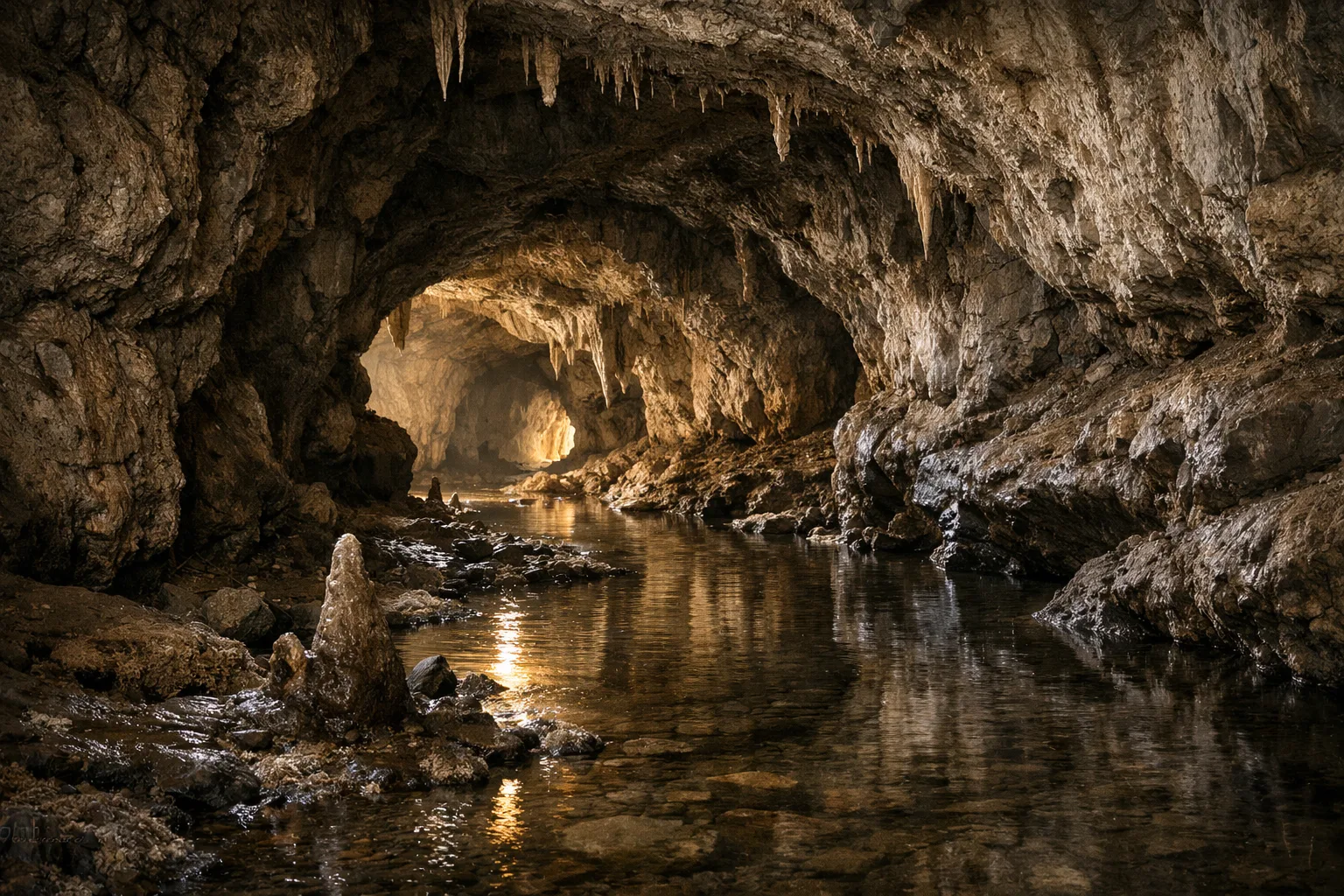
How Caves Form: The Slow Work That Shapes Rock
Caves form as water dissolves rock, waves carve coastlines, or lava drains from cooling flows. Discover how tiny cracks grow into underground passages.

How Do Mushrooms Seem to Appear Overnight?
Mushrooms don’t grow from nothing in a single night. Their hidden fungal network can produce visible fruiting bodies quickly when conditions are right.
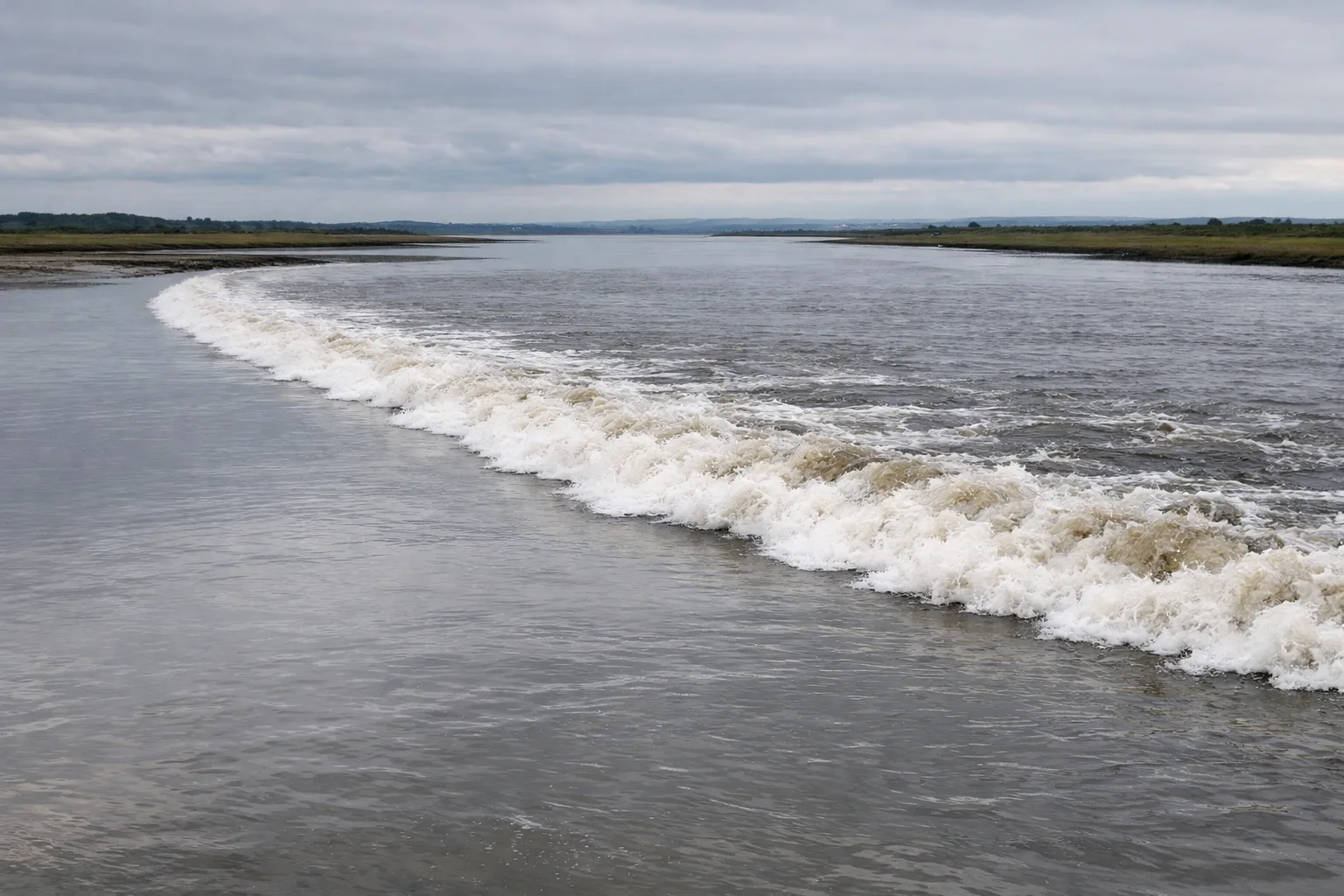
How Tidal Bores Send Waves Upstream
A tidal bore forms when a rising tide is funneled into a shallow river mouth, steepening into a moving front that can surge against the river’s flow.