How Do Fingerprints Form Before Birth?
By WowPebble Editorial
Fingerprints begin taking shape before birth, as growing skin and tiny ridges develop on a fetus’s fingertips. The process helps explain why each pattern is distinctive.
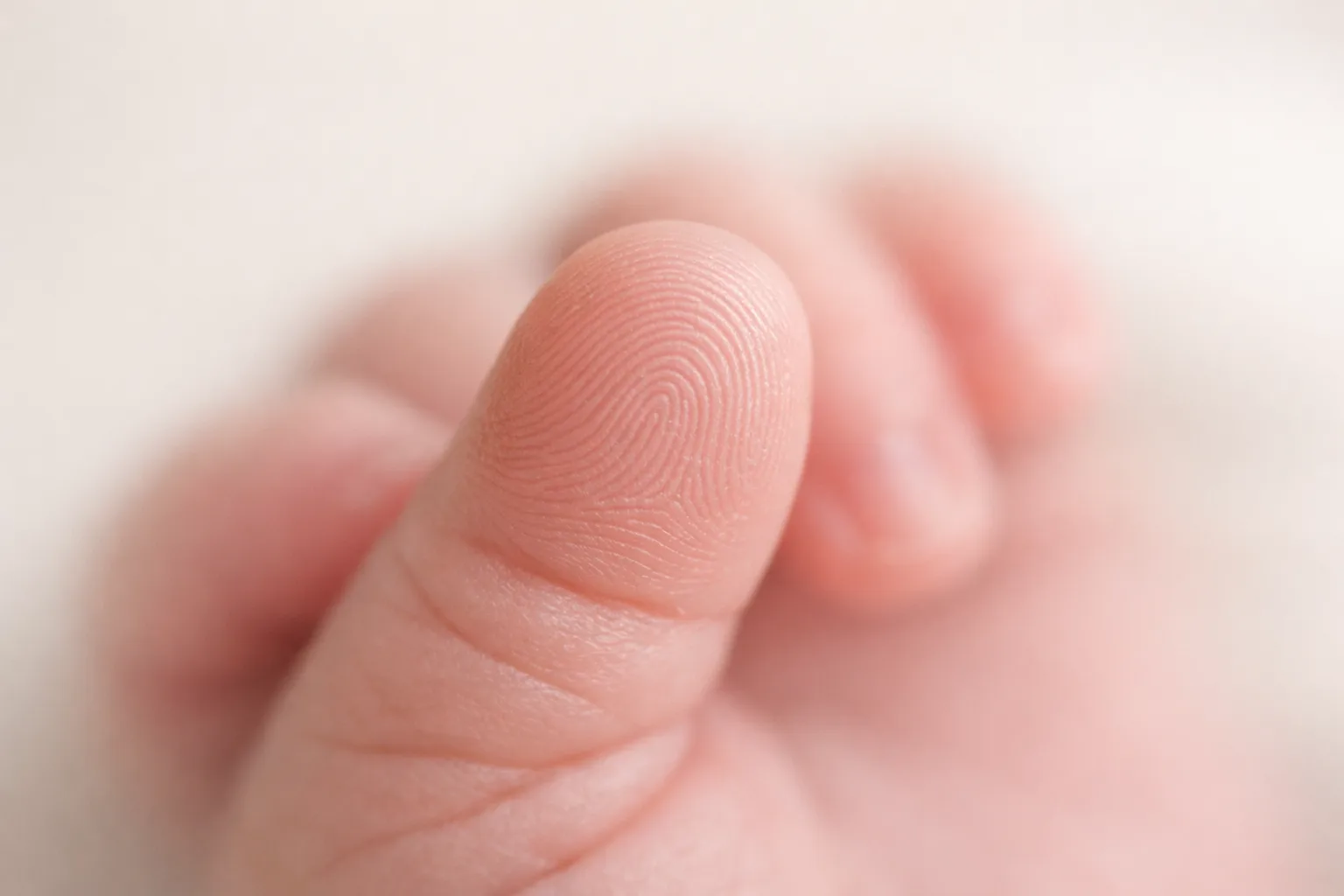
Fingerprints are already taking shape months before a baby is born. Their tiny ridges develop as the skin grows on the fingertips, guided by inherited traits and small variations in the conditions inside the womb. By the time a baby arrives, the basic patterns are in place—and they will generally stay with that person for life.
The process is more than a matter of genes drawing a pattern onto the skin. Fingerprints emerge as several parts of a developing hand grow and interact. The shape of the fingertip, the tissues beneath the skin, and the growth of the skin itself all contribute. This makes fingerprint formation an example of how biology combines broad developmental instructions with fine-grained variation.
A fingerprint begins with a developing hand
Early in pregnancy, the fetus’s fingers are still forming. Small, rounded swellings called volar pads appear on the fingertips and other parts of the hands and feet. These temporary pads are part of the developing tissue beneath the skin. They become less prominent as the hand grows, changing the surface over which the ridges develop.
At the same time, the outer skin is developing. In the fingertip area, cells in the lower part of the epidermis—the skin’s outer layer—multiply and form ridges. These raised lines are known as friction ridges. They make up the visible pattern of a fingerprint and are part of the skin found on the fingers, palms, toes, and soles.
Ridge formation is a prenatal process, progressing as the fingertips and skin develop. The NIJ’s embryology chapter describes the changing pads and primary ridges. Broad patterns such as loops, arches and whorls describe the overall flow, not every small feature. Exact week counts need an explicit developmental-age convention, so a single pregnancy-week deadline would be misleading here.
The developing pattern is shaped by growth over time rather than appearing all at once. The fingertip’s tissues change while the skin is forming, and the ridges develop in relation to those changing structures. This helps explain why the process can produce a stable pattern without every fingertip following an identical route.
Why fingerprints differ from person to person
Genes matter, but they do not specify every detail of a fingerprint. They influence broad features of hand development, including the size and shape of the fingers and the growth of the volar pads. The timing and pattern of ridge formation depend on how those structures develop together.
A 2023 Cell study of ridge development describes signalling waves interacting with the fingertip's local anatomy. It is not simply a pattern mechanically pressed into skin by movement or pressure. Variation in where waves start and meet helps explain pattern differences; do not turn that mechanism into a claim that one movement determines a fingerprint.
That helps explain why even identical twins, who share the same DNA, do not have identical fingerprints. Their broad patterns may resemble one another, but the fine ridge details differ. The same principle applies to the fingers on one person’s hand: they develop in related ways, yet each has its own pattern. Shared genes can influence general features without dictating every bend, ending, or split in the ridges.
Fingerprint uniqueness is therefore not just a matter of whether a print is classified as an arch, loop, or whorl. Many people share those broad categories. The smaller details within the pattern, combined with their arrangement, make each fingerprint more distinctive.
When the pattern becomes permanent
The main fingerprint pattern is established before birth. As a child grows, the fingers get larger, but the ridge arrangement generally grows with them rather than being replaced by a new design. The pattern can appear larger on a grown finger than on a newborn’s, yet its underlying arrangement remains recognizable. That is why fingerprints can be compared across different stages of life.
A fingerprint is not just a surface drawing. The NIJ’s account of adult friction-ridge skin explains how the deeper structure maintains the surface as cells are replaced. Superficial damage can heal with the pattern restored; a deeper injury can instead leave a permanent scar. That is a distinction about tissue damage, not a promise that any particular cut will heal without altering a print.
Ridges also contain tiny features, such as endings and forks, that make a pattern more distinctive than its overall category. Two people can both have loops, for instance, while the smaller features within those loops differ. These details are part of the pattern laid down during development, not a separate design added later.
What fingerprints do for the body
Fingerprints are part of the skin’s friction-ridge system. Along with other features of the skin on the palms and soles, they contribute to contact and handling; this is not a claim that ridges increase friction on every surface in every moisture condition. The skin on these areas also has sweat pores, and moisture can affect how well the ridges make contact with a surface. In this way, the ridged skin is both a feature of the body’s surface and part of how the hands interact with objects.
This practical role is one reason fingerprints leave impressions. When a fingertip touches a surface, the ridges can transfer a pattern of moisture or other material. How clear the impression is depends on factors such as the surface, pressure, and condition of the skin. A light touch may leave little behind, while movement during contact can blur the pattern. The print left on an object is therefore an impression of the ridges, not the ridges themselves.
From newborn fingerprints to identification
Because ridge patterns persist, fingerprints are useful for distinguishing one print from another. Their broad patterns—arches, loops, and whorls—can help describe them, while examiners also look at the arrangement of finer ridge details. The lasting nature of the pattern makes it possible to compare prints made at different points in a person’s life.
That does not mean every fingerprint impression is easy to identify. A print may be smudged, partial, or distorted by movement and pressure. The surface and the condition of the skin can also affect what is transferred. A clear-looking pattern still needs careful interpretation, because the amount of detail available can vary from one impression to another. Fingerprints are a practical identification tool, but the quality of the impression matters.
A pattern made by development
Before birth, a fingertip’s ridges form as layers of developing skin grow over changing tissues. Genes shape the starting conditions, while small variations in growth help determine the details. The result is a pattern that is set early, expands as the hand grows, and usually remains recognizable throughout life.
So fingerprints are not stamped onto a baby’s skin at the last moment. They emerge gradually from the development of the hand itself. Their broad forms reflect how the fingertip develops, while the smaller ridge details arise through the same process of growth and variation. A newborn’s fingerprints are thus both a record of early development and one of the first distinctive features a person carries into the world.
You might also like

How Do Mushrooms Seem to Appear Overnight?
Mushrooms don’t grow from nothing in a single night. Their hidden fungal network can produce visible fruiting bodies quickly when conditions are right.
How Tidal Bores Send Waves Upstream
A tidal bore forms when a rising tide is funneled into a shallow river mouth, steepening into a moving front that can surge against the river’s flow.
Why Chameleons Change Color—and What the Colors Signal
Chameleons change color to communicate, respond to temperature and light, and sometimes blend in. Their shifting shades come from both pigments and remarkable skin cells.