How Beavers Build Dams—and Turn Streams into Wetlands
By WowPebble Editorial
Beavers do more than stack sticks. By slowing streams with carefully maintained dams, they create ponds and wetlands that can transform the surrounding landscape.
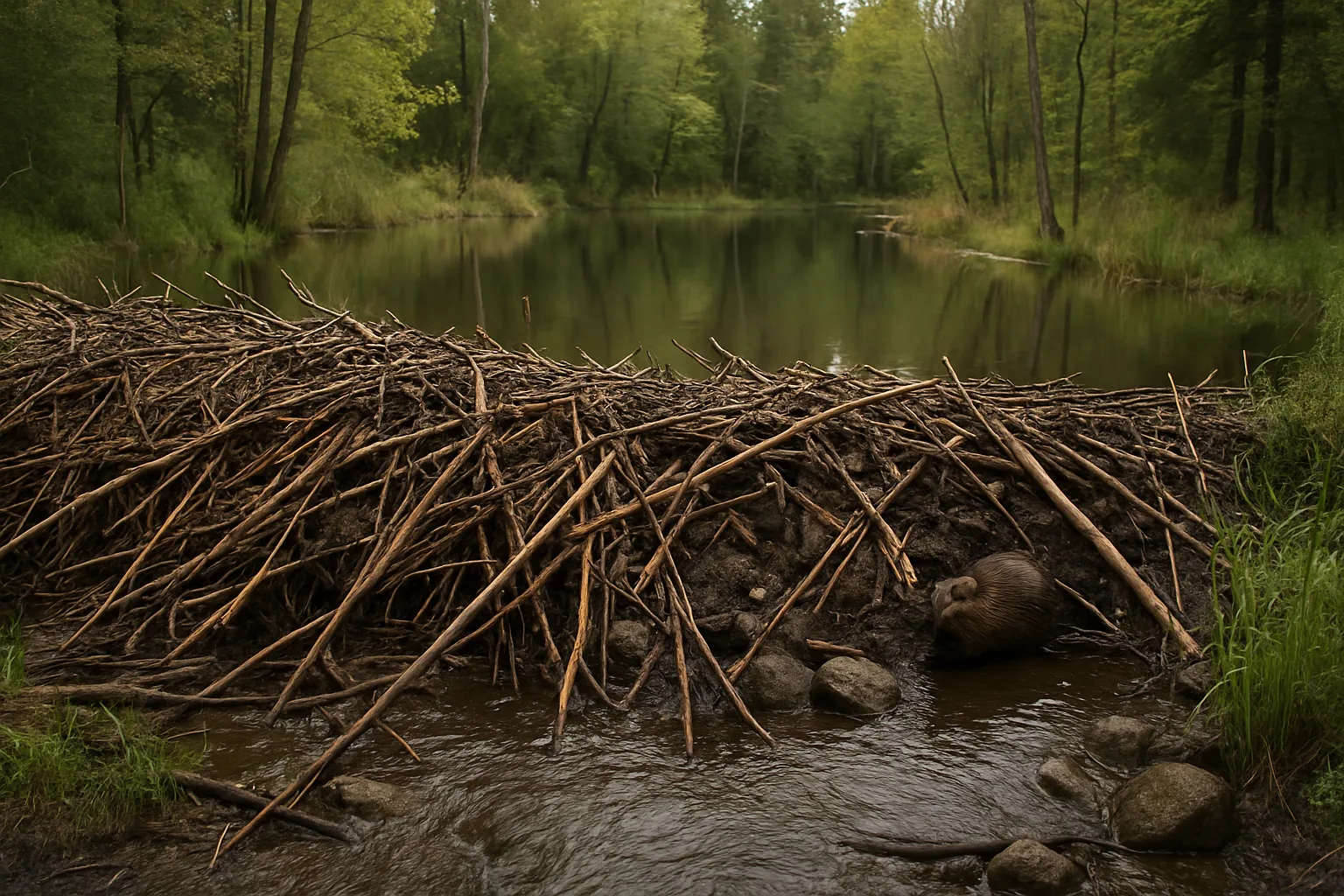
A beaver dam is more than a pile of branches across a stream. It changes how water moves through a landscape, often turning a narrow channel into a pond and a patchwork of wetlands. The builders achieve this with a practical mix of site selection, gnawed wood, mud, and constant repair.
The result can reshape the local environment: water spreads out, sediment settles, and new habitats form. But not every beaver builds a dam, and the effects vary with the stream, the landscape, and the animals living nearby.
First, beavers choose a useful place
Beavers are semi-aquatic rodents. They are strong swimmers, but moving on land is less safe for them. Water offers a quick escape from many predators, so a reliable pond can make a good place to live and raise young.
That helps explain why beavers build dams. In a stream that is too shallow or fast for their needs, a barrier can raise the water level and create a deeper pool. The pond may also cover the underwater entrance to a lodge or burrow, giving the beavers a sheltered route in and out.
They do not dam every waterway. A lake, deep river, or other naturally suitable body of water may need no barrier at all. Where dams are built, the location matters. A narrow section of a gently sloping stream can be a practical spot: a relatively short structure may hold back water that spreads into the surrounding low ground.
How a beaver dam comes together
Beavers gather branches and small trees, often cutting them with their large front teeth. They may also use stones, plant matter, and mud. The exact mix depends on what is available nearby. A dam is not usually a neat, tightly fitted wall. It is a rough, porous structure that slows the current while allowing some water to pass through or over it.
Construction can start with branches laid across a stream, often with some pieces pointing into the flow. The beavers add more material, packing gaps with mud and vegetation. A growing pond can make it easier to float and move branches, while the rising water helps create the deeper conditions they need.
Dams are ongoing projects. Flowing water can wash out material, and high water can damage or breach a structure. Beavers add and reposition branches and mud to maintain it. Their work can be especially noticeable when they respond to a leak or a drop in water level by reinforcing a weak spot.
The dam is only one part of a beaver’s engineering. They may also make canals through vegetation to move branches by water, or create feeding paths between the pond and trees. These features help them work and travel without spending as much time exposed on land.
From stream to pond—and beyond
Once a dam holds water, the stream’s shape and behavior begin to change. Water backs up behind the barrier, spreads across nearby ground, and moves more slowly. Flooded soil can kill trees that are not suited to prolonged wet conditions, while aquatic plants and wetland vegetation gain room to grow.
Slow water also tends to drop some of the sediment it carries. Over time, that material can build up in the pond and across the wetland. Some water may soak into the surrounding ground, though the amount depends on local soils and geology. A beaver pond can therefore affect not just the visible channel, but the way water is stored and moves through the nearby landscape.
These changes create a shifting mix of habitats. Ponds and wetlands can offer feeding or sheltering places for amphibians, waterfowl, insects, fish, and other wildlife. Dead trees left standing in flooded areas can provide nesting or feeding sites for some species. Other plants and animals may lose habitat as dry ground becomes wet. A beaver dam does not benefit every species equally; it changes the conditions, and different organisms respond in different ways.
The structures also change over time. A pond may fill with sediment, a dam may be abandoned or damaged, and the water can eventually drain. The wet ground may then develop into a meadow or another kind of habitat. Beavers can recolonize suitable places, so the landscape may cycle through different stages rather than settle into one permanent condition.
Why the changes matter to people
Beaver activity can bring practical benefits as well as challenges. Wetlands can store water on the land and slow its movement through a catchment. That may soften some high flows or help water remain in a landscape during drier periods, but the effects depend on the site and cannot be assumed to prevent floods or droughts. Beavers can also help create wet areas that may be less prone to burning than dry vegetation around them, though this is no guarantee against fire.
The same rising water can flood roads, fields, yards, or valuable trees. Dams built near culverts can block water flow and contribute to flooding. In some places, people use measures such as protective fencing around trees or devices that manage water levels near a dam. The right response depends on the location, local rules, and potential risks, so land managers may need to be involved.
It is also worth avoiding simple assumptions about fish. A dam changes water depth and movement, and its effects on fish depend on the species, the waterway, and the structure. Some fish can move past many beaver dams, while barriers may cause problems in particular settings. What happens at one stream does not automatically predict what will happen at another.
Small builders, large effects
Beavers do not reshape a landscape by planning a wetland from the start. They build to meet immediate needs: deeper water, safer movement, and access to food. Yet those repeated, local actions can have consequences far beyond the dam itself. A small stream becomes a pond; the pond spreads into wetland; and water, plants, soil, and wildlife respond.
That is why beavers are often described as ecosystem engineers. Their structures alter the physical environment, creating opportunities and trade-offs for other species and for people. The dam may look like a simple barrier, but its influence travels outward through the whole waterside community.
You might also like
How Do Mushrooms Seem to Appear Overnight?
Mushrooms don’t grow from nothing in a single night. Their hidden fungal network can produce visible fruiting bodies quickly when conditions are right.
How Tidal Bores Send Waves Upstream
A tidal bore forms when a rising tide is funneled into a shallow river mouth, steepening into a moving front that can surge against the river’s flow.

Why Chameleons Change Color—and What the Colors Signal
Chameleons change color to communicate, respond to temperature and light, and sometimes blend in. Their shifting shades come from both pigments and remarkable skin cells.