How to Find a Wall Stud Without a Stud Finder
By WowPebble Editorial
A magnet and surface clues may suggest wall framing, but they do not clear a spot for drilling. Learn what each clue establishes and when to stop.
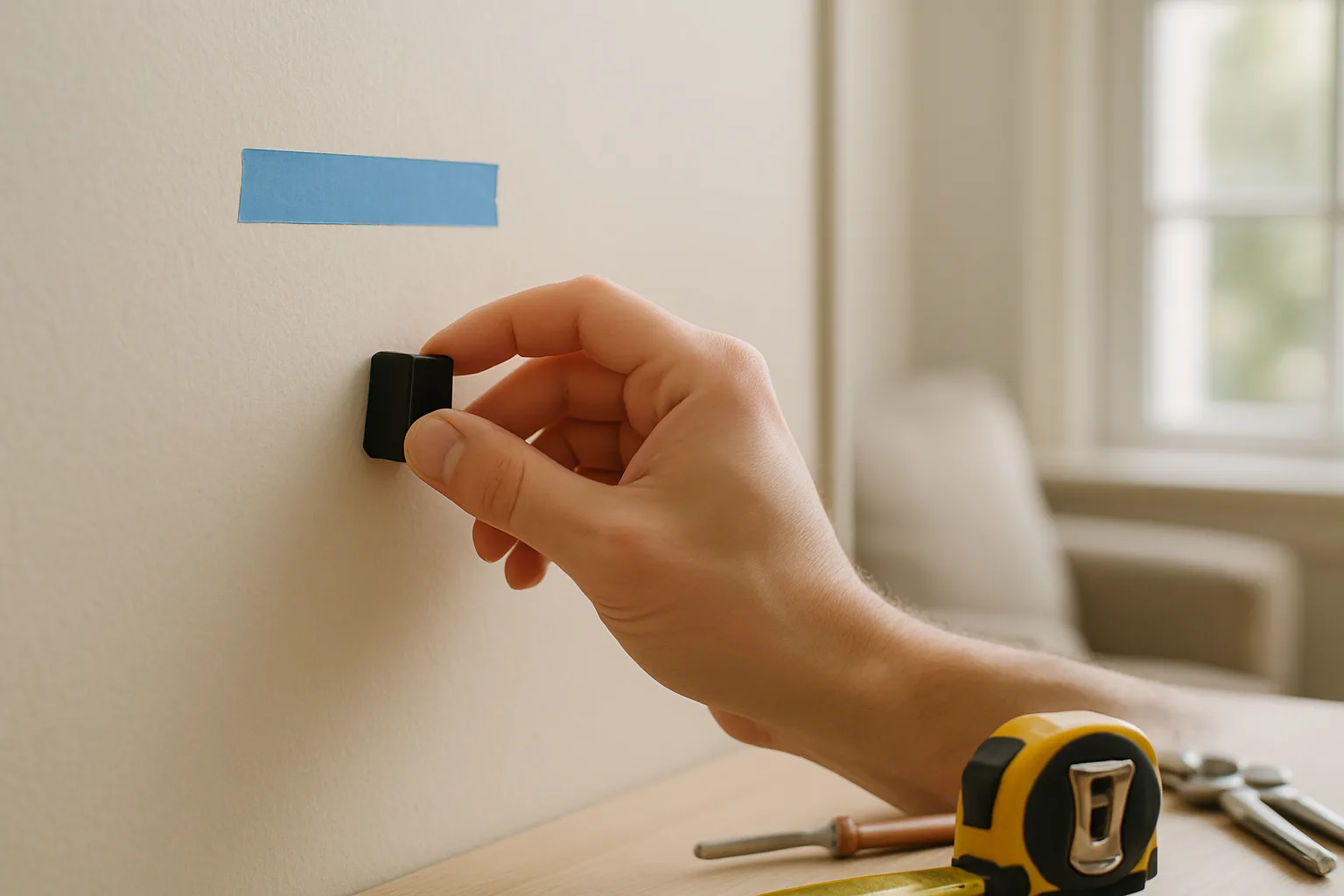
You can look for clues to a wall stud without an electronic stud finder, but a clue is not clearance to drill. A magnet can locate metal fasteners; tapping and measurements can suggest a pattern. None of those observations establishes that the proposed hole is clear of cables, pipes or other services.
Separate finding framing from choosing a safe fixing
First identify the wall construction and the mounting job. Drywall on framing, plaster on lath, masonry and tiled surfaces do not offer the same clues or need the same fixings. Do not use assumed stud spacing as a map of an unfamiliar wall.
For heavy loads, a wall of uncertain construction, or a location with unknown services, use an installer who can assess the wall and the fixing system. Moving a hole a little away from a socket does not demonstrate that its route is clear.
Use a magnet to map possible fasteners
C.H. Hanson explains its magnetic finder as detecting metal screws or nails used to attach wall coverings to framing. The magnet detects the metal, not the wooden member itself.
Move a suitable magnet slowly over the surface without scratching it. Mark separate attraction points with removable tape, then see whether several points form a vertical pattern. A single attraction could have another explanation. Metal trim, lath or an unusual fastening arrangement can prevent a simple interpretation.
The useful result is a set of possible fastener positions. It is not a measured centreline or a guarantee of sound timber behind every point.
Treat tapping and spacing as supporting clues
Compare nearby sounds when tapping lightly; do not decide from one tap. Surface layers and construction can change the result. Compare possible fastener lines with features you can already identify, without removing electrical covers or opening the wall.
If the clues disagree, stop interpreting them as confirmation. Do not drill a small “test” hole to settle the question. Resistance encountered after penetrating the surface is not a safe way to discover what is behind it.
Check hidden services before any drilling decision
A stud-location question and a hidden-services question require separate answers. Even Bosch’s detector guidance calls for other information before drilling and describes conditions that affect detection. A detector is an aid with limitations, not an unconditional all-clear.
Use the wall's available plans, the equipment's instructions and competent assessment appropriate to the job. If you cannot establish a safe location, choose a non-invasive alternative suitable for the load or have the installation assessed. Do not improvise around a suspected cable, pipe or gas line.
Know what you have actually established
Before mounting anything, you need to know the substrate, an appropriate fixing and load limit, and whether the planned work can be done safely. A magnet may help with the first question; it does not answer the others.
Without enough evidence, the useful answer is “not confirmed yet.” A marked spot on the wall should record an observation, not encourage drilling through uncertainty.
You might also like

What to Keep in a Home Kit for a Power Outage
Build a practical outage kit with lighting, charged power banks, water, easy-to-eat food, essential medicines and supplies suited to your household.

How to Clean a Humidifier and Stop Mineral Buildup
Clean your humidifier regularly to remove scale and reduce residue. Learn how to descale it safely, care for filters and prevent mineral buildup.

How to Remove Burnt Food from a Stainless Steel Pan
Loosen burnt-on food from a stainless steel pan with hot water and gentle scraping. For stubborn residue, add baking soda and scrub without damaging the finish.