Can You Freeze Cheese? The Types That Hold Up Best
By WowPebble Editorial
Yes, you can freeze cheese—but some varieties fare far better than others. Learn what to freeze, how to pack it, and the best ways to use it after thawing.
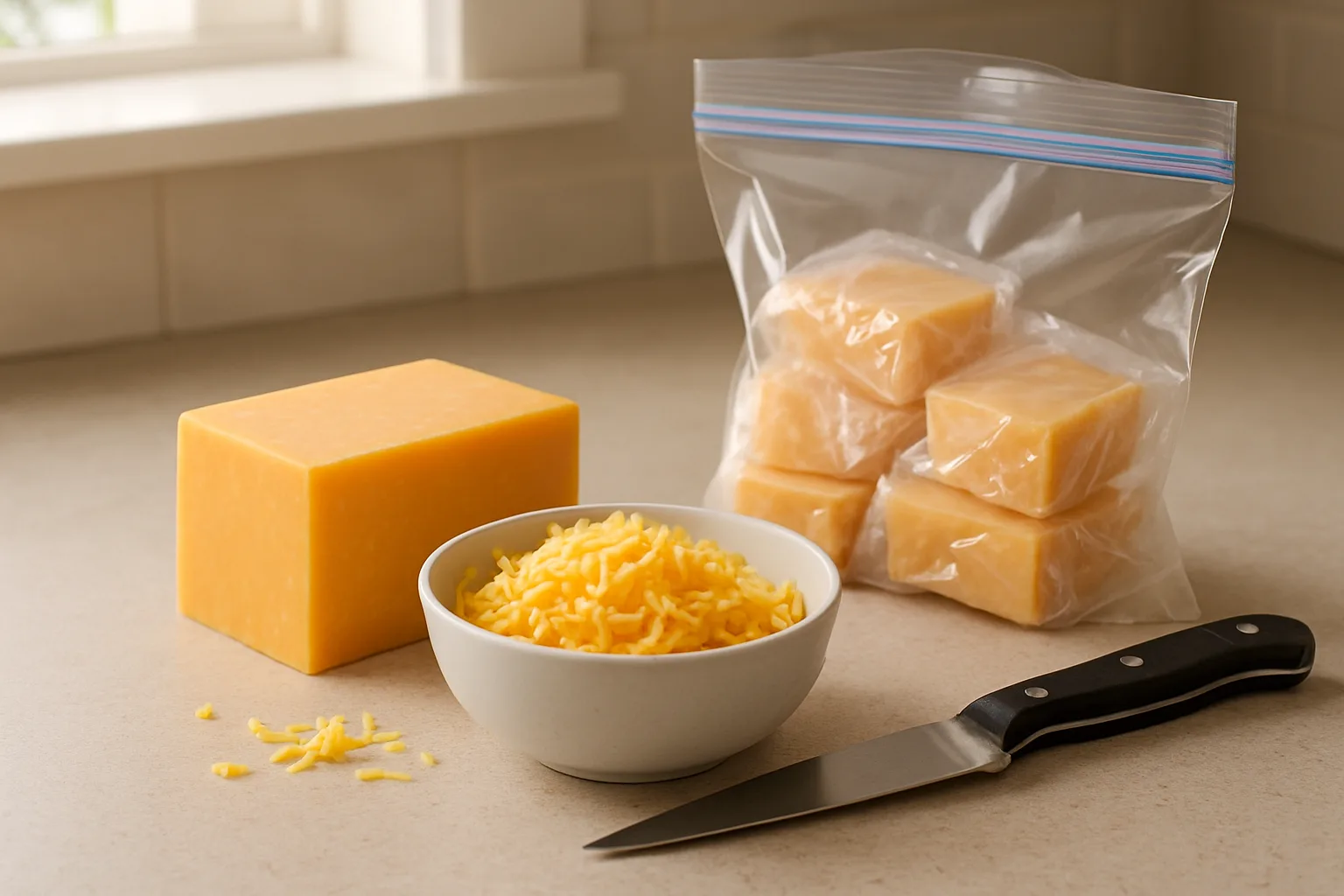
Yes, you can freeze cheese, and doing so is a useful way to save a surplus or make a favorite last longer. The catch is that freezing can change cheese’s texture. Firm, low-moisture varieties generally hold up best, while soft, watery cheeses are more likely to turn crumbly, grainy, or separated once thawed. That doesn’t always make them unusable: many frozen cheeses work perfectly well in cooked dishes.
Which cheeses freeze best?
NCHFP names cheddar and Swiss as hard-cheese examples and describes the changed texture of frozen hard or semi-hard cheese. Treat other varieties as product-specific choices. Arla’s dairy-freezing guide likewise distinguishes dairy types; a semi-firm mozzarella product is not the same starting material as fresh mozzarella packed in liquid.
Semi-hard cheese may become a little more crumbly after thawing, and its texture may not be quite as smooth as before. But that’s rarely a problem in a casserole, sauce, omelet, or grilled sandwich. If you want cheese to serve on a board or eat in slices, freezing is less reliable: the change in texture can be noticeable.
Shredded cheese is convenient to freeze because it’s already ready for recipes. Spread it in a thin layer in a freezer-safe bag or container, press out extra air, and seal it well. You can usually break off or scoop out what you need without thawing the whole batch, which makes it handy for pizzas, pasta, and other cooked dishes.
| Cheese type | How well it freezes | Best use after thawing |
|---|---|---|
| Cheddar and other firm cheeses | Generally well | Cooking, grating, sandwiches |
| Parmesan and other hard cheeses | Generally well | Grating into hot dishes |
| Shredded cheese | Convenient to freeze | Pizza, pasta, casseroles |
| Cream cheese, ricotta, cottage cheese | Texture often changes | Baking or cooked recipes |
| Fresh mozzarella and other watery cheeses | Often loses its original texture | Cooked dishes, if texture is not important |
Which cheeses are poor candidates?
Fresh, high-moisture cheeses tend to be disappointing when you want them to keep their original texture. Cottage cheese, ricotta, and fresh mozzarella may become watery, grainy, or separated. Cream cheese can also lose its smooth consistency. Some of these cheeses may still be useful after freezing in baked goods, fillings, or cooked sauces, but they may not be pleasant to spread or eat as they were before.
The Pacific Northwest university storage guide specifically notes cooked uses for some thawed soft cheeses when creaminess is not important. This is a texture choice for properly stored food, not a way to make spoiled cheese safe.
Soft-ripened cheeses, such as Brie and Camembert, can also change in texture. If you freeze them, think about whether you’ll be happy using them in a cooked dish rather than serving them as a soft, creamy cheese. The same principle applies to any variety you value for a delicate texture: freezing may preserve it as food, but not as the same eating experience.
Why does freezing change cheese?
Cheese is a mixture of water, fat, and proteins. As it freezes, some of its water forms ice crystals. Those crystals can disrupt the structure that gives a cheese its smooth or elastic texture. After thawing, moisture may separate, and the cheese may feel drier or more crumbly.
The effect varies by cheese because cheeses differ in moisture, fat, and how they’re made. A firm block and a soft fresh cheese don’t respond to freezing in the same way. That’s why freezing works best when texture is less important—such as when the cheese will be grated into a hot dish—rather than when you want to serve it in neat slices.
How to freeze cheese properly
A little preparation helps protect cheese from drying out and picking up odors in the freezer:
NCHFP’s freezing-cheese guidance describes hard/semi-hard cheese in moisture-vapour-resistant packaging and warns that cream cheese, cottage cheese and ricotta do not freeze well. Its storage examples are not a promise that every cheese retains its original serving texture. Follow a particular product's directions, especially fresh or delicate cheeses.
- Divide it into useful portions. Freeze only what you’re likely to use at one time. Smaller pieces thaw more quickly, and you won’t need to defrost a large block for a small recipe.
- Wrap it tightly. Use freezer-safe wrapping or a well-sealed freezer bag. For a block, wrap the cheese snugly and place it inside a second airtight layer, such as a freezer bag or container. The goal is to limit air exposure.
- Label the package. Write the cheese type and freezing date on the outside so you can identify it later.
- Freeze promptly. Put it in a freezer that is kept at 0°F (-18°C) or colder. Freezing won’t improve cheese that has already spoiled or undo poor storage, so start with cheese that is still in good condition.
If the cheese is unopened and its original packaging is intact, you may be able to freeze it in that packaging, but an extra freezer-safe layer offers added protection. For shredded cheese, leave a little room in the container for handling, seal it well, and avoid packing it in a way that makes it difficult to separate later.
How to thaw and use frozen cheese
For butter, milk and cheese, NCHFP recommends refrigerator thawing. Keep the cheese contained while it thaws and follow the product's storage instructions. Thawing time varies with portion and conditions; a texture change does not by itself establish whether a particular cheese is safe.
If you’re using frozen shredded cheese in a hot recipe, you can often add it straight from the freezer. For a block, thaw it first if you need to cut or grate it easily. Cheese that has separated or become crumbly can still be stirred into a sauce, melted into a casserole, added to scrambled eggs, or sprinkled over pasta. Heat won’t restore its original texture, but it can make texture changes much less noticeable.
Treat freezer shelf-life advice as quality guidance for food that was safe before freezing and remained properly frozen. The FDA food-safety reference distinguishes this from rescuing mishandled food. Follow the product's storage directions, thaw refrigerated and use promptly; freezing and later cooking do not erase prior spoilage.
So, should you freeze cheese?
Freeze firm cheeses, hard grating cheeses, and shredded cheese when you’re happy to use them in cooking or don’t mind a change in texture. Be more cautious with fresh and soft cheeses, which can lose their creamy consistency. If you’re saving cheese for a cheese board or for eating plain, refrigeration is usually the better choice. If you’re saving it for a pizza, sauce, or casserole, the freezer can be a practical solution.
You might also like
How to Store Bread So It Stays Fresh Longer
Bread storage balances texture, mould risk and keeping time. Learn when room-temperature storage makes sense, how refrigeration differs, and when to freeze.

What to Keep in a Home Kit for a Power Outage
Build a practical outage kit with lighting, charged power banks, water, easy-to-eat food, essential medicines and supplies suited to your household.
How to Clean a Humidifier and Stop Mineral Buildup
Clean your humidifier regularly to remove scale and reduce residue. Learn how to descale it safely, care for filters and prevent mineral buildup.