Why Do Thermal Paper Receipts Fade Over Time?
By WowPebble Editorial
A thermal receipt relies on a heat-sensitive image rather than ordinary ink. Heat, light, contact and storage conditions can alter its readability over time.
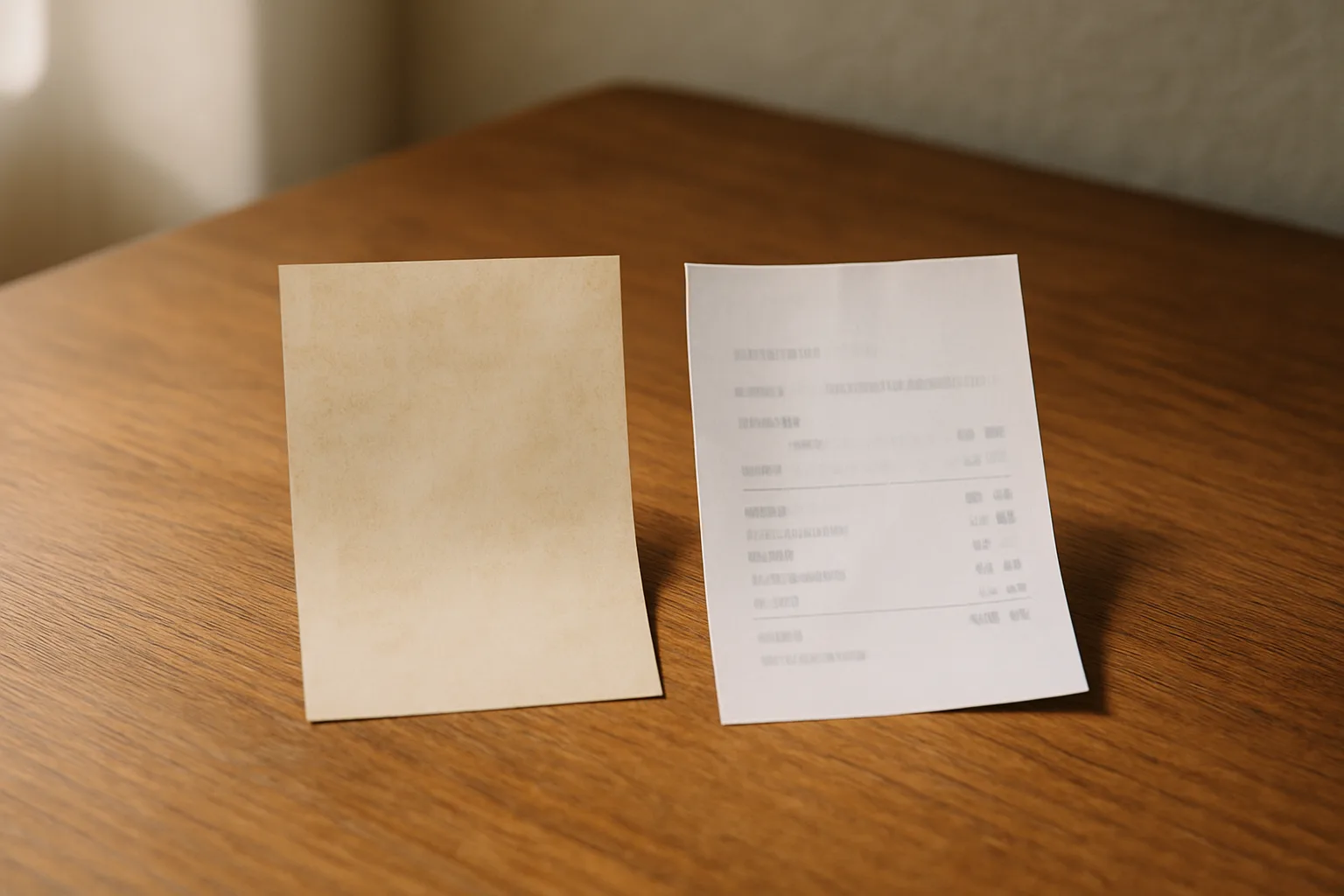
A receipt can look perfectly clear when you leave the shop, then turn pale, blotchy, or almost blank in a drawer. The reason is that many receipts are produced by direct thermal printing rather than ordinary ink printing. They’re made on heat-sensitive paper, and the image depends on a chemical reaction that can be affected by its surroundings.
That makes thermal receipts quick and convenient to produce—but less dependable for long-term storage than many people expect. Heat, light, friction, and contact with certain chemicals can all change the printed image.
How a thermal receipt is printed
A thermal printer doesn’t need an ink cartridge or ribbon. Instead, its print head contains tiny elements that heat selected spots on the paper as it passes through. The paper has a special coating that darkens where it gets hot, forming letters, numbers, and logos.
For conventional dye-based thermal paper, the heat-sensitive layer contains a colour former and developer together with materials that control its thermal response. Mitsubishi’s thermoscript technical information describes that construction. The exact formulation varies; the explanation is not a claim that every heat-sensitive paper product uses an identical chemistry.
This is called direct thermal printing. It’s useful for receipts because the printers are compact, relatively quiet, and don’t require ink supplies. The trade-off is that the image is part of a reactive coating, not a layer of stable ink sitting on top of the page.
What makes the print fade?
The image can change when the chemicals in the coating are exposed to conditions that keep reacting with them or disrupt the printed color. How quickly that happens depends on the paper’s formulation and how it is stored.
Heat is one of the biggest risks. The coating is designed to respond to heat, so a warm environment can cause unwanted changes. A receipt left in a hot car, near a radiator, or against a warm appliance may darken, discolor, or lose contrast. Excess heat can also make unprinted areas turn gray or black, sometimes obscuring the original text.
Light can contribute to fading. Strong light, especially sunlight, can affect the color-forming chemicals in thermal paper. A receipt kept on a sunny dashboard or displayed near a bright window is more exposed than one stored in a closed drawer.
Contact with chemicals can damage the image. Oils, lotions, cleaning products, and some other substances may react with the coating. Certain plastics and adhesives can also cause changes, depending on their ingredients. That’s why a receipt pressed against a plastic sleeve, tape, or another material may develop smudges or faded patches.
Rubbing and handling matter, too. The coating is on the paper’s surface, where repeated friction can wear or mark it. Folding, scraping, or carrying a receipt loose in a wallet can leave creases and rubbed areas that make the print harder to read.
These effects don’t always look like simple fading. A receipt might become uniformly pale, develop dark spots, or turn nearly black. Different conditions can produce different changes, and sometimes more than one factor is involved.
Why some receipts last longer than others
Not all thermal paper is identical. Manufacturers can use different coating formulas, and paper quality varies. Storage conditions make a difference as well: a receipt kept cool, dry, and away from light is generally better protected than one left in heat or sunlight.
The printing itself also matters. A faint receipt may have started out with low contrast, making later changes more noticeable. Printer settings, the condition of the print head, and the paper’s sensitivity can all affect how dark the image appears when it is first made.
So there isn’t one fixed timetable for when a thermal receipt will fade. Some remain readable for a long time under favorable conditions; others become difficult to read much sooner. The paper’s chemistry and its history both play a part.
How to keep a receipt readable
If you need to keep a receipt for a return, warranty, expense report, or other record, protect it from the main sources of damage:
- Keep it in a cool, dry, dark place.
- Don’t leave it in a car, on a sunny windowsill, or near a heat source.
- Avoid storing it in direct contact with tape, adhesives, oily items, or unknown plastics.
- Handle it gently and avoid repeatedly folding or rubbing the printed area.
- Make a digital copy if you may need the information later.
Keep a readable copy as a backup, but check whether the organisation receiving a return, claim or expense report requires the original. A photo does not create a universal right to substitute a copy. For the paper itself, Koehler’s storage guidance warns about light, heat, humidity and contact with solvents or plasticisers; its product-specific longevity claims should not be applied to every receipt.
A regular ink printout can be a better choice for long-term paper records, but the best option depends on the purpose and the printer. Thermal paper is designed for fast, convenient printing—not necessarily for permanent archiving.
Is the receipt disappearing because its ink evaporated?
No. There usually isn’t a pool of liquid ink on the paper slowly drying out or evaporating. The printer creates the image through a heat-triggered reaction in the coating. Over time, heat, light, contact, and wear can alter that coating or the colored image it formed.
That’s why an old receipt can be more than faded: it can darken, smudge, or become unevenly unreadable. The same feature that makes thermal printing simple—using heat to create the image—also helps explain why its records need a little extra care.
You might also like

Why Paperback Pages Turn Yellow as They Age
A paperback’s yellowing pages are more than a sign of age. The color comes from changes in the paper’s chemistry—and light, air, and storage can speed them up.

Why Do Mirrors Reverse Left and Right but Not Up and Down?
A mirror does not actually swap left and right. It reverses the direction pointing into the glass—and the way we compare ourselves with the reflection creates the illusion.
Why Does a Retractable Pen Click When You Press It?
A retractable pen’s click comes from a small locking mechanism inside its barrel. Here’s how the button, cam and spring work together to extend and retract the tip.