Why One Prong on Some North American Plugs Is Wider
By WowPebble Editorial
The wider blade on a polarized plug is a small design feature with an important job: helping keep an appliance’s hot and neutral connections in the intended places.
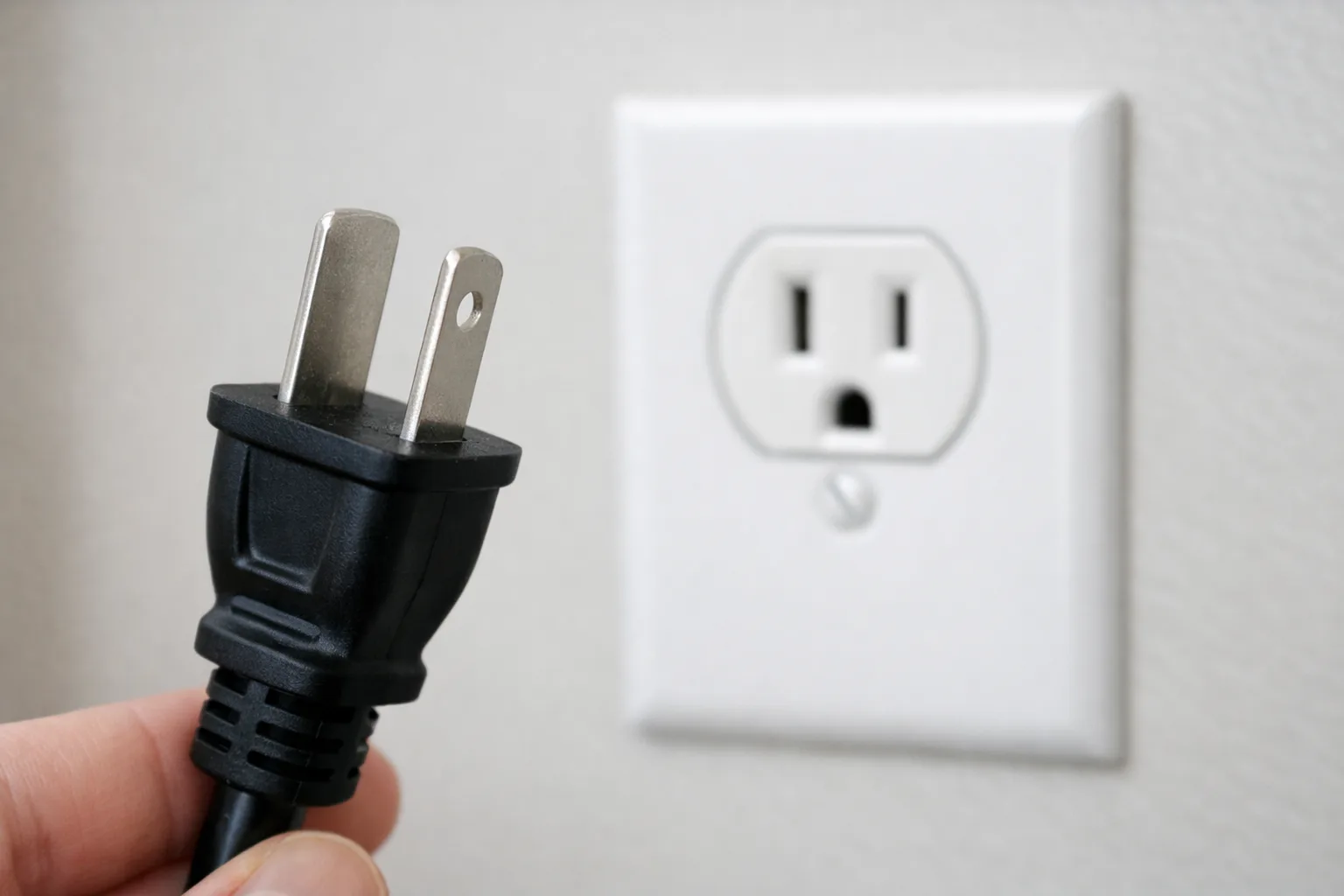
Look closely at some two-prong plugs in North America and you’ll notice that the blades aren’t the same width. That difference is not a manufacturing quirk: it helps the plug fit into an outlet in only one orientation, keeping the appliance’s connections aligned with the outlet’s hot and neutral slots.
This design is called polarization. It doesn’t make electricity harmless or replace other safety features, but it can help ensure that switches and other parts of an appliance interrupt the intended conductor.
What the two blades connect to
A standard North American outlet supplies alternating current through two main conductors. The hot conductor brings electrical energy to an appliance. The neutral conductor provides the return path for current during normal operation. In a typical outlet, the hot slot is narrower and the neutral slot is wider, so a polarized plug’s narrow blade goes to hot and its wide blade goes to neutral.
The current alternates direction many times each second, but that doesn’t make the two connections interchangeable from a safety perspective. The neutral is connected to ground at the electrical service panel, which keeps it near ground potential under normal conditions. The hot conductor remains at a potentially dangerous voltage relative to ground.
Neutral is not the same as a dedicated grounding wire. It carries current during ordinary use, and a wiring fault can make it dangerous. The grounding conductor, when present, provides a separate path intended to help protect against electric shock if a fault energizes an appliance’s metal casing.
Why keeping hot and neutral in place matters
Polarization helps an appliance’s internal wiring stay oriented as designed. One important example is a simple lamp with a screw-in bulb. In a properly wired polarized setup, the neutral is connected to the threaded shell of the socket, while the hot is connected to the small contact at the bottom. That arrangement helps keep the more exposed threaded part at neutral potential rather than hot potential.
A polarized connection can also help a switch interrupt the hot conductor. If a plug could be inserted either way, the appliance’s switch might end up interrupting neutral instead. The appliance could turn off and stop working, yet parts inside could remain connected to hot. Keeping hot and neutral aligned helps avoid that situation in devices designed to rely on polarization.
The wider blade is therefore a simple mechanical guide: it makes the plug fit only one way in a compatible polarized outlet. It does not detect whether a home’s wiring is correct, and it cannot guarantee that every internal part is safe to touch. It helps preserve the intended connection, not eliminate every electrical hazard.
The wider blade is not a ground pin
A common point of confusion is whether the wide blade is a grounding connection. It isn’t. On a two-prong polarized plug, both blades are part of the electrical circuit: one connects to hot and the other to neutral. Neither is the separate equipment-grounding pin found on many three-prong plugs.
On a grounded plug, the third prong connects to the grounding system. It is there to help direct fault current safely and allow protective devices to operate if something goes wrong. The two flat blades still connect to hot and neutral, and the neutral blade is usually wider. The grounding pin and the wider neutral blade do different jobs.
Not every plug has unequal blades. Some older or simpler two-prong plugs are nonpolarized, with two blades of the same width. They can fit into an outlet either way. Many appliances are designed with insulation and internal construction that don’t depend on a particular plug orientation. Other devices use a polarized plug because their design benefits from keeping hot and neutral connections in a specific order.
Why some plugs won’t fit certain outlets
A polarized plug is made to fit a polarized outlet with a narrow hot slot and a wider neutral slot. If the outlet is old or nonpolarized, both slots may be the same width. In that case, a polarized plug might not fit, because its wider blade cannot enter the narrow slot.
That mismatch is not a reason to file down the blade, force the plug, or remove a grounding pin. Altering a plug can defeat a safety feature and create a hazard. If a plug does not fit, check that you have the right outlet for the device and that both are in good condition. For questions about an old or damaged outlet, consult a qualified electrician.
A plug adapter may change the physical connection, but it does not automatically add grounding or correct unsafe wiring. The right solution depends on the appliance and the outlet; an adapter should not be treated as a way to bypass a safety feature.
What to remember
The wide blade on a polarized North American plug identifies the neutral connection and prevents the plug from being inserted the wrong way into a compatible outlet. That can help keep an appliance’s switch and other components connected as intended. It is not a ground pin, and it does not make neutral safe to touch.
The next time you notice an uneven pair of blades, you’re looking at a small feature that encodes useful information into the shape of the plug. Its purpose is modest but practical: to help preserve the intended relationship between hot and neutral, one insertion at a time.
You might also like

Why Do Mirrors Reverse Left and Right but Not Up and Down?
A mirror does not actually swap left and right. It reverses the direction pointing into the glass—and the way we compare ourselves with the reflection creates the illusion.
Why Does a Retractable Pen Click When You Press It?
A retractable pen’s click comes from a small locking mechanism inside its barrel. Here’s how the button, cam and spring work together to extend and retract the tip.
Why Do Chimneys Have Caps? The Practical Reasons Explained
Chimney caps keep out rain, animals and debris, and some help contain sparks or reduce wind-driven downdrafts. Here’s how they work—and what they don’t do.