Why Does a Shower Curtain Often Move Inward?
By WowPebble Editorial
A shower curtain can drift inward because the falling water and rising warm air set bathroom air in motion, creating small pressure differences across the fabric.
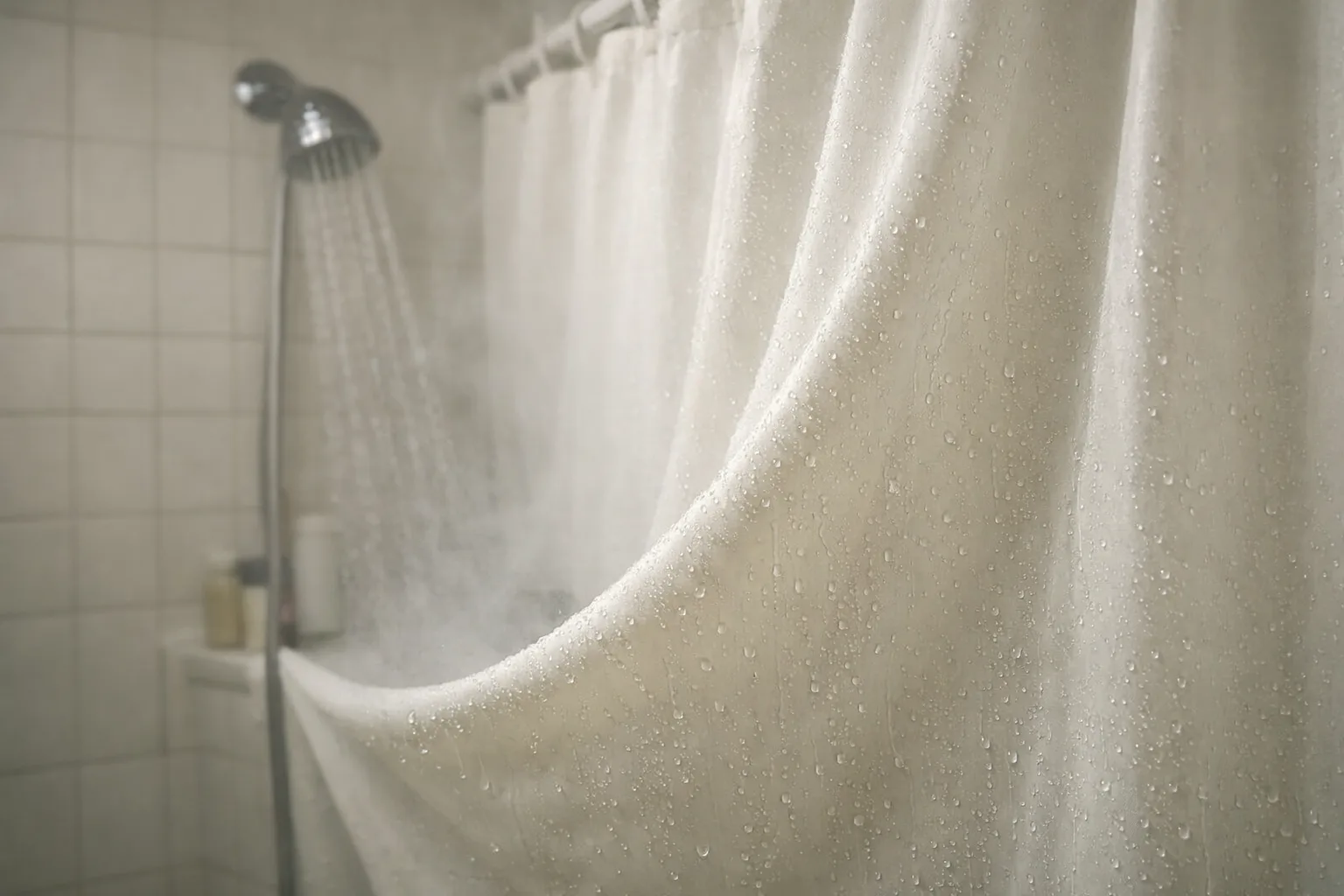
A shower curtain often moves inward because the running shower sets nearby air in motion, creating pressure differences that can deflect the flexible sheet. Falling water can carry air with it; warming the air can change the circulation too. The important distinction is between explaining the force on the curtain and identifying which airflow produces it in a particular bathroom.
How water can move air
Droplets experience drag as they travel through air. The interaction also transfers momentum to the air: a shower is not just water moving through an otherwise motionless space. Air moves around the spray and surrounding surfaces, and the resulting pressure need not be equal on the two sides of the curtain. A higher pressure on the outside can push a light curtain inward; no vacuum is required.
In his own account of a shower simulation, engineer David Schmidt reported a circulating airflow with a lower-pressure centre. That was a result of his model, not a measurement of every shower or proof that one vortex explains all bathrooms. It is more informative than saying only that the curtain is “sucked in.”
Why warmth is not the whole explanation
Heating can change the movement of air, but an inward-moving curtain does not by itself demonstrate a heat-driven effect. In a published discussion of moving-air phenomena, science educator Peter Eastwell described inward movement with cold water in one shower setup and greater deflection with hot water. He also reported that changing the spray’s position relative to the curtain changed whether it moved.
Those qualitative observations support a limited conclusion: temperature and layout can matter, while warmth is not necessary in every case. They do not establish how much each mechanism contributes in your bathroom. Nor does the slogan “faster air means lower pressure” identify the actual flow around the sheet.
Why one curtain moves more than another
Schmidt’s account notes that the airflow forces in his model were weak enough to affect light curtains more readily than heavy ones. The spray and curtain therefore matter as well as water temperature. Different construction and placement can produce different behaviour without making either shower an exception to physics.
You might also like

Why Do Mirrors Reverse Left and Right but Not Up and Down?
A mirror does not actually swap left and right. It reverses the direction pointing into the glass—and the way we compare ourselves with the reflection creates the illusion.
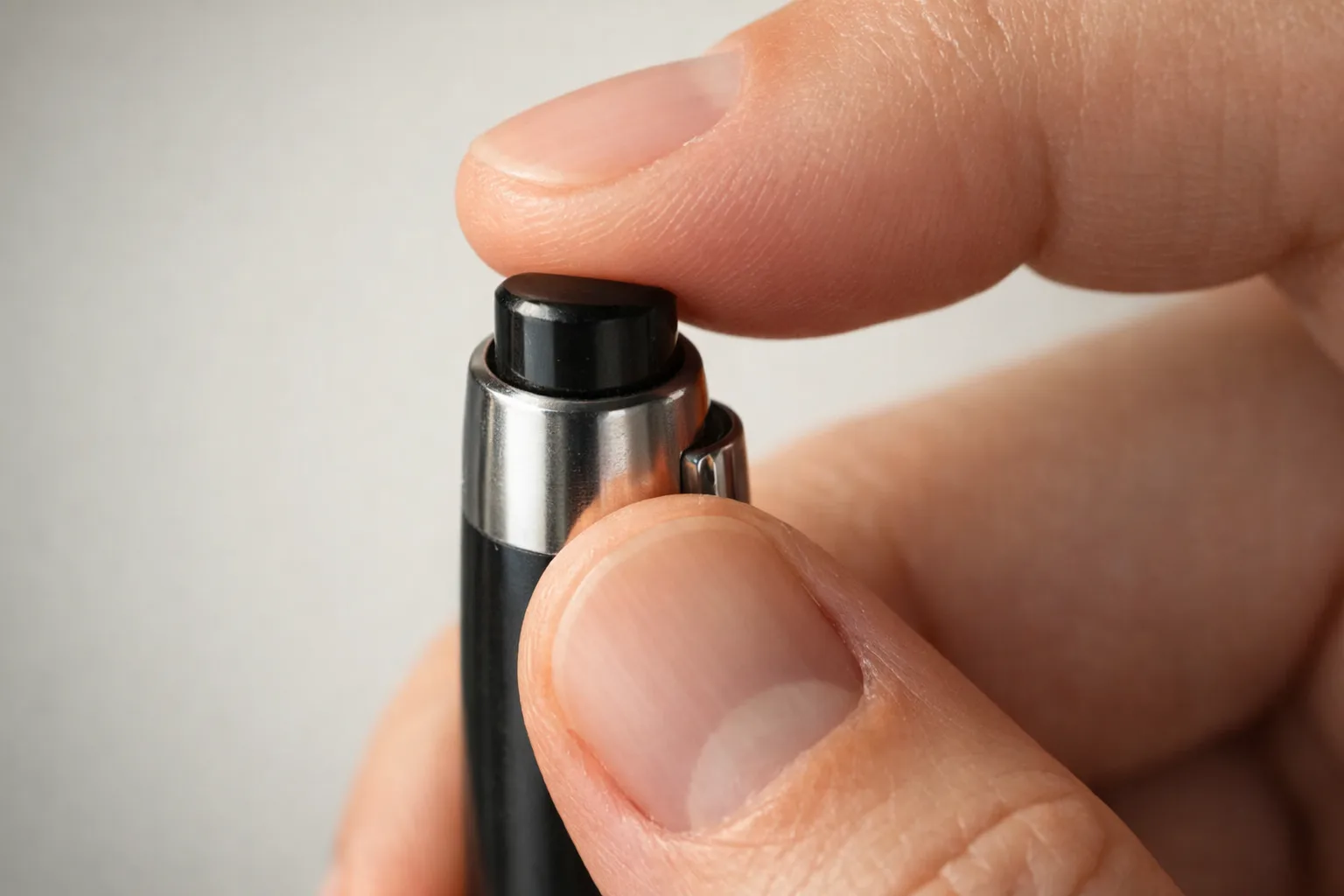
Why Does a Retractable Pen Click When You Press It?
A retractable pen’s click comes from a small locking mechanism inside its barrel. Here’s how the button, cam and spring work together to extend and retract the tip.
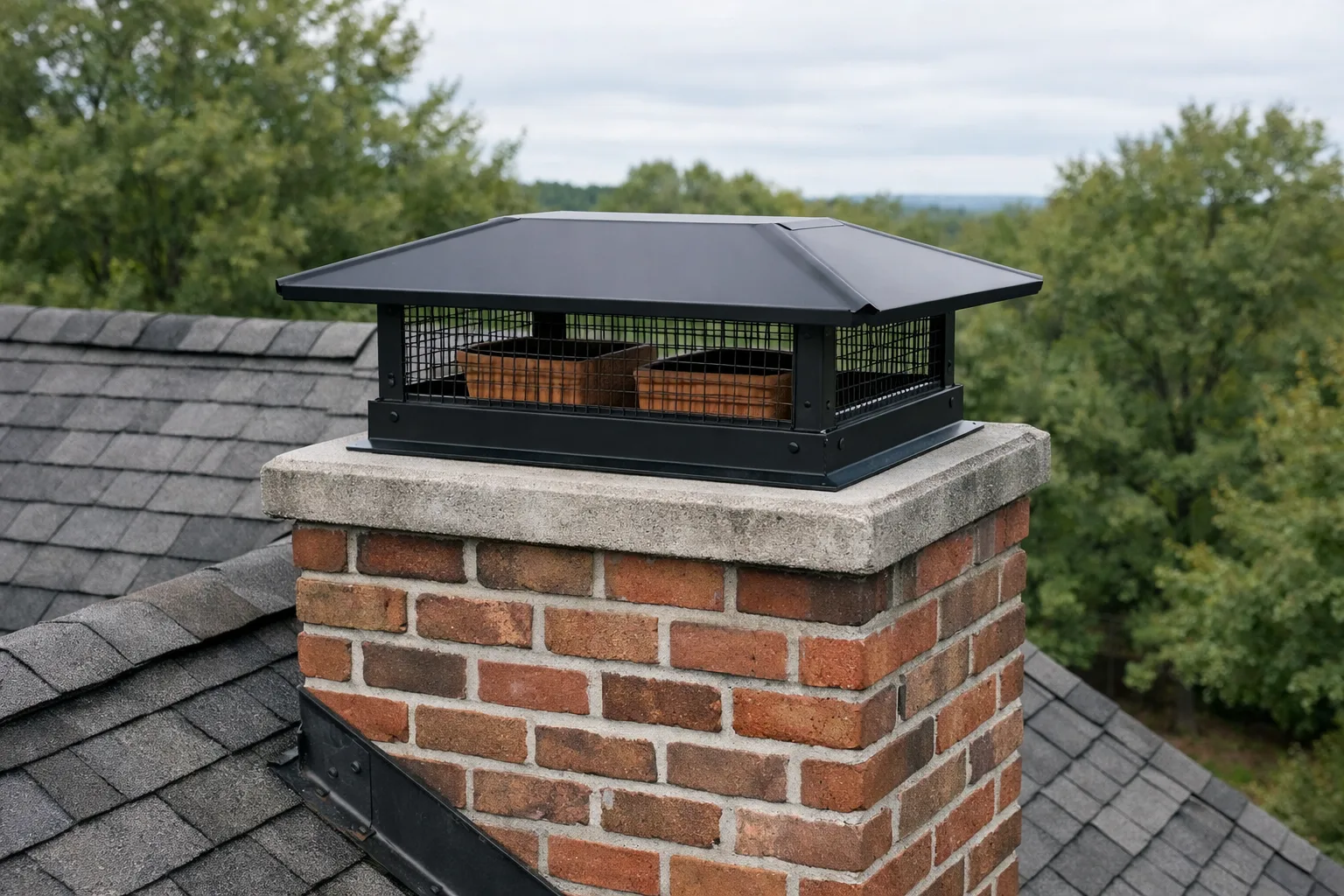
Why Do Chimneys Have Caps? The Practical Reasons Explained
Chimney caps keep out rain, animals and debris, and some help contain sparks or reduce wind-driven downdrafts. Here’s how they work—and what they don’t do.