Why Honey Crystallizes—and Whether It’s Still Good to Eat
By WowPebble Editorial
Crystallized honey hasn’t necessarily gone bad. Learn why its sugars form crystals, how to make it pourable again, and when to check for spoilage.
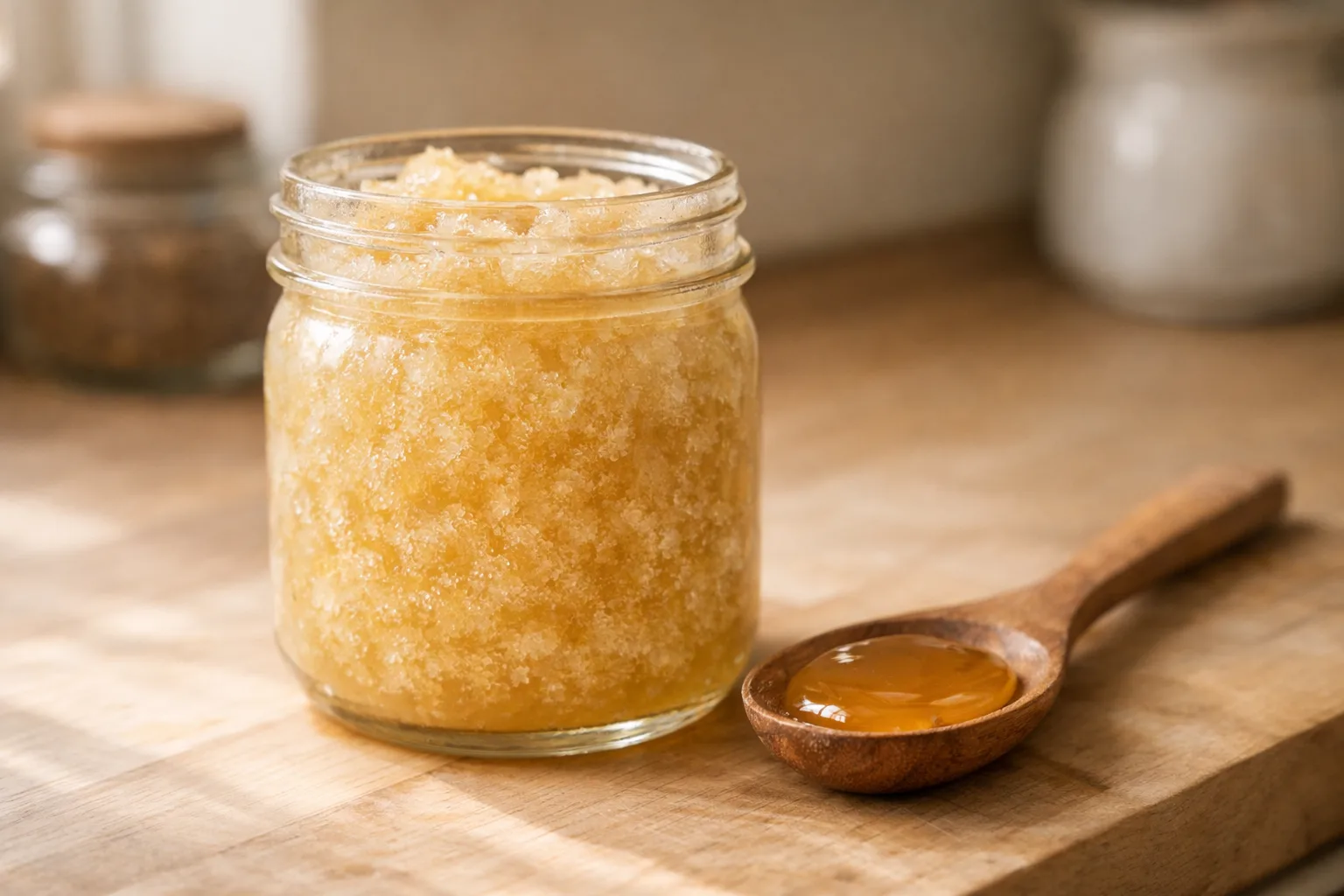
Honey can turn from clear and runny to cloudy, grainy, or nearly solid while sitting in the cupboard. That change may look like spoilage, but it is usually a natural process: some of the sugars in honey separate from its water and form crystals. Crystallized honey is generally still usable. You can eat it as it is or gently warm it if you prefer a pourable texture.
Why honey crystallizes
Honey is a concentrated mixture of sugars and water. Its main sugars are glucose and fructose, along with smaller amounts of other sugars and compounds. There is usually more sugar in honey than the water can keep dissolved indefinitely. Over time, glucose can come out of the solution and form tiny crystals.
Fructose is more soluble in water, so it tends to remain in the liquid portion. As glucose crystals grow and multiply, the honey can become cloudy or develop a thick, spreadable texture. Depending on the honey and how the crystals form, the result may be fine and smooth or larger and grainier. Some jars become firm throughout, while others have crystals suspended in liquid honey.
Several factors affect how quickly this happens. The balance of glucose and fructose varies with the flowers from which bees gathered nectar, so some honeys crystallize faster than others. Water content, storage conditions, and small particles such as pollen can also influence the process. These particles can provide starting points for crystals to form. Even honey from the same general type of source can vary, so a change in texture is not unusual.
Temperature also plays a part, though its effect is not as simple as “colder always means faster.” Honey often crystallizes readily in cool conditions, while very low temperatures can slow the movement of its sugars. Warmth can keep crystals from forming or help dissolve crystals that are already there. As a result, honey may behave differently in different cupboards, kitchens, or seasons.
Is crystallized honey still safe to eat?
In most cases, yes. Crystallization is a change in texture, not proof that honey has spoiled. You can eat it by the spoonful, spread it on toast, stir it into porridge, or measure it into recipes. Its sweetness remains, though the thicker texture may make it less convenient to pour or measure. Some people prefer crystallized honey because it is easier to spread and less drippy.
Honey keeps well when stored properly because it has little available water for many microbes to use. Still, it is not immune to every problem. Keep the container closed and use a clean, dry spoon. Water or food crumbs introduced into the jar can affect its quality. Store honey away from excess heat and moisture, and follow any storage guidance on the label.
Check for changes beyond a cloudy or grainy texture. A fermented or noticeably sour smell, unexpected foam or bubbling, or signs that the honey has been contaminated are reasons for caution. These signs can indicate a problem, especially if moisture has entered the container. Crystallization by itself is not a reliable way to determine whether honey has gone bad; if you are unsure about its condition, discard it.
There is one important safety exception: honey should not be given to children under 12 months old, whether it is liquid or crystallized. Crystallization does not make honey safe for infants.
How to make crystallized honey runny again
If you want a pourable texture, warm the honey gently in its container. Set a heat-safe jar in a bowl of warm water and let the crystals gradually dissolve. Stirring can help distribute the warmth, especially if the honey is thick. Replace the water if it cools, and give the honey time to soften rather than trying to speed up the process with intense heat.
Use care with the container as well as the honey. Avoid putting a glass jar straight into very hot water, since a sudden temperature change can cause glass to crack. If the honey is in plastic, do not warm the container unless its label says it is suitable for heating. A microwave can heat honey unevenly and create very hot spots, so a warm-water bath is easier to control.
You do not have to dissolve every crystal. If you use honey often, you can scoop or spread it in its crystallized form. If you do warm it, it may crystallize again later. That is a normal result of the same natural process, not a sign that you warmed it incorrectly or that it has spoiled.
Can you prevent crystallization?
You can slow crystallization, but you may not be able to prevent it indefinitely. A tightly closed container kept at a steady room temperature is a practical choice. Avoid leaving honey in a cold spot or somewhere with frequent temperature changes. Refrigeration is generally unnecessary and can encourage a quicker change in texture.
Keeping the jar clean and dry is useful for maintaining honey’s quality, but it will not stop its sugars from forming crystals. Likewise, choosing a particular container or moving the honey to a different cupboard cannot guarantee that it will remain liquid. The natural composition of the honey has a lot to do with how quickly its texture changes.
Filtering and processing affect how quickly crystals form, but crystallization can happen in many kinds of honey. Its presence—or absence—is not a reliable way to judge whether honey is pure, raw, or high quality. Honey differs naturally from one source to another, and its texture can change during storage. A clear jar is not necessarily better than a crystallized one.
Ways to use crystallized honey
A jar that has set does not need to be treated as a problem. Its thicker consistency can work well as a spread, and it can be stirred into foods where a liquid texture is not essential. For a recipe that calls for honey to pour easily, soften the amount you need in a warm-water bath or warm the jar gently before measuring. There is no need to heat the whole container if you only need a small portion.
If the texture is the only change you notice, choose whichever form suits the way you plan to use it. You can leave the crystals in place, warm the honey, or let it soften naturally at room temperature. Each option keeps the focus on convenience rather than treating crystallization as a sign of failure.
A natural change, not a reason to throw it away
The cloudy jar at the back of the cupboard is often simply honey in another form. Its glucose has gathered into crystals, while more soluble sugars remain in the liquid. Unless there are signs of spoilage or contamination, crystallized honey is usually fine to eat. Use it as it is, or warm it gently when you want it to flow again.
You might also like
How to Store Potatoes So They Sprout More Slowly
Keep potatoes cool, dark, dry and well ventilated to slow sprouting. Learn which containers work, where to store them and what to avoid.

How to Get Garlic Smell Off Your Hands
Garlic smell can linger after chopping, but a thorough wash with soap and water usually helps. Here’s how to clean your hands—and what to try if the odor remains.
How to Keep Brown Sugar Soft After Opening the Bag
Keep brown sugar soft by sealing it in an airtight container and storing it in a cool, dry cupboard. Here’s what to do if it hardens anyway.