How to Keep Brown Sugar Soft After Opening the Bag
By WowPebble Editorial
Keep brown sugar soft by sealing it in an airtight container and storing it in a cool, dry cupboard. Here’s what to do if it hardens anyway.
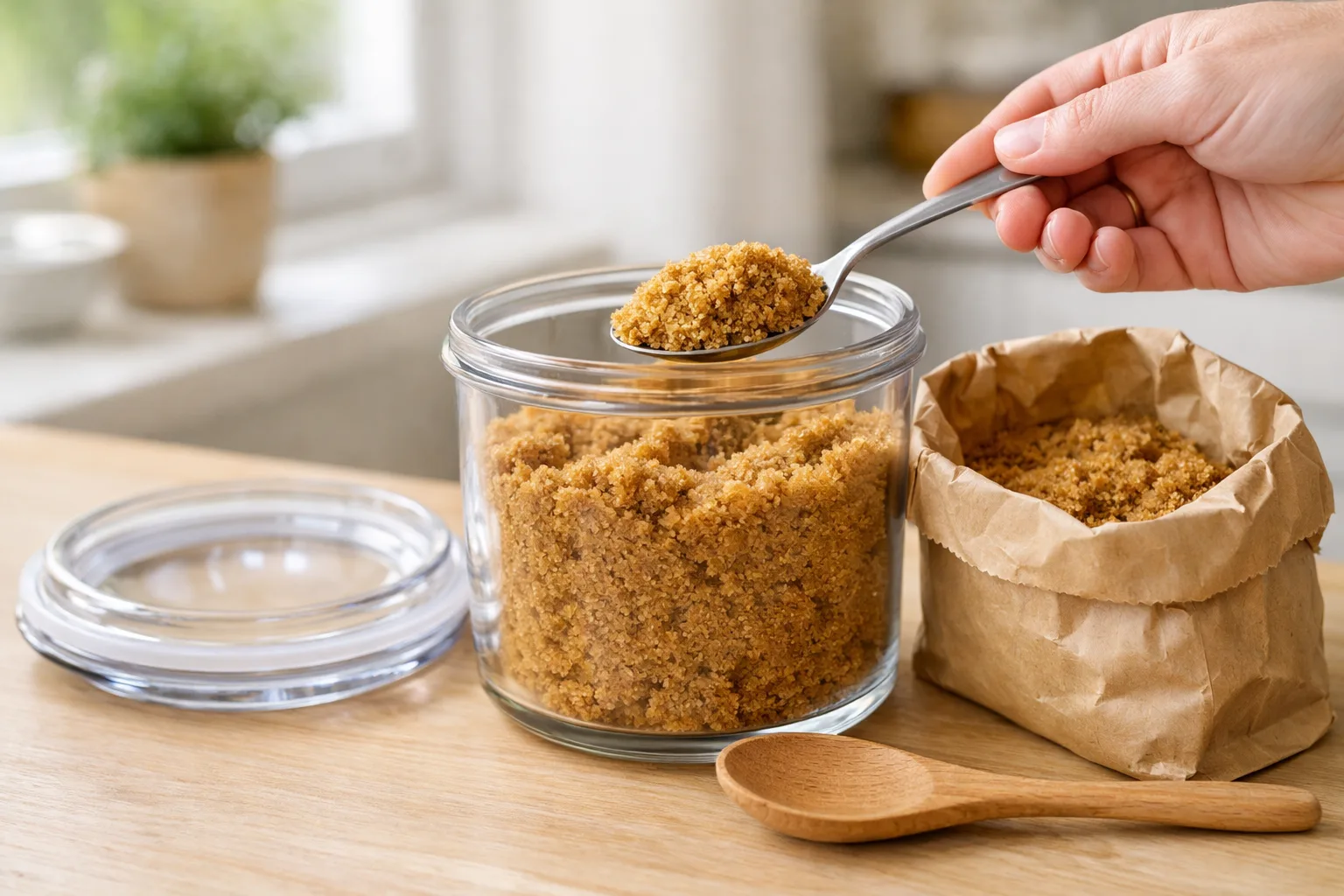
To keep brown sugar soft after opening the bag, transfer it to an airtight container and store it in a cool, dry cupboard. Brown sugar contains molasses, and when it loses moisture to the air, it can dry out and form hard lumps. A tight seal helps keep that moisture in.
Store it in an airtight container
A container with a snug-fitting lid is more reliable than simply folding or clipping the opened bag. Choose a clean, dry, food-safe container large enough to hold the sugar without packing it down. If you prefer to keep the sugar in its original bag, put the bag inside an airtight container or sealable food-storage bag.
Keep the container in a cupboard away from heat and dampness. A spot beside a kettle, oven or dishwasher may expose it to extra heat or steam. The refrigerator is not a good storage place: changes in temperature and moisture can encourage condensation when the sugar is taken out.
Light and dark brown sugar need the same basic storage. Dark brown sugar has more molasses, but both types can dry and harden if left exposed to air.
Add a brown sugar saver if you use one
A food-safe terracotta brown sugar saver can help maintain softness. Soak it as directed on its packaging, wipe off excess water, then place it in the sugar and seal the container. The porous clay releases moisture gradually. Follow the product instructions for how long to soak it and when to re-soak it; don’t use an unlabelled piece of pottery as a substitute.
The saver is optional. A well-sealed container is the most important step, especially if you use the sugar regularly and close the lid promptly after scooping.
Soften sugar that has already hardened
For sugar you need right away, place the amount you want in a microwave-safe bowl. Cover the bowl with a damp paper towel and microwave in short bursts of about 15 to 20 seconds, checking between bursts. The sugar and bowl can be hot enough to burn; use a fork, not your fingers, to gently separate lumps. Stop when the sugar is soft enough to scoop, before it starts to melt. It can harden again as it cools, so this is a quick fix rather than a storage method. Don’t microwave the original bag unless its packaging specifically says it is microwave-safe.
If you have more time, put the hard sugar in an airtight container with a food-safe terracotta saver prepared according to its directions. Check the sugar after it has had time to soften. Avoid adding a slice of bread or fruit for long-term storage: they can introduce unwanted flavours and may spoil if left in the container.
Keep the container dry and closed
Use a clean, dry spoon, and avoid letting steam or water get into the sugar. Close the lid after each use rather than leaving the container open while you bake. These small habits limit exposure to the air that dries brown sugar out.
If the sugar is hard but otherwise looks and smells normal, it may simply have lost moisture; soften what you need and improve the seal for next time. If it has become wet or shows signs of spoilage, don’t use it.
You might also like
How to Store Potatoes So They Sprout More Slowly
Keep potatoes cool, dark, dry and well ventilated to slow sprouting. Learn which containers work, where to store them and what to avoid.
How to Get Garlic Smell Off Your Hands
Garlic smell can linger after chopping, but a thorough wash with soap and water usually helps. Here’s how to clean your hands—and what to try if the odor remains.
How to Pack a Suitcase So Clothes Wrinkle Less
Pack fewer items, use loose rolls for casual clothes, and fold structured garments along their seams. These simple steps help limit creases in transit.