Why Does a Tape Measure’s Metal Hook Wiggle?
By WowPebble Editorial
That loose-looking hook at the end of a tape measure is doing an important job: shifting to compensate for its own thickness, so measurements stay accurate.
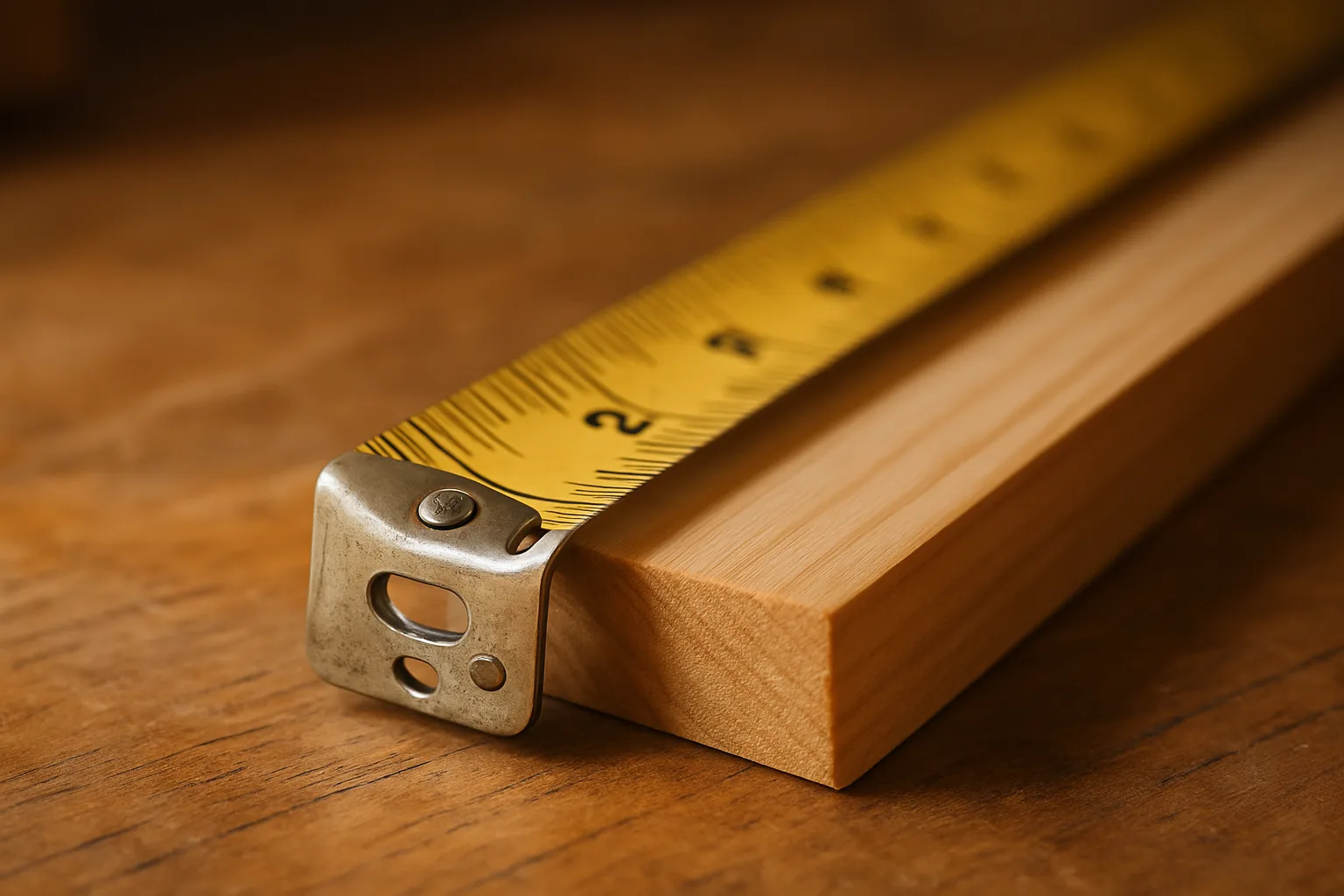
The metal hook at the end of a tape measure may look loose, but its small back-and-forth movement is usually intentional. The hook slides to compensate for its own thickness, helping the tape give the right reading whether you pull it around an outside edge or press it against an inside one.
That movement is called “hook play.” Without it, the hook’s thickness could add to—or subtract from—a measurement, depending on how you used the tape. A little wiggle is not a flaw: it is part of the measuring system.
One tape, two ways to measure
A tape measure’s hook has to work in two different situations. For an outside measurement, such as the length of a board, you catch the hook over the board’s edge and pull the tape taut. For an inside measurement, such as the width of a cupboard, you press the hook against one wall and extend the tape to the other.
The catch is that the metal hook has thickness. If it were fixed rigidly to the blade, that thickness would affect where the tape’s markings lined up with the surface being measured. A design that worked for pulling around an edge would not necessarily work when pushing against a wall.
The sliding hook solves this problem. Its movement is roughly equal to the thickness of the hook. When you pull the tape, the hook shifts outward against its fasteners. When you press it into an inside corner, it shifts inward. In either case, the movement helps keep the tape’s zero point aligned with the surface that the hook is touching.
How the movement keeps the reading right
For a pull measurement, the hook bears on the outside edge; for a push measurement, its opposite face bears against the starting surface. The controlled travel compensates for the hook's own thickness so those two contact arrangements can share the blade's scale.
Stanley describes its TRU-ZERO hook as moving for inside and outside measurements. This is designed travel on that type of hook, not permission to ignore a bent hook or loose, damaged fasteners.
How to use it in practice
For an outside measurement, catch the hook firmly over the edge and pull the blade straight and taut. The hook will move slightly as you pull. Read the mark where the other end of the object meets the blade.
For an inside measurement, press the hook against the inside surface and keep it seated while extending the tape. The hook shifts in the opposite direction. Read the measurement at the far edge, taking care to keep the blade straight rather than bowed or twisted.
Some tape designs provide additional inside-measuring features. Use them only as described for the actual tool; do not substitute an assumed case length, a bent blade or a guessed correction for the marked scale. The sliding-hook method and a case-specific method are different arrangements.
The key is not to push or pull the hook by hand to “set” it. Let the measuring action move it naturally, and avoid forcing it past its normal range.
When the wiggle might be a problem
A small amount of controlled movement is normal; a hook that flops around, bends, or fails to sit flat may not be. A damaged hook or loose fasteners can make it harder to get repeatable measurements. So can a bent blade or a hook that catches unevenly on an edge.
If a measurement seems inconsistent, try measuring the same object several times with the hook seated in the same way. You can also compare the tape with a known reference, such as a reliable ruler. For precise work, use the same tape and measuring method throughout a project when possible. A tape measure is a practical tool, not a guarantee of perfect precision: wear, manufacturing differences, and the way a measurement is taken can all matter.
Do not tighten or remove the hook’s fasteners just to stop the movement. That can defeat the feature that makes the tool work for both inside and outside measurements. If the hook is visibly damaged or the tape no longer gives consistent results, replacing it is usually safer than trying to correct the sliding mechanism yourself.
A small design detail with a big job
Controlled hook travel has a defined purpose, but movement alone does not prove that a tool is undamaged or accurate. Seat the hook consistently for the intended push or pull measurement, and check inconsistent results against a sound reference.
A visibly bent hook or unreliable reading needs attention rather than an adjustment intended to eliminate the normal travel. For work with a specified tolerance, use a suitable checked measuring tool.
You might also like

Why Do Mirrors Reverse Left and Right but Not Up and Down?
A mirror does not actually swap left and right. It reverses the direction pointing into the glass—and the way we compare ourselves with the reflection creates the illusion.
Why Does a Retractable Pen Click When You Press It?
A retractable pen’s click comes from a small locking mechanism inside its barrel. Here’s how the button, cam and spring work together to extend and retract the tip.

Why Do Chimneys Have Caps? The Practical Reasons Explained
Chimney caps keep out rain, animals and debris, and some help contain sparks or reduce wind-driven downdrafts. Here’s how they work—and what they don’t do.