Why Do Some Streetlights Look Purple? The LED Defect Behind the Glow
By WowPebble Editorial
Some white LED streetlights turn purple when their phosphor coating separates. Explore a documented utility case and how to report a changed lamp.
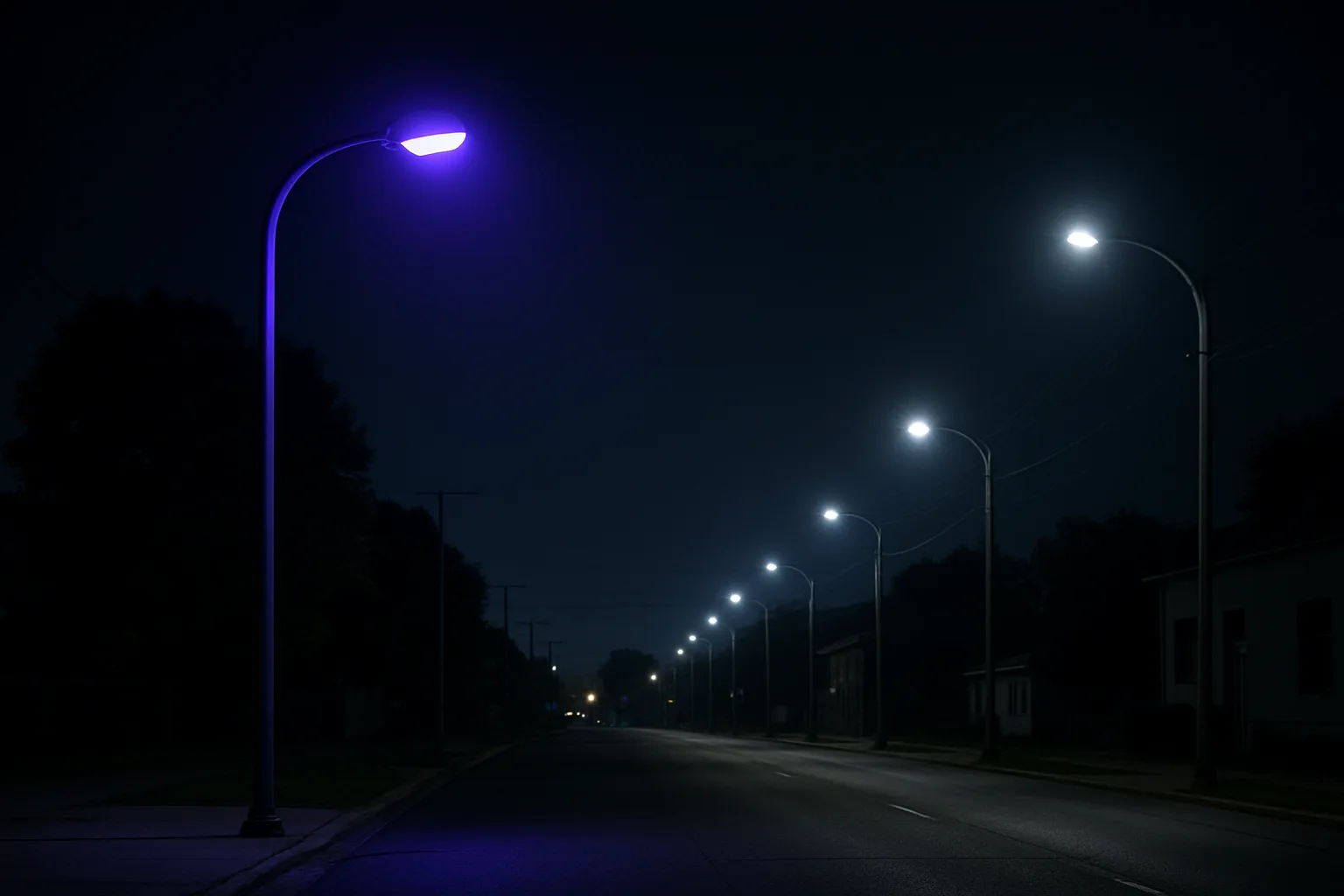
A streetlight glowing purple may be a white LED with a damaged colour-conversion layer. In a documented case, phosphor coating separated from LED packages, letting their underlying blue or violet light escape instead of producing the intended white light. That explains some faulty streetlights, rather than every purple outdoor light.
A lamp that has changed colour among otherwise white streetlights is worth reporting to its operator. The colour alone cannot identify the fixture, manufacturing batch or fault. Here is how a documented coating failure changes the light, and how to report it without inspecting electrical equipment yourself.
How an LED makes white light
Many white LED streetlights don’t create white light directly. They start with a blue LED, which produces short-wavelength light. A layer of phosphor—a material that absorbs some of that blue light and emits light at other wavelengths—helps convert the output into the broad mix of colors we perceive as white.
The balance matters. With the phosphor layer working as intended, the blue light combines with the other emitted colors to make a white-looking beam. If the layer is damaged, uneven, or has come loose, less blue light gets converted. The lamp can then appear intensely blue or violet compared with nearby, normally functioning lights.
People often call the color purple, though the light may be closer to blue or violet. The precise appearance depends on the lamp, the surrounding lighting, and the person looking at it. A phone camera can render it differently again because its sensor and automatic white balance don’t interpret light exactly as human eyes do.
Why does the coating fail?
Manitoba Hydro’s November 2022 explanation identifies phosphor delamination as a manufacturing defect in affected lamps on its network. This is a first-party account of particular equipment, not a diagnosis of every purple lamp or a current statement about all streetlights. For an observed lamp, the responsible operator can confirm whether that explanation applies.
LEDs are often chosen for street lighting because they can use less energy than older lighting technologies and last a long time. But “long-lasting” doesn’t mean “incapable of failing.” A lamp can have a defect in a material or component even when its electronic parts still produce light. In this case, the streetlight may remain illuminated while its color becomes noticeably wrong.
Why it stands out at night
A single purple lamp is especially noticeable against a row of white or warm-colored streetlights. Human vision adapts to dark surroundings, and the contrast makes the odd-colored source feel even more vivid. Nearby signs, building lights, and the color of the road can also affect how the lamp appears.
Cameras add another twist. A phone may exaggerate the blue or violet tones, or make the light look different from what you saw in person. That doesn’t necessarily mean the camera has captured a different kind of lamp; it reflects how the camera processes bright light against a dark scene.
Is a purple streetlight dangerous?
The color by itself doesn’t tell you whether a lamp is hazardous. A blue or purple appearance is not a reliable way to determine whether ultraviolet light is present: ultraviolet is outside the range people can see, and visible color cannot confirm or rule it out. Nor does an unusual hue automatically mean the lamp is about to fail completely.
Still, a faulty streetlight may not provide the kind of illumination it was designed to deliver. If it looks unusually dim, flickers, or leaves an area poorly lit, those are useful details to include when reporting it. Don’t climb a pole, touch the fixture, or try to inspect the equipment yourself.
What should you do if you spot one?
Streetlights are usually maintained by a local government, road authority, or utility, depending on where you live. Many have an online reporting form or a phone number for lighting faults. Provide the street name or nearest intersection, describe the lamp’s color, and mention any flickering or loss of light. A photo can help if it shows the location clearly, but it’s not essential.
One purple lamp may be a local maintenance issue rather than evidence that every nearby light is affected. Reporting it gives the responsible organization a chance to inspect the fixture and decide whether it needs repair or replacement.
Not every purple light is a faulty streetlight
Some outdoor lights are intentionally colored for decoration, events, or a particular atmosphere. A purple light outside a venue or on a building may be designed to look that way. The clue is often context: a single purple lamp mixed into a run of ordinary white streetlights is more suggestive of a defect than a coordinated display of colored lighting.
Streetlights can also look different because cities use different lighting technologies and color temperatures. Older lamps may cast a warmer, yellower glow, while many LEDs look cooler and whiter. Those planned differences are not the same as a white LED suddenly shifting toward blue or violet.
A colour-conversion fault is therefore a documented explanation for some streetlights turning purple. Report a changed lamp with its location and symptoms; leave identification and inspection to the operator. Coordinated decorative lighting is a different case.
You might also like

Why Do Mirrors Reverse Left and Right but Not Up and Down?
A mirror does not actually swap left and right. It reverses the direction pointing into the glass—and the way we compare ourselves with the reflection creates the illusion.
Why Does a Retractable Pen Click When You Press It?
A retractable pen’s click comes from a small locking mechanism inside its barrel. Here’s how the button, cam and spring work together to extend and retract the tip.
Why Do Chimneys Have Caps? The Practical Reasons Explained
Chimney caps keep out rain, animals and debris, and some help contain sparks or reduce wind-driven downdrafts. Here’s how they work—and what they don’t do.