Why Do Golf Balls Have Dimples? The Science Behind Their Flight
By WowPebble Editorial
Golf-ball dimples are more than decoration: they help air flow around the ball, cutting drag and making its flight longer and more controllable.
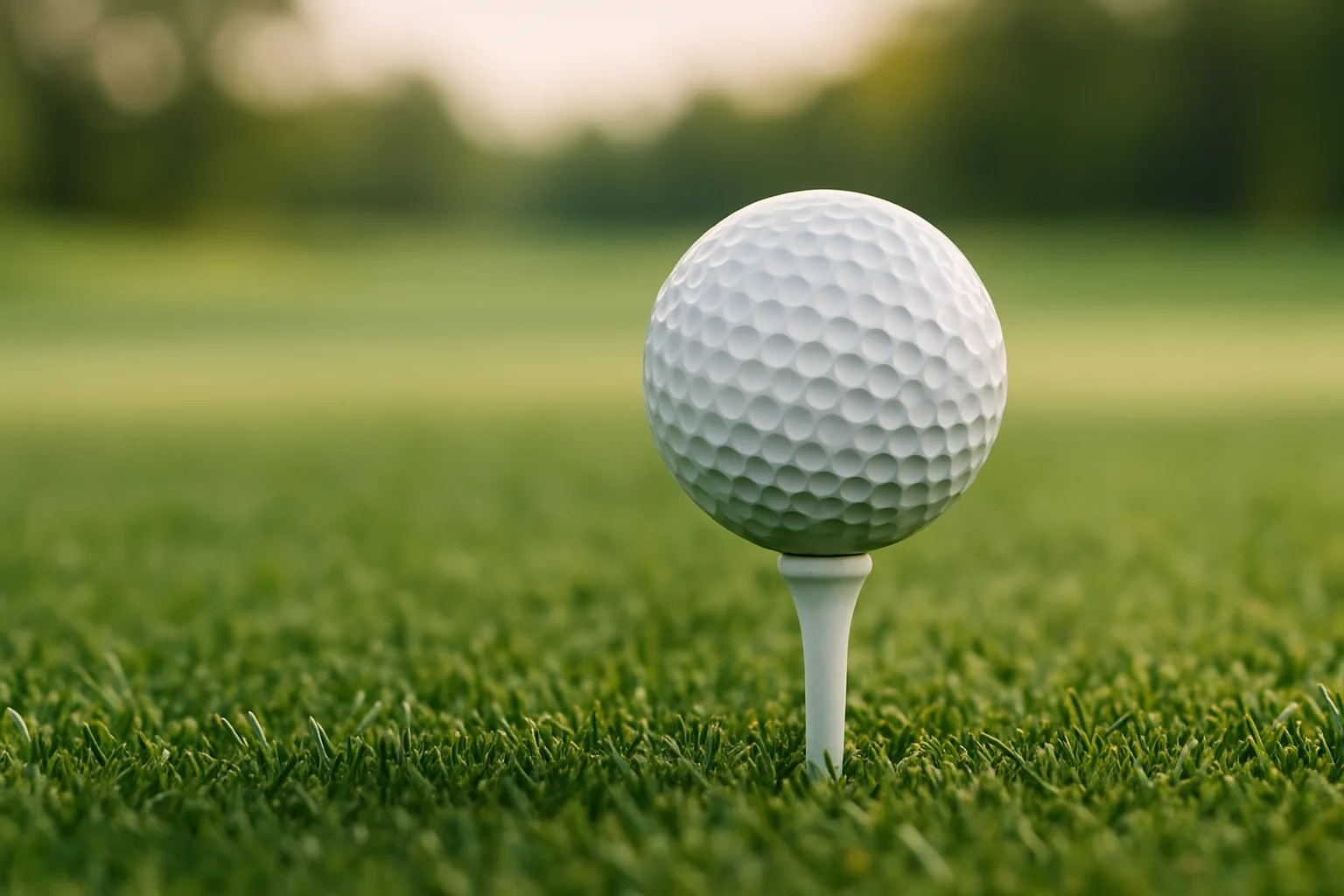
A golf ball may look as if it is covered in tiny dents, but those dimples are carefully designed features. Under typical golf-flight conditions, they can help the ball travel farther than a smooth sphere by changing how air moves around it. In short, dimples reduce the drag that would otherwise slow the ball down and help it stay airborne when struck with backspin.
The explanation comes down to airflow. A golf ball moving through the air pushes air aside, and the way that air separates from the ball affects how quickly the ball loses speed. Dimples encourage the airflow to behave in a way that reduces resistance.
How dimples reduce drag
As a ball flies forward, air flows around its surface. Some of that air follows the ball’s curved shape, while the air behind it forms a turbulent wake. The wake is a region of disturbed, lower-pressure air that pulls backward on the ball. This backward force is called pressure drag.
A perfectly smooth ball might seem like it should slip through the air more easily. In one sense, it does: the air rubbing directly against its surface creates less skin friction than it would against a textured surface. But that is only part of the story. On a smooth golf ball, the airflow tends to separate from the surface relatively early. The separation leaves a broad wake behind the ball, producing substantial pressure drag.
Dimples promote turbulence in the thin boundary layer next to the surface. Mixing brings faster-moving air closer to the surface, helping the flow resist separation as it moves around the ball. Under suitable flight conditions, later separation leaves a smaller wake and reduces pressure drag; the dimples do not supply energy to the ball.
So dimples do add some friction, but they help reduce a much larger source of resistance. The balance makes the dimpled ball more aerodynamic overall. It can keep more of its speed and travel farther than a smooth ball hit under comparable conditions.
Why backspin helps a golf ball rise
Dimples also help a golf ball generate aerodynamic lift, especially when the ball is spinning. A well-struck shot often has backspin: the ball rotates backward as it moves forward. That rotation changes the airflow around the ball, creating a pressure difference between its upper and lower sides. The resulting force acts upward, helping the ball remain in the air longer.
Titleist’s aerodynamic design explanation treats speed, spin and surface design together. Spin-related lift and drag reduction are distinct effects: a lower-drag comparison does not by itself establish the lift or distance of every spinning ball. No particular distance gain follows from counting dimples alone.
Lift is useful, but it is not a simple matter of “more is always better.” Too much spin or an unsuitable launch can make a shot balloon upward and lose distance. The best flight depends on the golfer’s swing and the conditions, as well as the ball’s construction. Dimples support the flight; they do not guarantee a particular result.
Roughness is not always an advantage
NASA Glenn’s sphere-drag discussion shows why a rough surface can have less drag than a smooth one in a particular flow range: surface roughness changes boundary-layer transition. The result depends on the flow conditions, rather than on a rule that rougher always means faster.
That distinction matters when comparing balls. Speed and surface must be considered together, and an aerodynamic comparison does not by itself establish who first discovered dimples or when. Spin-related lift is a separate part of a golf ball's flight.
Why not make every ball exactly the same?
Dimple patterns vary from one golf ball to another. They can differ in number, depth, shape, and arrangement. Designers test those details to influence how a ball performs, including its drag, lift, and stability in flight.
There is no single pattern that is ideal for every golfer or every shot. A ball designed for one balance of distance, spin, and feel may perform differently from one designed for another. The final result also depends on how the ball is struck. A golfer’s swing speed and delivery help determine the ball’s launch and spin, so a dimple pattern is only one part of the equation.
The surface has to work as a whole, too. If the dimples are too shallow, too deep, or arranged in an unsuitable way, the airflow may not behave as intended. Manufacturers therefore use carefully developed patterns rather than adding random dents. Golf balls also have to meet the rules of the game, so designers work within established equipment standards.
Would a smooth golf ball still fly?
Yes. A smooth golf ball would still move through the air if struck, and spin could still affect its path. In the flow conditions where dimples delay separation, a smooth ball would leave a larger wake and experience more pressure drag. It would lose speed more quickly and generally travel a shorter distance than a comparable dimpled ball.
Dimples are not little scoops that catch the air, nor do they propel the ball forward. The club provides the energy; the dimples influence how the ball moves through the air after it leaves the clubface. Their effect is subtle to look at but substantial in flight.
That is why a golf ball’s surface is more than a visual signature. Those small indentations help control airflow, reduce drag, and support lift from spin. A smooth ball might look simpler, but the carefully textured one is built to stay in the air and keep going.
You might also like

Why Do Mirrors Reverse Left and Right but Not Up and Down?
A mirror does not actually swap left and right. It reverses the direction pointing into the glass—and the way we compare ourselves with the reflection creates the illusion.
Why Does a Retractable Pen Click When You Press It?
A retractable pen’s click comes from a small locking mechanism inside its barrel. Here’s how the button, cam and spring work together to extend and retract the tip.
Why Do Chimneys Have Caps? The Practical Reasons Explained
Chimney caps keep out rain, animals and debris, and some help contain sparks or reduce wind-driven downdrafts. Here’s how they work—and what they don’t do.