Why Do Coins Have Ridges Around Their Edges?
By WowPebble Editorial
The ridges on a coin are more than decoration. They helped expose valuable metal being shaved off—and still make coins easier to identify and check.
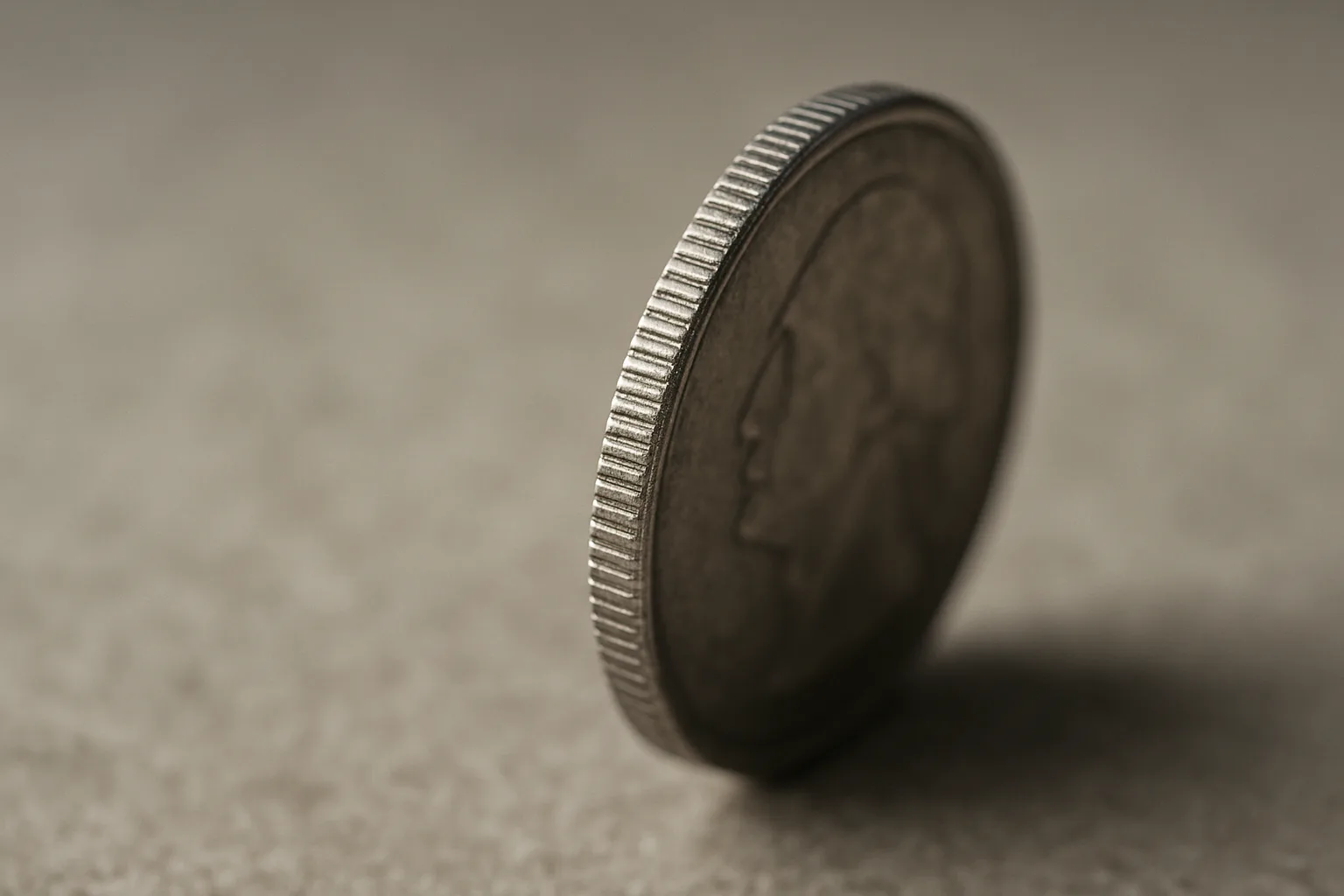
The regular grooves on a coin's edge are called reeding. A repeated edge pattern can make removed or damaged metal easier to notice, which matters for precious-metal coins historically subject to clipping. The Royal Mint’s Old Bailey case records document the collection of clippings and filings; they are not evidence that one particular ruler invented every ridged edge.
Modern edge designs have uses beyond that historical problem. They can help distinguish coins by touch or appearance and supply another design detail to inspect. That is not a current comparison of metal prices with face values, nor a guarantee that a reeded coin is genuine.
A defense against clipping
For much of history, coins were made from precious metals such as gold and silver. Their value came partly from the amount of metal they contained. That created an opportunity for clipping: a person could trim small slivers from a coin’s edge, collect the metal, and still try to spend the coin at its original value.
A little shaving might be hard to notice on a smooth-edged coin. Reeding changed that. If someone cut into a ridged edge, the regular pattern would be damaged or missing. The altered coin could attract suspicion, and a merchant might refuse it. The ridges did not make clipping impossible, but they made it easier to detect.
This distinction matters: reeding is mainly a way to show that an edge has been disturbed, not a barrier that physically prevents anyone from removing metal. It works much like a seal that reveals tampering. Once the pattern is broken, the damage is visible.
How ridged edges became practical
The idea of marking a coin’s edge depends on being able to produce coins consistently. As minting methods became more mechanized, mints could make coins with regular, repeatable edge patterns as well as consistent faces. That helped make reeding a practical feature of coin production.
A coin is struck when dies press its design into a metal blank, often called a planchet. On many modern coins, a collar surrounding the blank helps shape its rim and edge during striking. The collar can form a plain edge, ridges, or another design. Some coins also have edge lettering or other details added in a separate step.
The US Mint’s glossary distinguishes the collar from the edge and raised rim. Keep those terms separate: a rim protecting the face and a reeded outer edge are not the same feature.
The grooves are not just scratches cut into a finished coin. They are usually formed as part of the minting process, which makes them regular in size and spacing. That consistency is why a damaged or irregular pattern can stand out.
Why coins still have ridges
The old problem of clipping has become less common as everyday coins have moved away from being valuable simply for their metal content. Yet reeded edges have stuck around for several practical reasons.
They can help people tell coins apart by touch. A person may be able to distinguish a smooth-edged coin from a ridged one without looking. That can be useful for anyone handling change, including people with limited vision. In some currencies, edge differences help separate denominations, though the system varies from country to country and is not a universal guide.
They offer a quick check of the coin’s edge. A regular pattern gives people something to inspect when checking whether a coin looks genuine or has been altered. Edge designs can be difficult for a counterfeiter to reproduce convincingly, especially when combined with other details. But ridges alone do not prove a coin is authentic: counterfeit coins can imitate features, and genuine coins can become worn or damaged.
They are part of familiar coin designs. People expect certain coins to have particular edges, and mints often keep established features when producing new versions. A ridged edge may be retained because it is useful, because it helps distinguish a coin, or simply because it is part of a long-standing design.
Not every coin has ridges
Some coins have smooth edges. Others use interrupted ridges, lettering, symbols, or more elaborate patterns around the edge. The choice depends on the coin’s design, denomination, minting process, and the traditions of the country that issues it.
The US Mint’s anatomy guide distinguishes plain, reeded, lettered and decorated edges. Those categories help describe a coin; an apparently regular edge does not by itself authenticate it. For identification, use the specifications of the named issue rather than one visible feature.
A smooth edge does not automatically mean a coin is fake. Many genuine coins are made that way. Likewise, not every ridged coin is necessarily authentic. The edge is one feature to consider alongside the coin’s size, weight, appearance, and other design details.
Different edge patterns can also serve as a practical way to distinguish coins that look similar face-on. But there is no single international code: a pattern that identifies one coin in one country may not mean the same thing elsewhere.
What to notice next time you handle change
Try rolling a coin between your fingers and paying attention to its edge. You may feel fine, evenly spaced grooves, a smooth rim, or a pattern that changes around the circumference. That small detail is a reminder that coins are designed to communicate information beyond the images on their faces.
A regular edge is one way to make interference more visible; it does not make removal impossible. Today's edge also contributes to identification and handling. Read a particular issue's specifications rather than treating a smooth, worn or ridged edge as a verdict on its value or authenticity.
You might also like

Why Do Mirrors Reverse Left and Right but Not Up and Down?
A mirror does not actually swap left and right. It reverses the direction pointing into the glass—and the way we compare ourselves with the reflection creates the illusion.
Why Does a Retractable Pen Click When You Press It?
A retractable pen’s click comes from a small locking mechanism inside its barrel. Here’s how the button, cam and spring work together to extend and retract the tip.
Why Do Chimneys Have Caps? The Practical Reasons Explained
Chimney caps keep out rain, animals and debris, and some help contain sparks or reduce wind-driven downdrafts. Here’s how they work—and what they don’t do.