Why Car Windshields Have Black Dots Around the Edges
By WowPebble Editorial
Those tiny black dots do more than decorate a windshield. They help protect the glass bond, soften the shift from dark to clear, and manage sunlight.
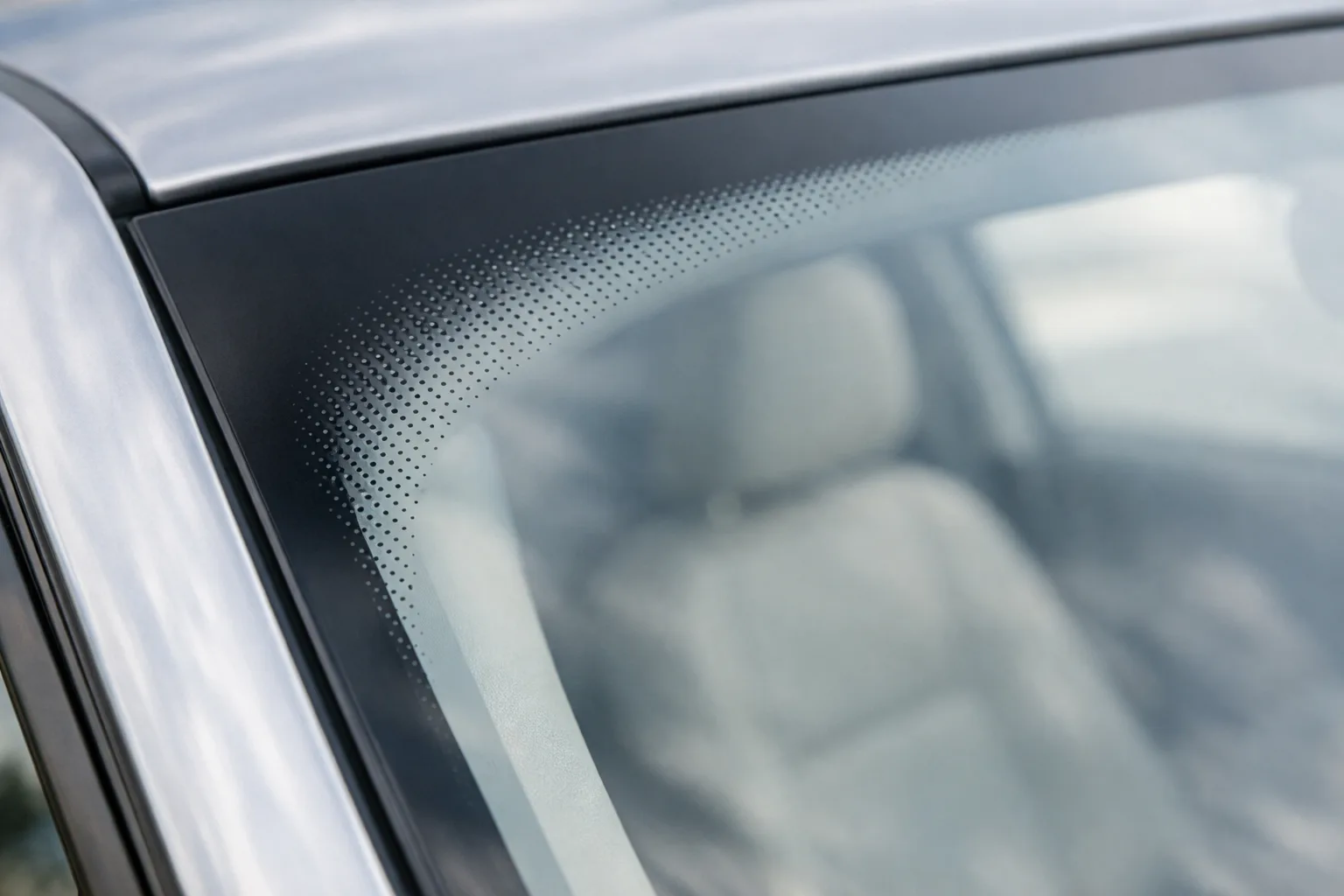
Look closely at the edge of a car windshield and you’ll see a black band that fades into a field of small dots. The pattern may seem decorative, but it is part of the glass’s practical design. The dark coating helps cover and shield the area where the windshield is bonded to the car, while the dots make the transition from black to clear less abrupt.
The solid border and the dotted pattern are usually made from a durable ceramic enamel called frit. They are related parts of the same treatment, but they serve somewhat different purposes. Understanding that distinction makes the pattern easier to read: the band marks the edge treatment, and the dots create a gradual-looking boundary beside it.
What the black band does
A modern windshield is attached to the car’s frame with a strong adhesive, commonly urethane. The bonded joint helps hold the glass securely in place. The black frit covers the area where the adhesive sits, so the glue line and the edge of the frame are less visible from outside the vehicle.
The band also shields the bonding area from sunlight. Sunlight contains ultraviolet radiation, which can degrade some materials over time. By blocking much of that exposure, the frit helps protect the adhesive from UV damage. The coating gives the edge a neat, consistent appearance as well, rather than leaving a visible strip of adhesive around the glass.
Frit is not simply a decorative sticker added after the windshield is installed. It is a ceramic coating applied to the glass during manufacturing and heated so that it fuses to the surface. The adhesive system is designed to bond to this coated area. In other words, the dark border is part of the windshield assembly and has a role in the way the glass is fitted to the car.
Why the solid edge fades into dots
The dotted area softens the visual change between the solid black band and the transparent part of the windshield. Without a gradual pattern, the edge would appear to switch suddenly from dark to clear. A field of dots makes that boundary look less sharp from both outside and inside the vehicle.
This arrangement is often called a dot matrix. The dots are commonly larger near the solid band and become smaller farther into the clear glass, producing a halftone-like fade. The exact pattern can vary from one windshield to another, but the general effect is the same: the coating appears to taper away rather than end at a hard line.
The transition is also relevant to how the glass responds to sunlight. A broad dark area absorbs more solar energy than clear glass, so the two regions can warm at different rates. A graduated pattern makes the change in shading less abrupt and can help moderate the transition in heating. It is one part of the windshield’s overall design, not a guarantee that the glass cannot experience stress or damage.
The dots are therefore not little holes, nor are they usually separate pieces attached to the windshield. They are part of the frit pattern on the glass. Their size and spacing create the visual fade, while the solid section remains the main opaque border.
What the shaded areas can conceal
The black border can hide the edge of the car body and parts of the windshield installation that would otherwise be visible through the glass. This helps create a cleaner-looking finish around the perimeter. The precise shape of the border depends on the vehicle and the windshield design.
Some windshields also have a larger shaded section near the rear-view mirror. That area can provide additional shade for the driver and conceal the mirror mount or nearby equipment. It is sometimes called a third visor frit, referring to the sun visors above the driver and front passenger.
The dark area near a mirror should not be confused with the dots themselves. A car may have cameras, sensors, or other equipment near the top of the windshield, but those are separate components. The frit is the coated pattern in the glass; it does not, by itself, indicate that a sensor is present. The glass and shaded sections are designed to suit the layout of the particular vehicle.
Why use ceramic frit?
The edge of a windshield has to endure sunlight, weather, vibration, and ordinary use. Its coating needs to stay in place rather than peel like a strip of tape. Ceramic frit is suited to this purpose because it can be fused to the glass during manufacture and forms a durable, opaque surface. It can also be applied in shapes that create both a solid band and a controlled dot pattern.
The frit is normally on the inner-facing surface of the windshield, where it is protected from direct exposure to weather and routine exterior cleaning. When viewed from outside, the glass can make the coating appear to sit at the edge of the window. It is nevertheless a fused coating on the glass, not a trim strip applied around the car’s frame.
This placement helps explain why the pattern can look like a printed border while behaving as part of the glass. The frit is made during the windshield’s manufacture, and the adhesive is applied to the designated bonded area during installation. The result is a finished edge that conceals the joint and presents a consistent dark outline.
Are the dots only decorative?
The pattern does improve the windshield’s appearance, but it is not merely an ornament. The solid band conceals and helps shield the bonded edge, while the dotted fade creates a smoother-looking transition from dark coating to clear glass. Other shaded sections may provide some shade or hide mounting areas, depending on the vehicle’s design.
It is also useful to keep the limits of the pattern in mind. The dots do not make the windshield immune to damage, and they are not a substitute for the adhesive bond. Nor should every dark patch be interpreted as a camera or sensor. The frit is one component of a larger glass and vehicle design.
The next time you notice the black dots around a windshield, you can think of them as a small piece of practical engineering. They help make the bonded edge less visible, protect the adhesive from sunlight, and give the transition from black to clear a more gradual appearance.
You might also like

Why Microwave Doors Have That Tiny Black Mesh
The metal mesh in a microwave door helps contain cooking radiation while letting visible light through. Learn its role and when door damage needs attention.

Why Do Mirrors Reverse Left and Right but Not Up and Down?
A mirror does not actually swap left and right. It reverses the direction pointing into the glass—and the way we compare ourselves with the reflection creates the illusion.
Why Does a Retractable Pen Click When You Press It?
A retractable pen’s click comes from a small locking mechanism inside its barrel. Here’s how the button, cam and spring work together to extend and retract the tip.