Why Bicycle Tires Have Different Valve Types—and Which One You Need
By WowPebble Editorial
Presta, Schrader and Dunlop valves all keep air in a bicycle tire, but their different designs reflect the rims, pumps and riding needs they serve.
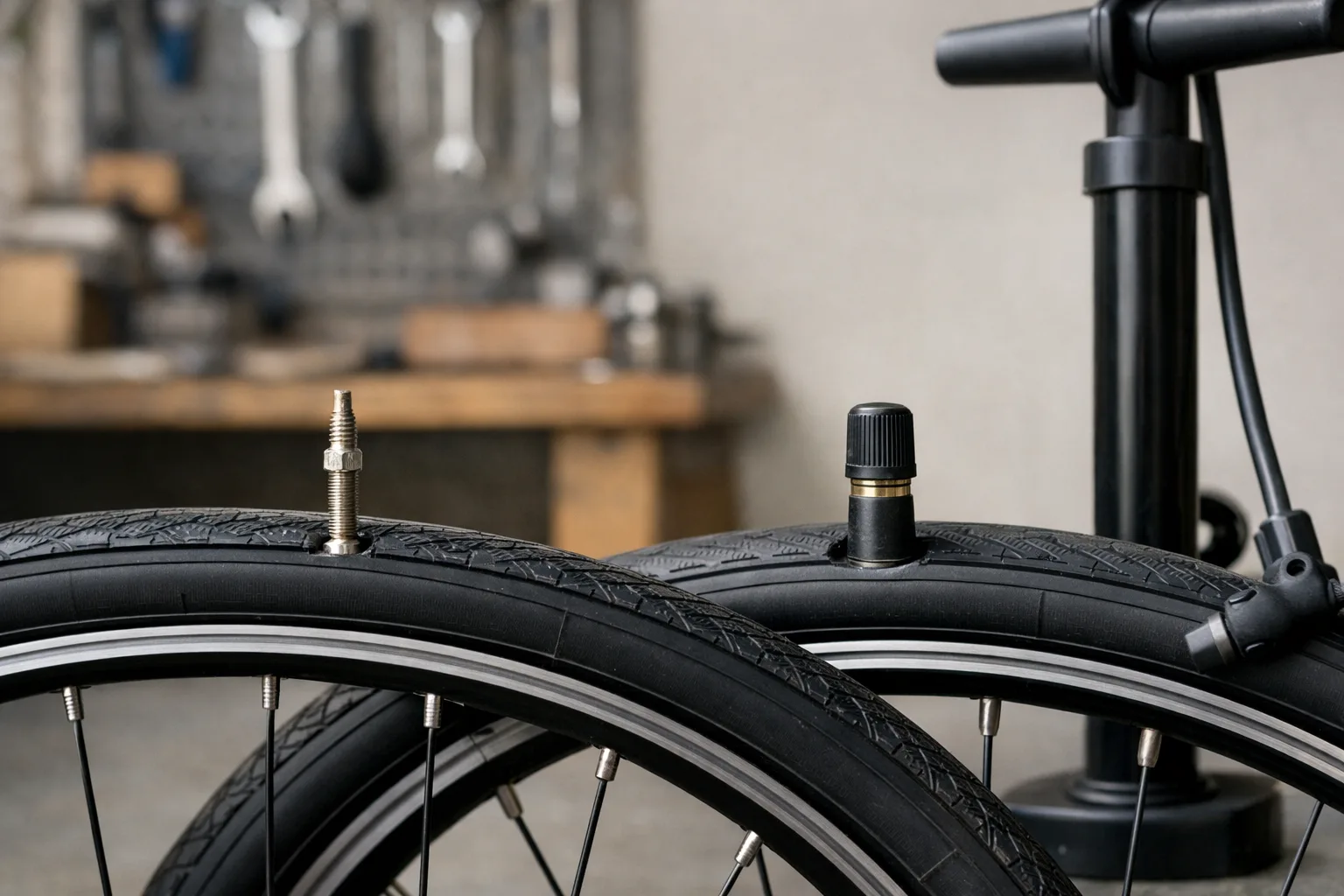
A bicycle valve looks like a small detail, until you arrive at a pump and discover its nozzle will not fit. The reason bikes use several kinds is that no single design suits every rim, pump and riding tradition. Three classic types—Presta, Schrader and Dunlop—hold air in different ways, but all do the same essential job: let air into the tire and keep it there.
The key thing to know is that a valve type is usually a feature of the wheel and its inner tube, not a special kind of tire. Your tire’s pressure needs come from the tire and wheel specifications. The valve affects how you inflate it and what equipment you need.
The three common bicycle valves
Presta: slim and common on road bikes
Presta valves are narrow, with a small threaded tip that you unscrew before adding air. After inflating, you tighten the tip again to close the valve. A small locknut near the rim can hold the valve in place, though it does not control the air seal.
Because a Presta valve is narrower than a Schrader, it fits through a smaller hole in the rim. That can be useful for narrow bicycle rims, which are common on many road bikes. Presta valves are also widely used on mountain and gravel bikes, so they are not limited to one kind of riding.
To inflate one, remove the cap if present, loosen the tip, and attach a pump head designed for Presta—or a compatible dual-head pump. Some pumps require you to flip an internal fitting or use a small adapter. When finished, remove the pump and retighten the tip. The valve’s small size is convenient, but the exposed tip can bend if it is knocked while unscrewed.
Schrader: familiar and sturdy
Schrader valves are wider and look like the valves used on most car tires. Inside is a spring-loaded pin. Pressing the pin opens the valve; the pump head usually pushes it in while delivering air. The spring helps close it when pressure is released.
Schrader is familiar from car valves, and Schwalbe discusses compatible pumps and adapters. A fitting connector does not make an uncontrolled service-station air hose suitable for a bicycle tyre. Use a pump and readable gauge that let you control pressure within the tyre and rim maker's limits; do not enlarge a rim hole or inflate by appearance alone. For uncertain equipment, use a bicycle pump or ask a bike shop.
Dunlop: a familiar choice in some places
Dunlop valves, also called Woods or English valves, are a classic bicycle-valve family. Their cores and operation vary between old and modern versions, so do not infer the internals or a pressure-check method just from the outer shape. Identify the valve and pump instructions before choosing an adapter.
If you encounter a Dunlop valve, check the pump instructions or ask a local bike shop which head fits. Valve names and designs can be confusing, and compatibility is not always obvious from a quick glance.
Why not use one universal valve?
Bicycle wheels have evolved for different purposes, and their valves reflect practical compromises. A narrow valve needs a smaller rim hole. A wider one may be easier to handle and may work with familiar inflation equipment. Design choices also persist because riders, shops and manufacturers already have compatible pumps, tubes and spare parts.
The rim itself is an important part of the story. A wheel is made with a valve hole sized for a particular valve family. If you buy a replacement inner tube, its valve must fit that hole, and its length must reach far enough through the rim for a pump to attach. Deep-section rims may need a longer valve or a suitable extension.
There is no simple rule that one valve always allows higher pressure or makes a bike faster. The safe pressure depends on the tire, rim and wheel instructions. A valve that is damaged, poorly fitted or incompatible with the rim can cause trouble, but choosing Presta over Schrader alone does not determine how much pressure a tire should hold.
What about tubeless tires?
A tubeless setup has no inner tube, but it still needs a valve attached to the rim. Many bicycle tubeless valves are Presta-style: they pass through the rim and seal with a nut and rubber base. The seal is important because there is no tube around the valve to contain the air.
Tubeless valves come in different lengths and shapes to suit different rims. Some have removable cores, which can make it easier to add sealant or clear a blockage. Follow the wheel and valve maker’s instructions when fitting one; a valve that does not seal against the rim can leak even if it is the right general type.
Schwalbe’s tubeless instructions also require a compatible approved wheel and tyre and warn not to exceed the lower applicable rim or tyre pressure limit. A valve that physically fits does not approve an otherwise incompatible tubeless conversion.
How to choose the right valve
Start with the wheel, not the pump. Look at the rim’s valve hole and check the markings or instructions from the wheel maker. If you are replacing a tube, match the valve type and choose a stem long enough for the rim. A Presta-to-Schrader adapter can help a Presta valve connect to some Schrader-style pumps, but it does not change the rim hole or make every pump compatible.
It is also worth carrying a pump that matches your valves, especially on a ride. A workshop pump with a dual head may handle more than one type, but roadside mini-pumps vary. Test your setup at home so you know how to attach and release the pump without bending a valve or letting air out.
Different bicycle valves are less a mystery than a record of practical trade-offs. Presta fits a smaller opening, Schrader offers a familiar spring-loaded design, and Dunlop remains useful in places where it is established. Once you know which valve your wheel uses, choosing a tube and pump becomes a simple matter of matching parts.
You might also like

Why Do Mirrors Reverse Left and Right but Not Up and Down?
A mirror does not actually swap left and right. It reverses the direction pointing into the glass—and the way we compare ourselves with the reflection creates the illusion.
Why Does a Retractable Pen Click When You Press It?
A retractable pen’s click comes from a small locking mechanism inside its barrel. Here’s how the button, cam and spring work together to extend and retract the tip.
Why Do Chimneys Have Caps? The Practical Reasons Explained
Chimney caps keep out rain, animals and debris, and some help contain sparks or reduce wind-driven downdrafts. Here’s how they work—and what they don’t do.