Why Are So Many Pencils Painted Yellow?
By WowPebble Editorial
KOH-I-NOOR's dated yellow 1500 pencil is one documented example of the familiar colour. Its history does not explain every maker or identify a lead grade.
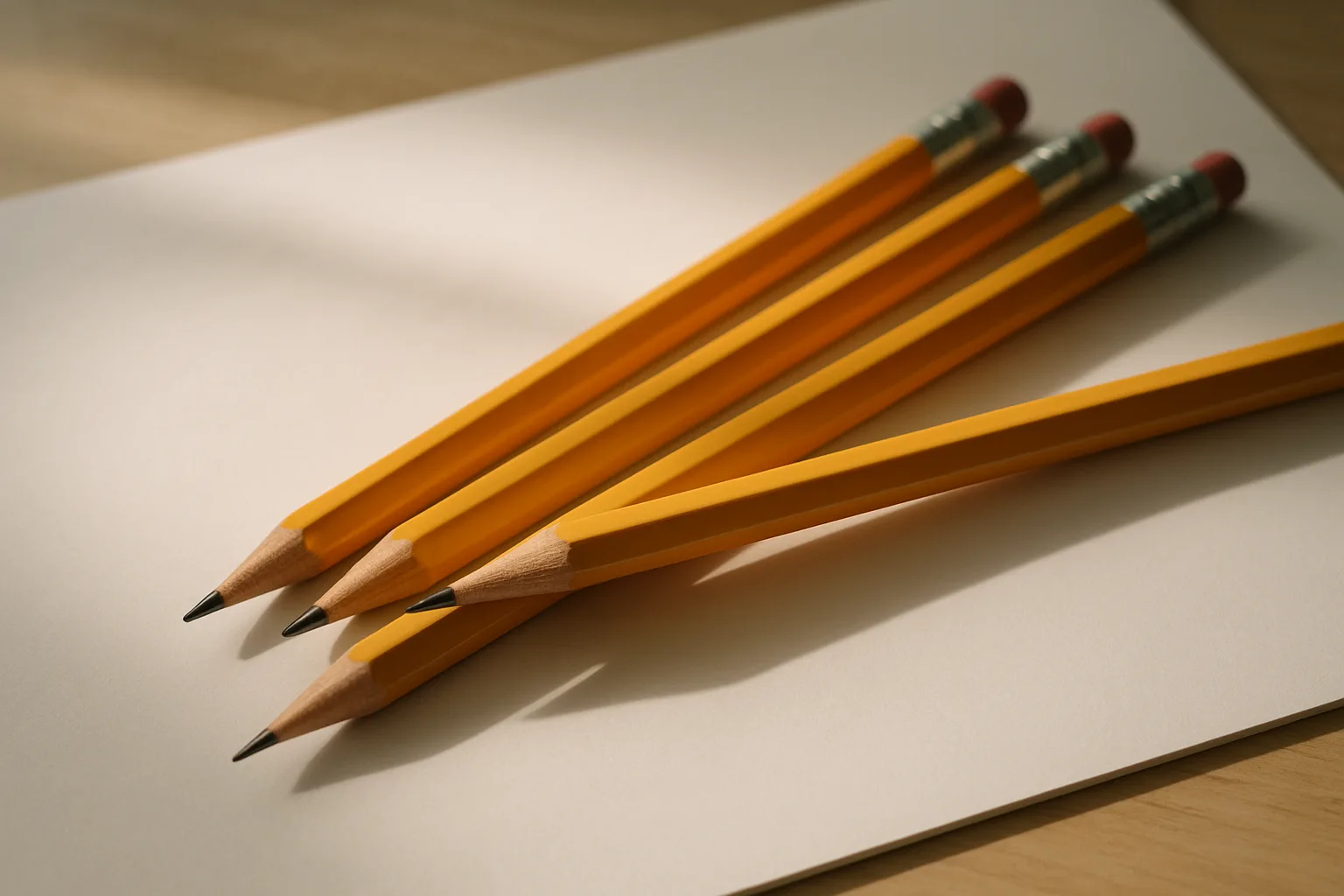
Yellow pencil paint is a matter of product identity and convention, not a feature that makes graphite write. A well-documented part of the history is KOH-I-NOOR's yellow 1500 pencil. It provides a concrete example of a successful yellow design without proving why every later manufacturer chose the colour.
A dated example, rather than a universal origin story
KOH-I-NOOR HARDTMUTH’s own timeline dates production of its yellow 1500 pencil to 1888 and records a Paris Grand Prix award in 1900. Those are the dates of the manufacturer's account. They should not be replaced with a different exhibition date simply because it appears in a popular retelling.
The timeline establishes a named yellow product. By itself, it does not establish that all other makers copied it, that yellow was invented as a pencil colour then, or that every buyer understood the same symbolism.
The paint and the writing core answer different questions
A pencil's outer colour helps identify its design or product family. The marking that identifies its graphite grade is a separate piece of information.
The manufacturer's current 1500 catalogue describes yellow pencils offered in multiple hardness classes. That is a useful present-day comparison: the same yellow appearance can accompany different leads. Choose a grade for the job rather than expecting a yellow casing to guarantee a particular darkness or feel.
Why the familiar story needs limits
Accounts sometimes link yellow pencils to Chinese graphite, prestige or a single moment when the industry changed colour. Such a story needs evidence about a particular manufacturer and period; colour alone cannot prove either the origin of the graphite or the maker's reason for using it.
For a pencil you own, its name, grade and manufacturer's description are better evidence than a story attached to its paint. Other finishes do not imply an inferior core, and a yellow pencil is not automatically part of the historical 1500 family.
What to notice on your next pencil
Look separately at the casing colour, brand or model, and lead-grade marking. They describe different features. A yellow exterior can be a recognisable design tradition while the printed grade tells you something more directly relevant to its intended use.
That distinction preserves the interesting history without turning a successful brand's account into a rule about every pencil.
You might also like

Why Do Mirrors Reverse Left and Right but Not Up and Down?
A mirror does not actually swap left and right. It reverses the direction pointing into the glass—and the way we compare ourselves with the reflection creates the illusion.
Why Does a Retractable Pen Click When You Press It?
A retractable pen’s click comes from a small locking mechanism inside its barrel. Here’s how the button, cam and spring work together to extend and retract the tip.
Why Do Chimneys Have Caps? The Practical Reasons Explained
Chimney caps keep out rain, animals and debris, and some help contain sparks or reduce wind-driven downdrafts. Here’s how they work—and what they don’t do.