Why Are Keyboard Letters Arranged in the QWERTY Layout?
By WowPebble Editorial
QWERTY began with the early typewriter, but its staying power has more to do with familiarity and shared standards than with a perfect key arrangement.
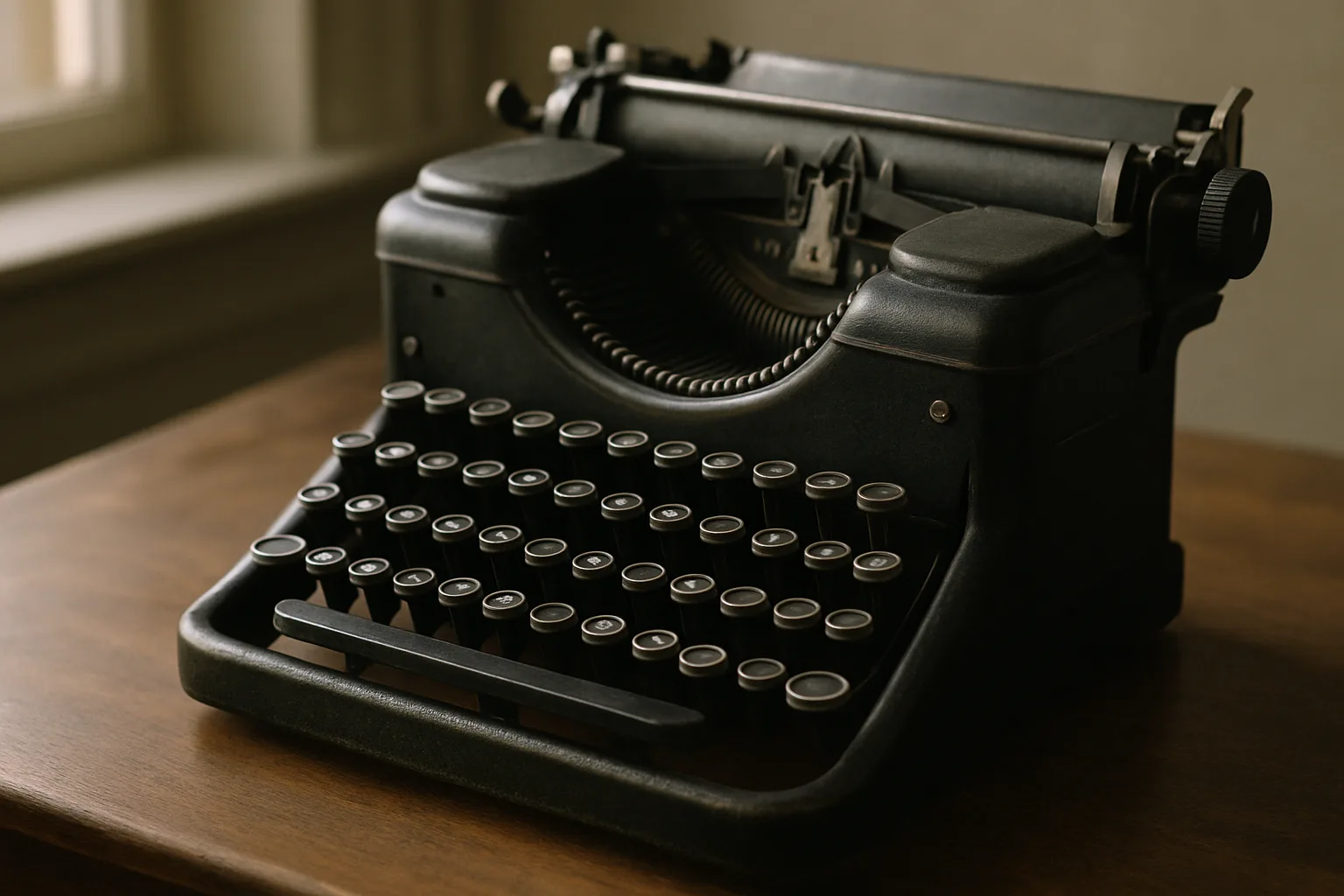
Look down at almost any English-language keyboard and the top letter row begins Q-W-E-R-T-Y. That arrangement is so familiar it can seem inevitable. But QWERTY was shaped by the practical challenges of early typewriters—and it survived because, once many people learned it, switching became difficult.
The short answer is that QWERTY grew out of the development of the typewriter in the 19th century. It was not designed from scratch as an ideal layout for human hands, and the popular claim that its purpose was simply to slow typists down is not supported by clear historical evidence. Its long life is better explained by habit, training, and the power of a widely shared standard.
From typewriter to familiar keyboard
Christopher Latham Sholes worked with collaborators on practical writing machines in the 1860s. The Smithsonian’s invention-history account records Densmore's 1873 manufacturing agreement with Remington, while the museum’s Sholes & Glidden machine record dates its commercial example to 1874. Remington was not a newly named successor invented by this keyboard project.
A primary document is Sholes’s 1878 type-writing-machine patent. A dated mechanism and its drawings are evidence of a particular design; they do not by themselves establish why every key was assigned its position or prove that slowing typists was the goal.
The typewriters of that era worked very differently from computers. Pressing a key moved a metal typebar carrying a letter toward an inked ribbon and paper. The typebars had to strike at a shared printing point. If certain bars moved at nearly the same time, they could interfere with one another and jam.
That mechanical challenge is part of why QWERTY's history is often told as a story about preventing jams. It is plausible that the mechanics influenced the evolving layout, but the surviving history does not justify a neat explanation in which every key was deliberately placed to stop a specific problem. The keyboard changed as inventors refined the machine, and the exact reasoning behind every position is not fully clear.
By the time Remington machines helped bring the typewriter into wider use, a layout recognizable as QWERTY had taken hold. As typewriters spread through offices and typing instruction became common, people learned that arrangement. Later keyboards inherited it.
Was QWERTY designed to make typing slower?
One persistent story says QWERTY was deliberately arranged to slow typists down, keeping the typebars from colliding. It makes for a memorable explanation, but it oversimplifies the history. The mechanical limits of early machines mattered, yet that does not establish that the whole layout was designed as a speed bump.
Nor does QWERTY look like a simple attempt to make typing as slow as possible. Some frequently used letter combinations are awkward to type, while many others are not. The layout's unevenness is easier to understand as the result of incremental development and historical circumstance than as proof of a single clever plan.
It is also tempting to assume that there must be one objectively fastest arrangement. Typing speed depends on more than letter positions: familiarity, practice, hand movement, the language being typed, and the type of work all matter. A layout that feels efficient to one experienced typist may feel inconvenient to someone who has spent years learning another.
Why did QWERTY stick around?
Once a layout becomes common, it gains an advantage that has little to do with its original design. Typists learn it. Schools and employers teach it. Manufacturers have a reason to make compatible machines, and people can move between those machines without starting over.
This is a form of standardization: the more people use a system, the more useful it becomes for everyone else to use the same one. A different layout might offer benefits, but adopting it would mean retraining typists and changing keyboards, teaching materials, and workplace routines. The possible improvement has to be large enough to make that disruption worthwhile.
That pattern helps explain why QWERTY survived the move from typewriters to computers. Computer keyboards no longer need to manage swinging metal typebars, but they inherited a familiar arrangement. Keeping the keys where users expected them was practical, even though the technology underneath had changed completely.
The same familiarity still matters today. People use QWERTY on laptops, desktop keyboards, and phones, where keys may be displayed on a touchscreen rather than physically pressed. Once a layout is part of everyday life, it is hard to dislodge—even if its original mechanical setting has disappeared.
Are there alternatives?
Yes. The Dvorak Simplified Keyboard, is one well-known alternative. It places many commonly used letters in positions intended to make typing more comfortable and efficient. Other layouts have also been designed, and keyboards around the world vary to suit different languages and writing conventions.
For example, French and German keyboard layouts commonly begin with AZERTY and QWERTZ rather than QWERTY. These arrangements reflect different language needs and typing traditions. There is no single keyboard layout used by everyone, even though QWERTY is widespread for English.
Alternative layouts can work well for people who choose to learn them, but claims that they automatically make everyone faster should be treated cautiously. Changing layouts brings a learning period, and a user's results depend on the task and the amount of practice. Whether changing is worthwhile depends on the user and task; an unmeasured promise of faster typing is not enough to decide.
A historical compromise that became a habit
QWERTY is not a perfect map of the English language or a timeless design rule. It is a practical arrangement that emerged during the early years of the typewriter, when mechanical constraints shaped the machines people used. Its precise origins are more complicated than the familiar tale of a layout invented solely to prevent jams or slow typists.
Its real advantage today is less mysterious: millions of people already know it. That shared familiarity makes QWERTY useful, easy to teach, and convenient to encounter across devices. The letters are arranged as they are not because the layout is unquestionably best, but because history made it familiar—and familiarity made it last.
You might also like

Why Do Mirrors Reverse Left and Right but Not Up and Down?
A mirror does not actually swap left and right. It reverses the direction pointing into the glass—and the way we compare ourselves with the reflection creates the illusion.
Why Does a Retractable Pen Click When You Press It?
A retractable pen’s click comes from a small locking mechanism inside its barrel. Here’s how the button, cam and spring work together to extend and retract the tip.

Why Do Chimneys Have Caps? The Practical Reasons Explained
Chimney caps keep out rain, animals and debris, and some help contain sparks or reduce wind-driven downdrafts. Here’s how they work—and what they don’t do.