Why Aluminum Foil Has a Shiny Side and a Dull Side
By WowPebble Editorial
The shiny and dull sides of aluminum foil come from the way it is made—not from different coatings. For most cooking, either side works just as well.
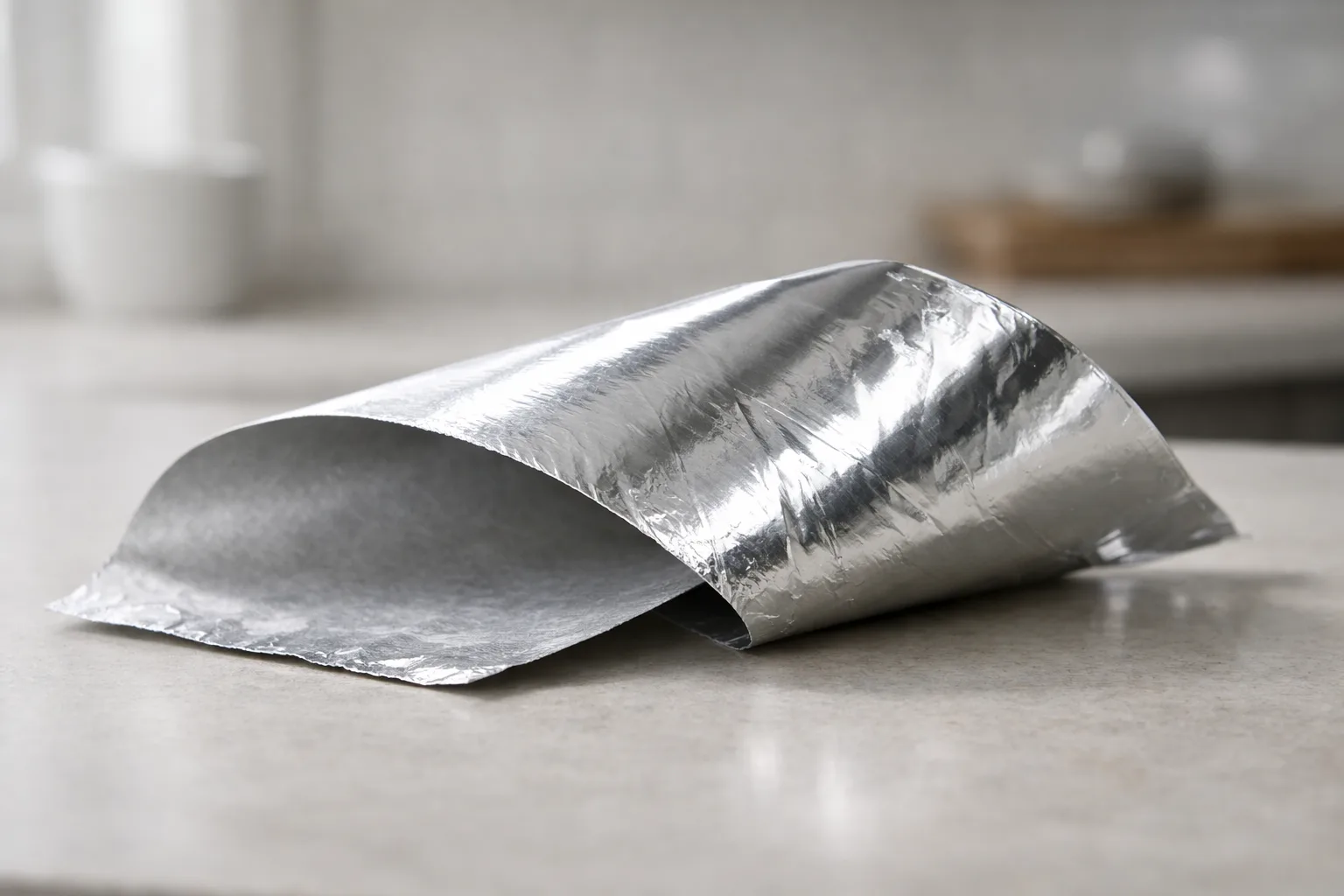
Aluminum foil seems to offer a small kitchen mystery: one side gleams, while the other looks matte. Does the difference affect how foil cooks food, keeps it warm, or protects leftovers? Usually, no. Both sides are the same aluminum, and the contrast in appearance is a result of how the foil is made.
The short version is that, during the final stages of rolling, manufacturers commonly press two thin layers together. The outer faces meet polished rollers and become shiny; the inner faces touch each other and come out duller. That difference in finish rarely matters in everyday use.
How foil gets its two finishes
Aluminum begins as a thicker piece of metal and is rolled repeatedly until it becomes a very thin sheet. Each pass reduces its thickness. As the metal gets thinner, it also becomes more delicate, so the method used in the final rolling stages helps produce the foil without tearing it.
Manufacturers commonly pass two layers through the rollers together. The outside face of each layer touches a smooth, polished roller. Pressure against that surface gives the face a reflective finish. The two faces pressed together in the middle do not touch the rollers. Their contact produces a less reflective, matte appearance instead.
When the layers are separated, each sheet has one shiny side and one dull side. The contrast is not the result of a shiny coating applied to one face, nor does it mean the sheet is made from two different materials. The difference is in the surface finish, while the foil itself is aluminum on both sides.
This process explains why the two finishes appear together on a standard sheet. They are a byproduct of how very thin foil is rolled, rather than a sign that one side was designed for a particular kitchen task. The side you see as brighter depends on how the surface reflects light; it does not indicate a different layer of metal.
What makes one side look shinier?
A smooth surface reflects light in a more orderly way, so it can look bright and mirror-like. A surface with a less even texture scatters light in more directions and appears duller. The two faces of foil have slightly different surface textures because of their contact during rolling, even though their material is the same.
The visual difference can seem dramatic when a sheet catches the light, particularly when it is folded or curved. But appearance alone does not tell you that one face is stronger, safer, or more effective for ordinary cooking. It is a useful clue to the manufacturing process, not a practical label for which side should touch food.
Does the side matter when cooking?
For ordinary uncoated foil, Reynolds permits either face against food. That directly answers the household cooking question. It is not a measurement showing that both surfaces have identical optical or infrared properties under every condition.
Follow the recipe and appliance instructions about where foil may be used and how food is heated safely. Turning standard foil shiny-side-in or out is not a substitute for those instructions, a thermometer or an appropriate food-storage container.
When the side can matter
The main exception is foil made with a special surface, such as nonstick foil. Its packaging may specify which side should face the food. Follow those directions: in that case, the instruction relates to the product’s nonstick feature, not the ordinary shiny-versus-dull difference.
It is also worth checking the package when using a specialty foil or an unfamiliar product. A surface treatment or product design can come with instructions that do not apply to standard foil. The packaging is a better guide for those products than the appearance of the two faces.
For standard foil, there is no need to spend time identifying which side is which before covering a dish or wrapping food. If a recipe simply calls for foil and gives no special directions, either face can be used. That keeps the distinction in perspective: it is a noticeable feature, but usually not one that changes how you use the sheet.
Is aluminum foil really “tin foil”?
Check the material stated on the package. A roll labelled aluminium foil is not evidence of a tin layer just because someone calls it ‘tin foil’. The household name does not identify a special coating or prescribe which face goes against food.
Coated, non-stick and laminated products need their own directions. The manufacturing explanation here concerns the ordinary shiny/dull aluminium sheet, not every reflective packaging material.
The simple answer
For standard foil, the finish difference is not a cooking-side instruction. Reynolds explains its ordinary foil in terms of paired rolling and says either face may contact food. Its non-stick products are a separate case: use their package directions. This distinguishes a manufacturing appearance from a product-specific surface treatment.
You might also like

Why Do Mirrors Reverse Left and Right but Not Up and Down?
A mirror does not actually swap left and right. It reverses the direction pointing into the glass—and the way we compare ourselves with the reflection creates the illusion.
Why Does a Retractable Pen Click When You Press It?
A retractable pen’s click comes from a small locking mechanism inside its barrel. Here’s how the button, cam and spring work together to extend and retract the tip.

Why Do Chimneys Have Caps? The Practical Reasons Explained
Chimney caps keep out rain, animals and debris, and some help contain sparks or reduce wind-driven downdrafts. Here’s how they work—and what they don’t do.