Why Airplane Windows Are Round Instead of Square
By WowPebble Editorial
Rounded airplane windows are more than a design choice: their smooth corners help limit the stress that repeated cabin pressurization puts on an aircraft.
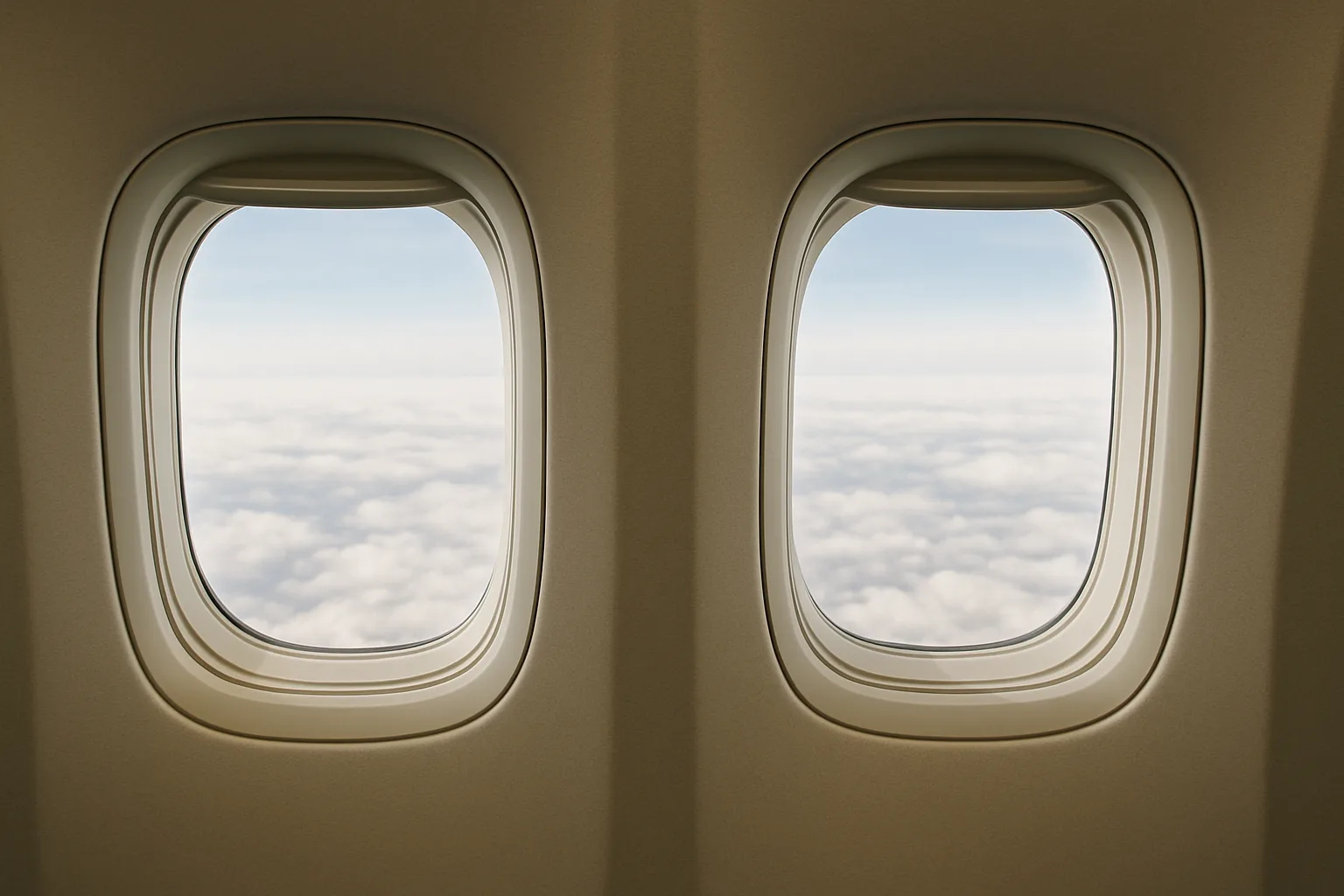
Look closely at an airplane window and you’ll notice it isn’t a square. Most passenger-plane windows are oval or rectangular with generously rounded corners. That shape helps solve a serious engineering problem: sharp corners can concentrate stress in an aircraft’s fuselage, especially as the cabin is pressurized and depressurized again and again.
The short version is that curves let forces flow more smoothly around an opening. The longer story involves the way an airplane breathes at altitude—and a turning point in the history of commercial aviation.
What happens to an airplane at altitude
At cruising altitude, the air outside a passenger jet is too thin for people to breathe comfortably. The cabin is therefore kept at a higher pressure than the surrounding atmosphere. The aircraft’s fuselage acts like a pressurized shell, holding that air in while the plane flies.
The pressure difference pushes outward on the cabin walls. It’s not a one-time load, either: each flight typically brings a cycle of pressurization during climb and depressurization during descent. Over time, those repeated changes can fatigue materials, much as bending a paper clip back and forth can eventually break it.
A window opening interrupts the smooth surface of the fuselage. The structure around it has to carry the loads that would otherwise pass through that section of the shell. The shape of the opening can affect how evenly those loads are distributed.
Why sharp corners are a problem
In a square opening, forces can build up at the corners. Engineers call this a stress concentration: a localized area where stress is higher than in the surrounding material. The sharper the corner, the more pronounced that concentration can be.
A rounded opening has no abrupt corner. The curve helps spread stress more evenly around the window frame and into the surrounding fuselage. That doesn’t make the window—or the aircraft—immune to fatigue, but it reduces one avoidable source of concentrated stress.
It’s the same basic reason you’ll find rounded corners in many structures and products that need to handle repeated loads. A smooth transition is often kinder to the material than a sharp change in direction.
The historical lesson from the de Havilland Comet
The FAA’s Comet accident lesson explains why this history should not be reduced to “square passenger windows caused the crashes.” The 1954 investigations brought together recovered wreckage, structural analysis and repeated-pressure tests.
For the Comet lost near Elba, G-ALYP, the recovered structure around roof-mounted automatic direction finder (ADF) windows identified the fatigue origin. Those were not the passenger windows beside the seats. A different airframe, G-ALYU, failed during water-tank pressure cycling at a corner of a forward escape-hatch window. Keeping those observations separate matters.
The lesson concerns stress around openings, repeated pressure cycles, structural detail and the adequacy of fatigue testing together. Rounded corners help reduce stress concentration, but a safe pressurized fuselage depends on the whole design and its testing and inspection—not window shape alone.
Are airplane windows actually round?
Usually, not perfectly. Many passenger-aircraft windows are more like rounded rectangles or elongated ovals. Their corners are curved rather than square, with the exact shape depending on the aircraft’s design.
That shape offers a practical compromise. Windows need to provide a useful view and fit the cabin layout, while their frames and surrounding structure must be designed to handle pressure loads. Engineers consider the whole assembly, including the size of the opening, its position, the frame, the materials, and how it connects to the fuselage.
Window shape and the functions of individual panes are separate questions. A passenger-window assembly can contain several layers, but their names and pressure roles must be checked for the particular design. See the assembly-specific explanation of the tiny hole in an airplane window rather than assigning one role to every “inner” pane.
Why not make every airplane window a circle?
A circle distributes stress smoothly, but aircraft design involves more than choosing the shape that performs best in one respect. A very small circular window would limit the view. A larger opening would require a carefully engineered frame and reinforcement, and its position would need to work with the aircraft’s structure and interior.
Rounded rectangles and ovals provide a useful balance: they avoid sharp corners while giving passengers a reasonably broad view. The precise design is part of a larger structural system, not a shape chosen in isolation.
Nor does a rounded window mean that stress disappears. Aircraft manufacturers account for pressure cycles through engineering, testing, maintenance, and inspection. The curved corners simply help reduce an important concentration of stress in the fuselage.
A small shape with a serious job
The rounded airplane window is easy to take for granted, but its shape reflects a hard-won understanding of how materials behave under repeated pressure. At cruising altitude, the cabin is a pressurized space inside a flexible structure. Every opening has to be designed so that the surrounding aircraft can safely carry the load.
So the next time you look out at the clouds, notice the curve at the edge of the window. It isn’t just a style choice. It’s a small detail shaped by physics, engineering, and the history of flight.
You might also like
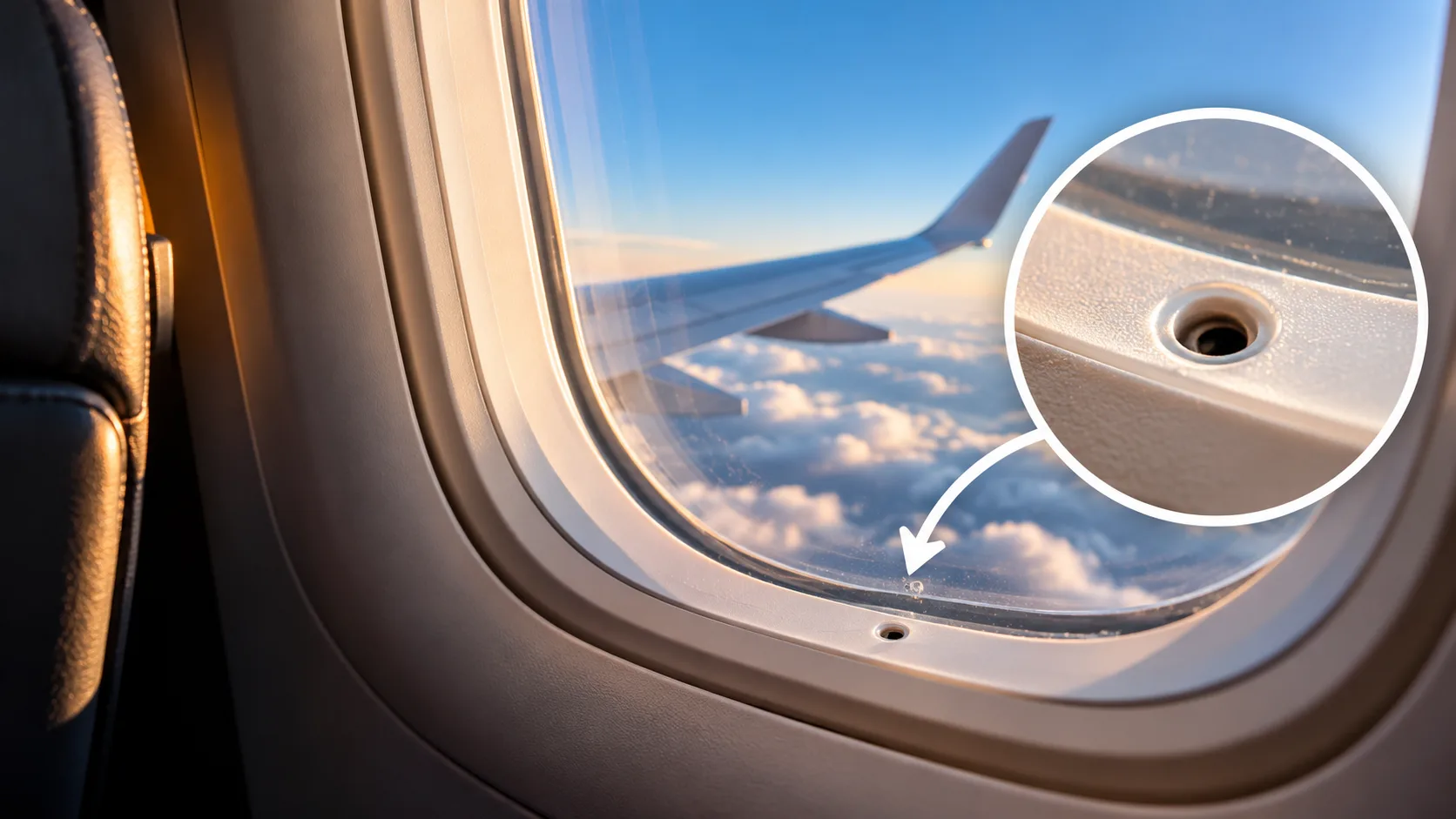
Why Airplane Windows Have That Tiny Hole — And 7 Other Design Details You Never Noticed
Understand the bleed hole in a conventional multi-pane airplane window, how it affects pressure, and seven other documented everyday design details.

Why Do Mirrors Reverse Left and Right but Not Up and Down?
A mirror does not actually swap left and right. It reverses the direction pointing into the glass—and the way we compare ourselves with the reflection creates the illusion.
Why Does a Retractable Pen Click When You Press It?
A retractable pen’s click comes from a small locking mechanism inside its barrel. Here’s how the button, cam and spring work together to extend and retract the tip.