How to Reheat Pizza So the Crust Stays Crisp
By WowPebble Editorial
A skillet can crisp a leftover pizza base, but texture and safe reheating are different checks. Compare methods and check the centre with a food thermometer.
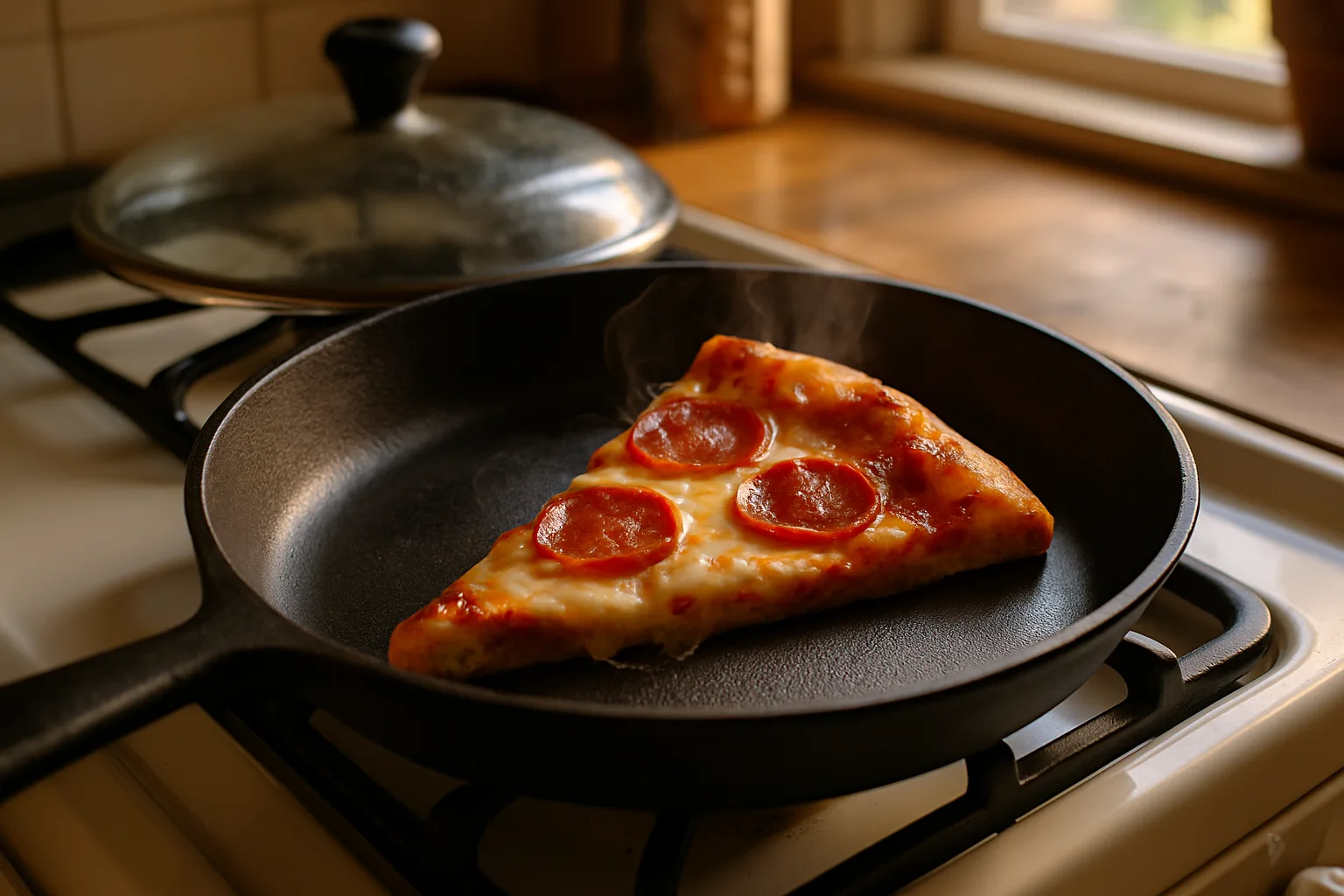
Leftover pizza can be nearly as satisfying as a fresh slice—if you warm it without turning the crust limp or the cheese tough. The trick is to heat the base with dry, direct heat, then give the toppings just enough warmth to soften. For one or two slices, a covered skillet is usually the easiest way to do both.
Start with safely stored leftovers. USDA’s storage guidance calls for prompt refrigeration, not prolonged storage on the counter. For reheating, use the USDA internal-temperature criterion of 165°F (74°C); a melted topping or crisp base alone is not that check. The timings below are cooking estimates, not food-safety guarantees.
The reason it works is simple: pizza crust loses its crispness as it cools, while moisture from the sauce and toppings can soften it further. A microwave heats quickly but tends to leave the base chewy. A hot pan brings back a crisp underside; a lid briefly traps warmth above, helping the cheese melt without keeping the crust in contact with steam for too long.
Whirlpool describes skillet/lid and oven methods as texture techniques. Keep that separate from USDA’s safety check in several places: the slice must reach 165°F (74°C) throughout, even when the underside already looks crisp.
The best all-around method: a skillet
- Set a dry skillet over medium-low to medium heat. A nonstick or well-seasoned pan makes lifting the slice easier, but you do not need to add oil.
- Put the cold slice in the pan and heat it uncovered for a few minutes. The exact time depends on the slice and pan, so check the bottom rather than relying on the clock. You want a crisp, golden underside, not a scorched one.
- When the base is nearly ready, add a few drops of water to an empty part of the pan, away from the pizza. Cover the pan briefly so the trapped warmth helps soften the cheese.
- Check the temperature in several places with a suitable food thermometer. Melted cheese alone is not enough: continue controlled heating until 165°F(74°C) throughout. If needed, uncover briefly to finish crisping without scorching the base.
Keep the heat moderate. If the pan is too hot, the base may burn before the center warms. If the slice is thick or piled with toppings, lower the heat and allow more time. The water is optional: use only a little, keep it off the crust, and skip it if the toppings are already warm or the cheese has softened.
Reheating several slices in the oven
For several slices, use a preheated oven and a suitable baking tray, with the setting and rack position recommended for the appliance. Keep slices in one layer so they can heat evenly. A tray also catches loose toppings instead of letting them fall onto an element.
Check progress rather than using one fixed time for every slice. Thickness, toppings and appliance behaviour matter. Verify 165°F(74°C) throughout with a food thermometer; if the underside browns too quickly, reduce the intensity or change position as the appliance instructions permit, and continue until the centre is safely reheated.
Avoid putting cold pizza into a cold oven and guessing at a fixed finish time. Preheating makes the result more predictable and helps the bottom begin crisping sooner. For a single slice, the oven works well too, but the skillet is usually quicker.
Using a toaster oven or air fryer
Use the appliance's permitted tray/basket arrangement and reheating guidance, keeping slices unstacked. Check often enough to avoid scorching, but use a food thermometer in several places to verify 165°F(74°C) throughout rather than relying on the appearance of cheese.
A thin slice and a heavily topped one will not necessarily finish together. Remove a slice only after its own safety check, and do not introduce foil or liners unless the appliance instructions permit the particular arrangement.
When the microwave is your only option
Use microwave-safe cookware and the appliance's reheating instructions. Cover and rotate or rearrange as appropriate to the food and follow its standing-time instructions. Check several places with a suitable food thermometer for 165°F(74°C) throughout; a warm outer edge can conceal a cold centre.
A microwave can heat the slice while leaving the base soft. If you want to finish it in a pan, use the skillet method after heating safely. An extra cup of water is not an established crisping method or a substitute for temperature control.
Small details that make a difference
Start with cold pizza. A refrigerated slice is easier to handle and less likely to have toppings slide around. Separate slices before reheating so heat can reach the edges.
Don’t crowd the pan. Give each slice room to sit flat. If the pan is full, the slices may warm unevenly, and adding water for a covered finish becomes awkward.
Use foil thoughtfully. Foil can make cleanup easier in the oven, but a flat, uncovered slice is more likely to crisp than one wrapped up, where moisture can collect.
Watch the toppings. A thin cheese slice warms differently from a thick slice loaded with vegetables or meat. Check the center and the underside, and adjust the heat instead of trying to force every slice to match one timer.
Store leftovers safely. Refrigerate leftover pizza promptly in a covered container or wrapped well. Reheat only what you plan to eat, and verify 165°F(74°C) throughout rather than judging safety by touch or appearance.
The simple rule for better leftover pizza
For one or two slices, use a skillet: crisp the bottom uncovered, then cover briefly if the cheese needs help warming. For a group, use a preheated oven. Choose the toaster oven or air fryer for a quick, crisp result, and treat the microwave as a speed-first option. Once you understand the balance—dry heat for the crust, gentle trapped warmth for the toppings—leftover pizza becomes much easier to bring back to life.
You might also like
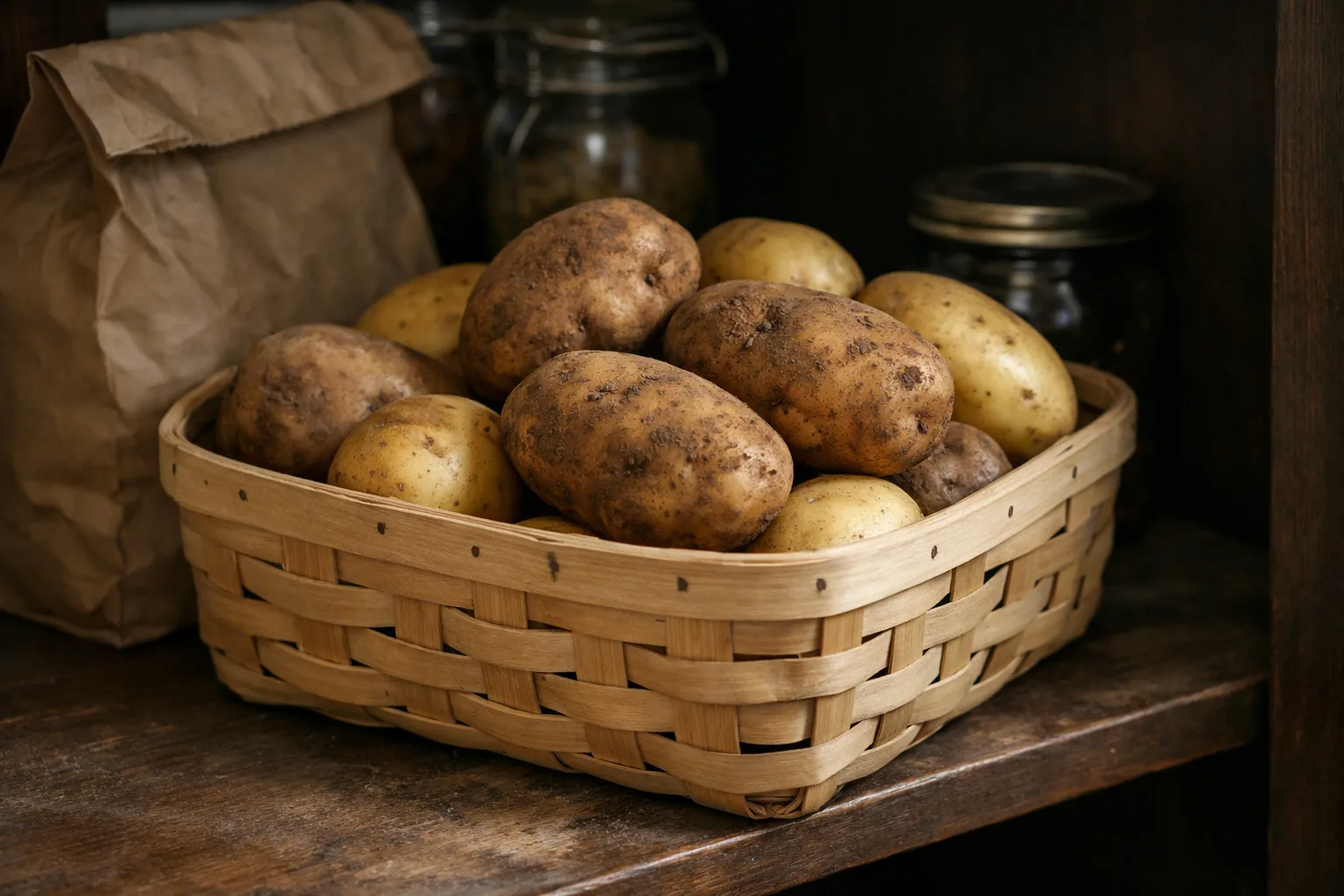
How to Store Potatoes So They Sprout More Slowly
Keep potatoes cool, dark, dry and well ventilated to slow sprouting. Learn which containers work, where to store them and what to avoid.
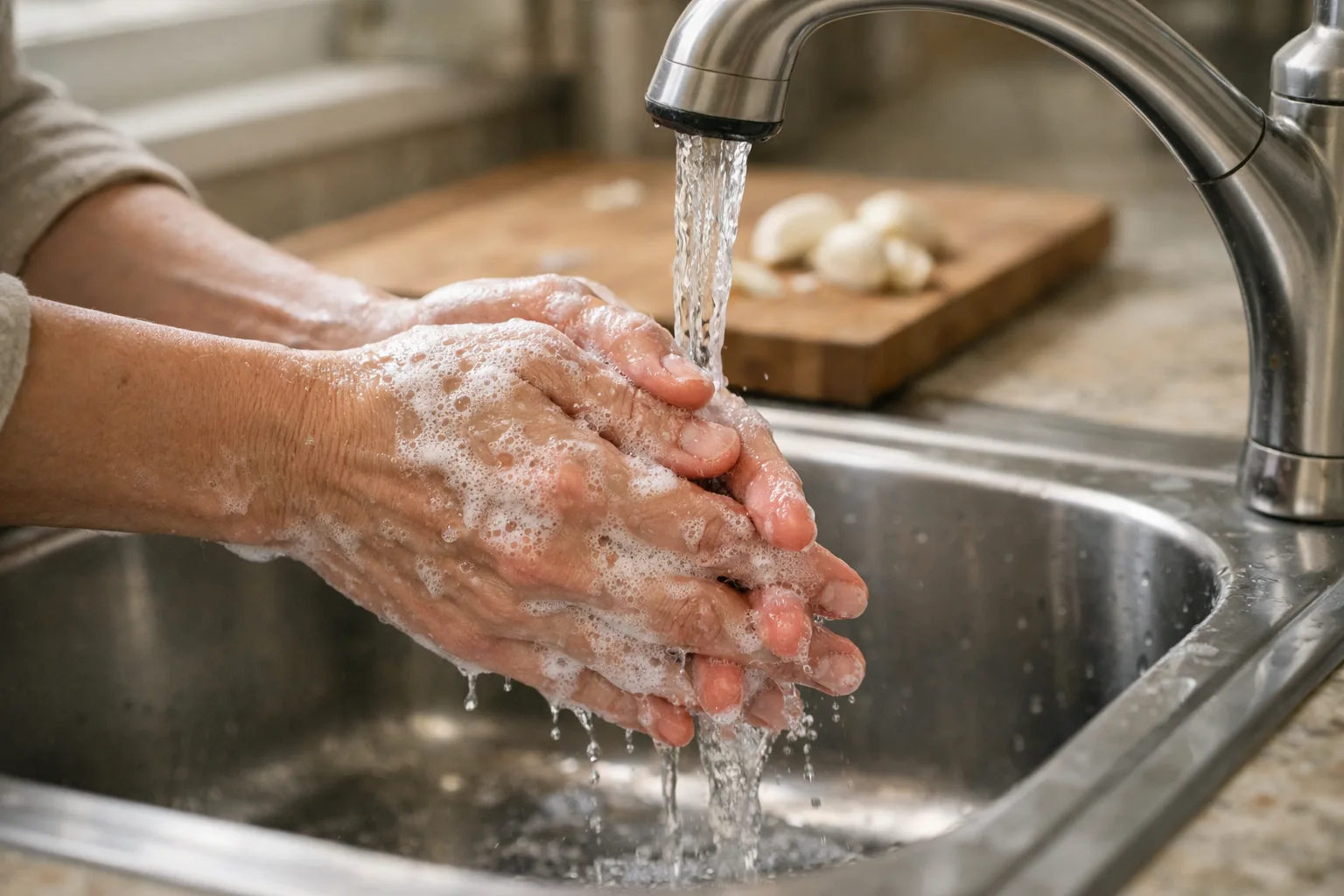
How to Get Garlic Smell Off Your Hands
Garlic smell can linger after chopping, but a thorough wash with soap and water usually helps. Here’s how to clean your hands—and what to try if the odor remains.
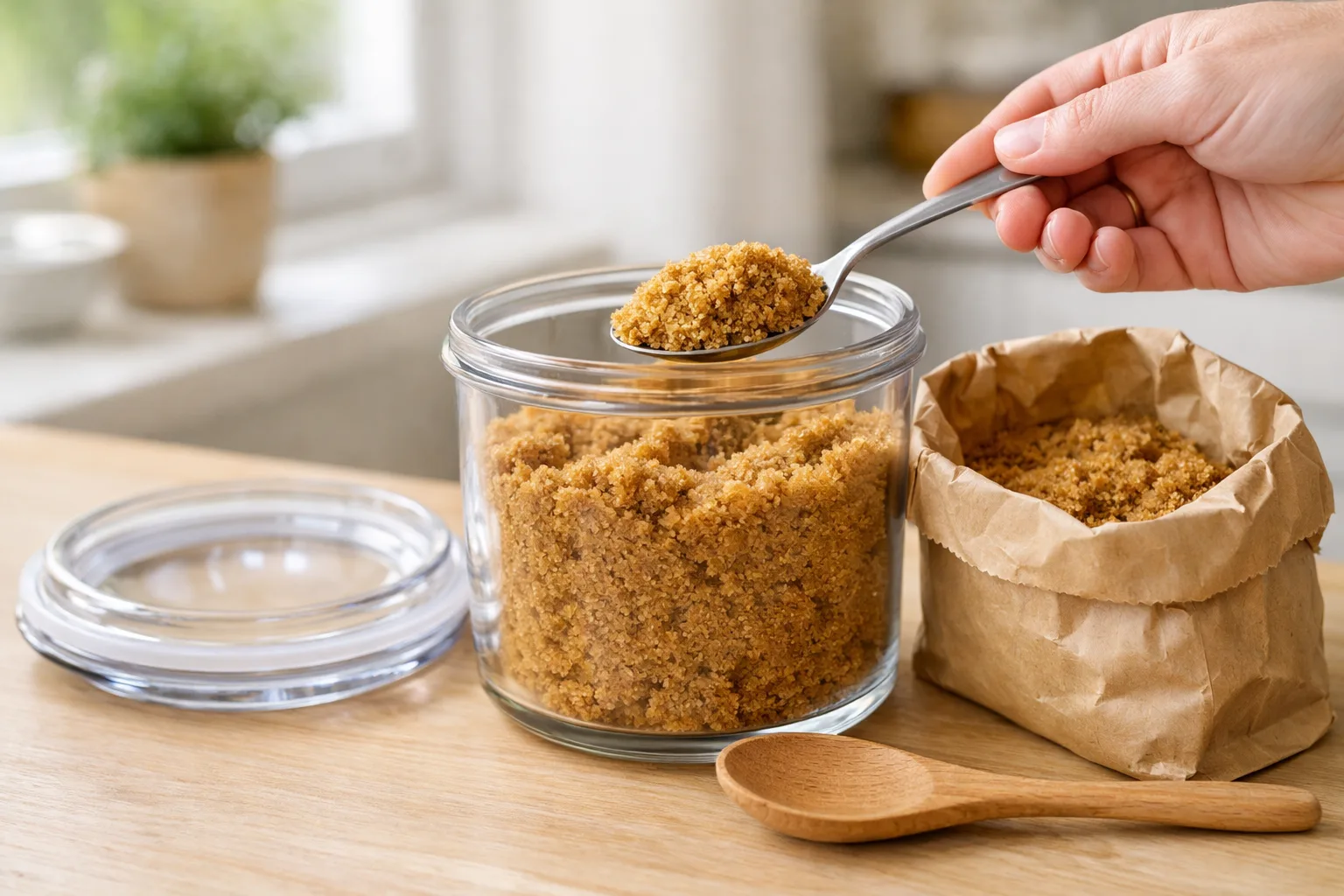
How to Keep Brown Sugar Soft After Opening the Bag
Keep brown sugar soft by sealing it in an airtight container and storing it in a cool, dry cupboard. Here’s what to do if it hardens anyway.