How to Keep a Rug from Sliding on a Smooth Floor
By WowPebble Editorial
A rug that creeps across tile or hardwood can be a nuisance—and a trip hazard. Learn which rug pads, grippers, and simple fixes work best for your floor.
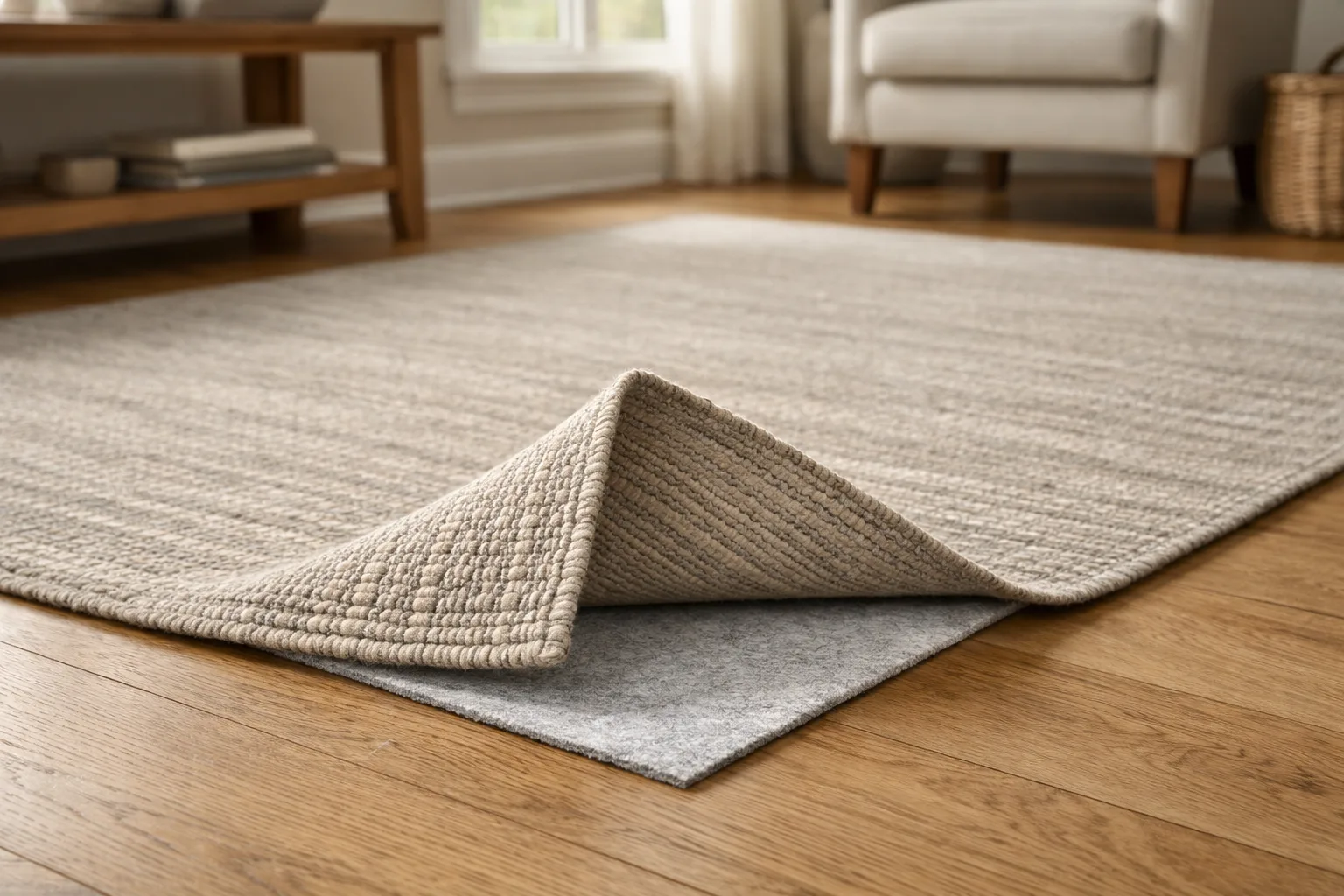
A rug can make a room feel warmer and quieter, but on a smooth floor it may slowly creep out of place—or bunch up underfoot. The simplest reliable fix is usually a non-slip rug pad made for both the rug and the flooring underneath. A good match adds grip without relying on sticky tape that could damage a finish.
Before buying anything, check the rug’s backing and the floor manufacturer’s care guidance. Some materials can react with certain pads or adhesives, leaving marks or discoloration. Once you know what is safe for your surfaces, a few straightforward steps can keep the rug steady and easier to live with.
Why rugs move on smooth floors
Rugs stay put when friction between their underside and the floor resists the force of footsteps, pets, or a vacuum. Smooth surfaces such as polished wood, laminate, tile, and vinyl offer relatively little grip. A lightweight rug has less weight to help hold it in place, and a rug with a slick backing can slide even more easily.
Movement is not just annoying. A rug that shifts or wrinkles can catch a foot or create an uneven surface. Securing it is especially worthwhile in busy walkways and near doors, where people are more likely to step on its edge.
Choose a rug pad that fits both surfaces
For most rugs, a purpose-made non-slip pad is the best starting point. Look for one labeled as suitable for your type of flooring and for the rug’s backing. Pads are made from different materials and constructions, so a product that grips one surface may not be appropriate for another.
A pad should generally be slightly smaller than the rug on every side, leaving the edges flat on the floor rather than perched on a raised border. Follow the pad maker’s sizing instructions; trimming is often possible, but only if the product allows it. A pad that sticks out can be visible, collect dirt, or become a new edge to catch a toe.
To install it, first clear the area and clean the floor and rug underside according to their care instructions. Let both dry fully. Lay the pad flat, then position the rug on top and smooth out any wrinkles. Check the rug after walking over it and after vacuuming. If the rug still shifts, make sure the pad is the right way up, correctly sized, and intended for that floor.
A cushioned pad can also make a rug feel softer and help it lie more evenly. But thicker is not automatically better: a bulky pad may make the rug’s edges sit too high or cause a door to catch. Choose a thickness that works with the rug and the room.
Other options for stubborn rugs
Corner or edge grippers: Small grippers can help with a rug that lifts or curls at its corners. Some attach to the rug, some to the floor, and some connect the two. Read the instructions carefully and check that the adhesive or material is safe for your particular flooring and rug backing. They may be useful for a small mat, though a full pad is often a better choice for a larger rug.
Rug tape: Double-sided rug tape can hold some rugs in place, but it is not a universal solution. Adhesive may leave residue or affect a floor’s finish, and some tapes are unsuitable for delicate rugs or certain flooring. Use only a product specifically approved for both surfaces, test it in an inconspicuous area if the instructions recommend it, and remove it as directed. Avoid ordinary household tape, which may leave a mess or damage the surface.
Furniture placement: Placing a stable furniture leg on part of a rug can help anchor it, particularly in a living room or dining area. It is best treated as extra support, not a substitute for a suitable pad. Do not position furniture in a way that makes the rug buckle or creates an awkward raised edge.
A different rug: If a rug remains difficult to secure, its size, shape, weight, or backing may be the problem. A heavier rug or one with a backing designed for the floor may be easier to keep in place. Always confirm that the backing is compatible with the surface below.
Protect the floor as well as the rug
A product that grips strongly is not necessarily safe for every floor. Flooring finishes vary, and manufacturers may have specific recommendations about underlays, rubber, latex, or adhesives. This matters particularly for finished wood, laminate, vinyl, and other surfaces where trapped moisture, chemical interaction, or residue could leave a mark. If you are unsure, ask the flooring or rug manufacturer before using a new pad or gripper.
Keep the floor and pad clean and dry. Dust and grit can reduce grip, while moisture trapped beneath a rug may harm some floors or contribute to odors. When cleaning, follow the care instructions for both the floor and the rug, and allow everything to dry before putting the pad back. Avoid soaking a pad unless its label says it can be washed that way.
Check the setup from time to time, especially after moving furniture, washing the rug, or vacuuming. Lift a corner to look for debris, curled edges, or signs of discoloration. If the pad has stretched, become brittle, or stopped gripping, replace it rather than adding stronger adhesive on top.
Common fixes to avoid
Shelf liner, strips of household rubber, and improvised sticky materials may seem like quick solutions, but they are not necessarily designed for use under rugs. They can leave residue, transfer color, trap dirt, or react with a floor finish. Likewise, pins or staples are not a safe way to attach a rug to a hard floor.
Do not assume that a rug’s own backing will protect the floor. Backings differ, and even a rug that stays put at first may shift as it is walked on. When in doubt, choose a properly labeled pad and follow the instructions for both products.
A simple way to make rugs safer
Start by matching a non-slip pad to the rug backing and the exact floor type. Clean and dry the surfaces, fit the pad just inside the rug’s edges, and check that both lie flat. Add grippers or approved tape only when they are compatible with the materials. With a little attention to fit and floor care, a rug can stay where it belongs without trading a slipping problem for a damaged surface.
You might also like
How to Store Potatoes So They Sprout More Slowly
Keep potatoes cool, dark, dry and well ventilated to slow sprouting. Learn which containers work, where to store them and what to avoid.
How to Get Garlic Smell Off Your Hands
Garlic smell can linger after chopping, but a thorough wash with soap and water usually helps. Here’s how to clean your hands—and what to try if the odor remains.
How to Keep Brown Sugar Soft After Opening the Bag
Keep brown sugar soft by sealing it in an airtight container and storing it in a cool, dry cupboard. Here’s what to do if it hardens anyway.